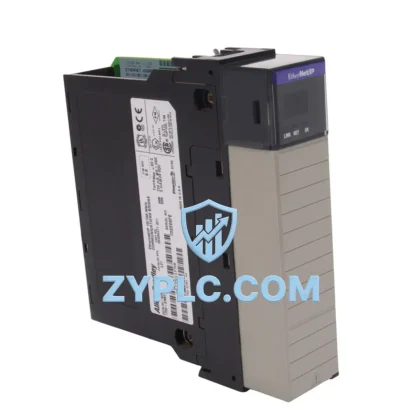
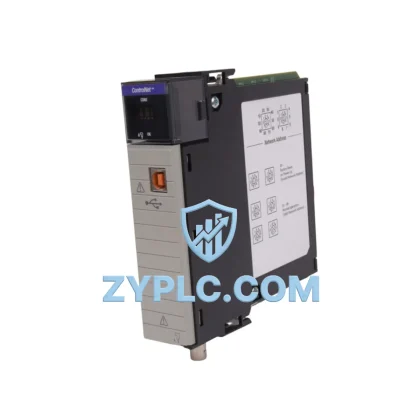
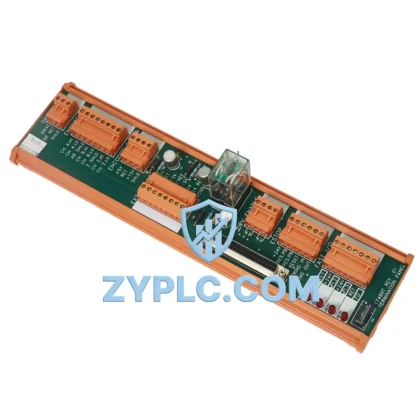
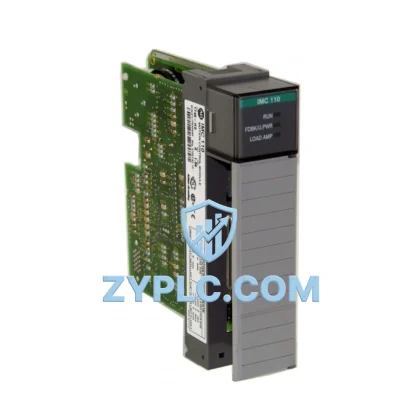
GE IS215REBFH1B System-Ready VME Bus Interface for Mark VI Architecture
The GE IS215REBFH1B is a VME Bus Interface Board engineered for deployment within GE’s Mark VI Turbine Control System and EX2100 Excitation Control platforms. As a critical backplane communication component, it serves as the structural backbone that enables high-integrity data exchange between the control processor, I/O modules, and communication gateways across the full automation hierarchy. In modern industrial control architectures — spanning power generation, petrochemical processing, and heavy manufacturing — the reliability of the VME bus layer directly determines the responsiveness and fault tolerance of the entire control loop. The IS215REBFH1B is designed to meet these demands with precision, ensuring that every signal path from field sensor to control output remains synchronized, stable, and auditable.
Within a layered Mark VI control architecture, this board occupies the critical interface position between the processor module (such as the IS215UCVEH2A or IS215UCVEH2B CPU cards) and the distributed I/O assemblies. It facilitates deterministic communication across the VMEbus backplane, ensuring that scan cycle integrity is maintained even under high-load conditions. Engineers integrating this board into a Mark VI MKVI TMR (Triple Modular Redundancy) configuration will find that it supports the redundancy arbitration logic required for continuous availability in mission-critical turbine control applications.
System architects working with GE’s Mark VI platform understand that the coherence of the control architecture depends on the seamless interaction between layers. The IS215REBFH1B enables the control layer — anchored by the VCMI (VME Communication and Memory Interface) — to maintain real-time synchronization with the I/O layer, which typically includes analog input boards such as the IS215AEPAH1B, thermocouple input modules, and discrete I/O boards like the IS215DSVOH1A. At the network layer, the board supports integration with Ethernet-based communication modules and serial gateway cards that bridge the Mark VI system to plant-level SCADA or DCS networks via Modbus TCP or SRTP protocols.
Power layer stability is equally essential. The IS215REBFH1B operates within the standard Mark VI power distribution framework, drawing regulated DC supply from the PPDA or PPDM power distribution boards. Proper power sequencing and grounding, as specified in GEH-6421 and related Mark VI hardware manuals, ensures that the VME bus interface initializes correctly during system startup and maintains signal integrity throughout the operational lifecycle. Engineers should verify backplane slot assignments and termination resistor configurations during commissioning to prevent bus contention or signal reflection issues.
At the human-machine interface layer, the IS215REBFH1B’s role becomes visible through the Mark VIe Toolbox and ToolboxST configuration environments, where bus topology, module addressing, and I/O mapping are defined. Operators monitoring the system through GE’s HMI platforms — including Cimplicity-based visualization stations — rely on the uninterrupted data flow that this board sustains. Any degradation in VME bus communication would immediately manifest as I/O scan faults or controller health alarms, underscoring the board’s centrality to overall system observability.
For actuator and drive integration at the execution layer, the IS215REBFH1B supports the command signal pathways that connect the Mark VI processor to servo valve controllers, generator excitation regulators, and variable frequency drives. In combined-cycle power plants, where the Mark VI simultaneously governs gas turbine, steam turbine, and generator excitation through coordinated control sequences, the VME bus interface must sustain deterministic latency across all command channels. The IS215REBFH1B is rated for this operational profile, making it suitable for both new system builds and direct replacement in existing Mark VI cabinets.
From a maintenance and lifecycle perspective, stocking the IS215REBFH1B as a critical spare reduces mean time to repair (MTTR) significantly. In turbine control environments where unplanned downtime can cost tens of thousands of dollars per hour, having a verified, tested replacement board available on-site is a standard risk mitigation practice. ZYPLC maintains inventory of the IS215REBFH1B with full functional testing, ensuring that each unit shipped meets GE’s original performance specifications. All units are covered by a 12-Month Warranty, providing procurement teams and plant engineers with the assurance needed for long-term maintenance planning.
Architecture Specification Table
| System Role |
VME Backplane Bus Interface — Mark VI / EX2100 Control Platform |
| Part Number |
IS215REBFH1B |
| Manufacturer |
GE (General Electric) — Energy Controls Division |
| Compatible Series |
Mark VI, Mark VIe, EX2100 Excitation Control |
| Bus Standard |
VMEbus (IEEE 1014) — 32-bit data path |
| Operating Voltage |
+5 VDC / ±12 VDC (via Mark VI backplane power rail) |
| Communication Capability |
VMEbus backplane; compatible with SRTP, Modbus TCP via gateway modules |
| Redundancy Support |
TMR (Triple Modular Redundancy) architecture compatible |
| Installation Environment |
Mark VI control cabinet; DIN rail or card cage slot mounting |
| Operating Temperature |
0°C to +60°C (standard industrial control panel environment) |
| Contextual Integration |
Fully compatible with ToolboxST / Mark VIe Toolbox configuration environment |
| Warranty |
12-Month Warranty — all units functionally tested prior to shipment |
Coordinated Control System Design
The IS215REBFH1B does not operate in isolation — its value is realized through its integration within a complete Mark VI control system architecture. In a typical turbine control cabinet, this VME bus interface board coordinates with the IS215UCVEH2A or IS215UCVEH2B CPU modules, which serve as the primary control processors executing turbine sequencing logic and protection algorithms. The backplane communication managed by the IS215REBFH1B ensures that processor scan cycles remain synchronized with I/O updates from analog input boards such as the IS215AEPAH1B (analog I/O board) and thermocouple input modules like the IS215TTVFH1B.
On the discrete I/O side, the board interfaces with modules such as the IS215DSVOH1A for digital output control of solenoid valves and relay-driven actuators. Power distribution to the VME card cage is managed by the IS215PPDAG1A or equivalent PPDA power distribution board, which must be verified for compatibility during system expansion or board replacement. For communication gateway functions — bridging the Mark VI to plant DCS or SCADA systems — the IS215VCMIH2C (VME Communication and Memory Interface) works in conjunction with the IS215REBFH1B to maintain network-layer data integrity.
In EX2100 excitation control applications, the IS215REBFH1B supports coordination with the IS215ESELH1B excitation selector board and associated firing circuit modules. For HMI connectivity, the system relies on Cimplicity workstations or ToolboxST-connected engineering terminals, both of which depend on stable VME bus communication to reflect real-time controller states. Engineers building or expanding Mark VI TMR architectures should also account for the IS215VCMIH2A and associated voter modules, which rely on the VME bus interface for redundancy arbitration and fault isolation.
Application in Layered Automation Systems
Power Generation: In gas turbine and combined-cycle power plants, the IS215REBFH1B is a standard component within Mark VI turbine control panels. It supports the real-time control loops governing fuel valve positioning, compressor inlet guide vane control, and generator excitation regulation. Its TMR compatibility makes it suitable for baseload generation units where continuous availability is a contractual requirement.
Petrochemical & Refinery Process Control: In refinery and chemical plant environments, Mark VI systems are deployed for compressor control, rotating equipment protection, and emergency shutdown integration. The IS215REBFH1B’s robust VME bus architecture supports the high-scan-rate I/O requirements of these applications, where millisecond-level response times are essential for process safety.
Water Treatment & Utilities: Municipal water treatment facilities and utility substations utilize GE Mark VI and EX2100 platforms for pump motor control, generator excitation management, and substation automation. The IS215REBFH1B enables reliable backplane communication in these environments, supporting long operational cycles with minimal maintenance intervention.
Mining & Metallurgy: In mining operations and metallurgical processing plants, where control systems must withstand high vibration, dust, and temperature variation, the IS215REBFH1B’s industrial-grade construction ensures sustained performance. It supports the integration of drive systems, conveyor controls, and process instrumentation within a unified Mark VI control architecture.
Architecture Engineering FAQ
Q1: Is the IS215REBFH1B compatible with both Mark VI and Mark VIe control systems?
The IS215REBFH1B is primarily designed for the Mark VI VMEbus-based architecture. Mark VIe systems use a different I/O and communication framework (IONet-based). Before deploying this board in a Mark VIe cabinet, engineers should verify the specific hardware revision requirements using GE’s hardware compatibility matrix or consult the GEH-6421 hardware manual. For EX2100 excitation systems, compatibility is confirmed for standard VME card cage configurations.
Q2: What commissioning steps are required when replacing the IS215REBFH1B in an existing Mark VI system?
Replacement requires the system to be placed in a safe maintenance state with turbine shutdown confirmed. The new board must be installed in the correct VME slot position as defined in the system’s hardware configuration drawing. After installation, ToolboxST or Mark VIe Toolbox should be used to verify module recognition, I/O mapping integrity, and communication health status. A full I/O loop check and controller health verification are recommended before returning the unit to service. ZYPLC provides technical support documentation with each shipped unit.
Q3: What does the 12-Month Warranty cover, and how does ZYPLC support long-term spare parts planning?
The 12-Month Warranty covers functional defects identified under normal operating conditions consistent with GE’s Mark VI installation specifications. Each IS215REBFH1B unit is functionally tested prior to shipment to verify VME bus communication integrity and electrical parameter compliance. ZYPLC maintains ongoing inventory of Mark VI series components to support long-term maintenance contracts and emergency spare requirements. For procurement teams managing multi-year maintenance plans, ZYPLC offers volume pricing and reserved stock arrangements. Contact: +86 19859288691 | plc.sales@zyplc.com
© 2026 ZYPLC. All rights reserved.
Original Source: https://zyplc.com
Contact: +86 19859288691 | plc.sales@zyplc.com