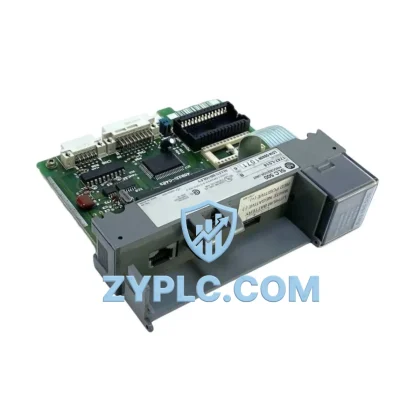
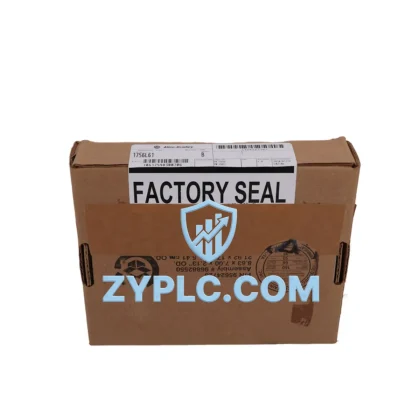
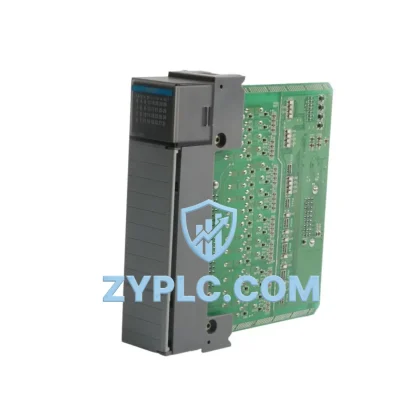
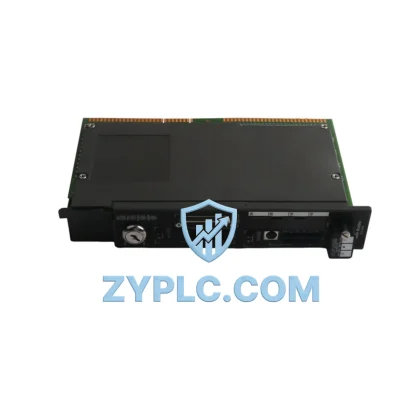
GE IS215UCVGH1AC: TMR Voting Controller Enabling Industrial Data Links Across Mark VIe Smart Factory Architecture
The GE IS215UCVGH1AC (SKU: UCVG H1A IS215UCVGH1AC) is a Universal Controller Voting Module engineered for GE’s Mark VIe Distributed Control System platform. Designed to serve as the decision-making core of Triple Modular Redundant (TMR) control architectures, this module continuously compares outputs from three independent controller channels and selects the majority-voted result — ensuring uninterrupted process control even when one channel experiences a fault. In smart factory environments where data integrity, real-time responsiveness, and system uptime are non-negotiable, the IS215UCVGH1AC delivers the communication backbone and voting logic that keeps the entire automation chain synchronized.
Within a complete Mark VIe control cabinet, the IS215UCVGH1AC interfaces directly with upstream and downstream layers of the automation hierarchy. Signal acquisition begins at the field device level — thermocouples, pressure transmitters, flow sensors, and vibration probes — whose analog and digital signals are conditioned and routed through I/O terminal boards before reaching the controller layer. The UCVG H1A module receives these processed signals, executes the TMR voting algorithm, and transmits authoritative control outputs to actuators, servo valves, and variable frequency drives on the execution layer. This closed-loop data flow, from sensor to controller to actuator, is what defines the IS215UCVGH1AC’s role as a network-critical component in industrial connectivity chains.
The module communicates over GE’s proprietary IONet high-speed deterministic network, which interconnects controller boards, I/O packs, and communication gateways within the Mark VIe rack. IONet’s real-time protocol ensures that voting decisions are transmitted with minimal latency, a critical requirement in turbine control, compressor management, and power generation applications where millisecond-level response times directly affect plant safety. Alongside IONet, the IS215UCVGH1AC supports integration with UDH (Unit Data Highway) and plant-level Ethernet networks, enabling SCADA systems and historian platforms to receive live process data without disrupting the deterministic control loop.
Network Communication Table
| Attribute |
Specification |
| Part Number |
IS215UCVGH1AC |
| SKU |
UCVG H1A IS215UCVGH1AC |
| Brand / Manufacturer |
GE (General Electric) |
| Series |
Mark VIe Distributed Control System |
| Module Function |
Universal Controller Voting Module (TMR) |
| Redundancy Architecture |
Triple Modular Redundant (TMR) — 2-of-3 voting logic |
| Primary Network Protocol |
IONet (GE proprietary high-speed deterministic Ethernet) |
| Plant Network Compatibility |
UDH (Unit Data Highway), Plant Ethernet, Modbus TCP (via gateway) |
| SCADA / HMI Integration |
Compatible via OPC-DA / OPC-UA gateway modules |
| Communication Interface |
Dual RJ45 Ethernet ports (IONet), backplane bus connector |
| Operating Voltage |
24 VDC (supplied via Mark VIe power distribution board) |
| Operating Temperature |
0°C to +60°C |
| Form Factor |
Mark VIe standard rack-mount module |
| Installation Environment |
Control cabinet, DIN rail compatible enclosure |
| Warranty |
12-Month Warranty — tested, verified, ready to ship |
Connected Automation Data Flow
The IS215UCVGH1AC does not operate in isolation — its value is realized through its position within a fully integrated Mark VIe control network. At the field level, sensors and transmitters feed raw process data into IS215AEPAH1B analog I/O packs and IS215DIPAH1A digital input packs, which digitize and forward signals over IONet to the UCVG H1A voting controller. The controller’s TMR logic processes these inputs across three redundant IS215UCVEH1A controller boards simultaneously, with the IS215UCVGH1AC arbitrating the final control decision.
On the power layer, the IS215PSVIH1A power supply interface module distributes conditioned 24 VDC across the Mark VIe rack, ensuring that the voting module and all connected I/O packs maintain stable operation during grid fluctuations or power switchover events. The IS215UCVGH1AC monitors power health status in real time and can trigger alarms through the UDH network to the plant’s SCADA system — typically a GE iFIX or Cimplicity HMI station — before a fault escalates to a process trip.
For protocol bridging between the Mark VIe IONet domain and plant-level Modbus TCP or PROFIBUS networks, the IS215GFOIH1A fiber optic interface module and dedicated communication gateway boards translate IONet data packets into standard industrial protocols. This enables remote I/O stations, variable frequency drives such as the GE AF-650GP series, and third-party field devices to exchange data with the Mark VIe controller without requiring proprietary hardware at every node. Edge gateway devices installed at the control cabinet boundary can further aggregate this data for cloud-based analytics platforms, completing the smart factory connectivity chain from sensor to enterprise.
At the human-machine interface layer, operators interact with the Mark VIe system through GE Cimplicity SCADA workstations or panel-mounted HMI terminals connected via plant Ethernet. The IS215UCVGH1AC’s real-time voting outputs are reflected in live process graphics, trend displays, and alarm management screens within milliseconds of a state change — a direct result of the low-latency IONet communication architecture. Remote diagnostic access is supported through the Mark VIe toolbox software, allowing engineers to interrogate controller health, review voting discrepancies, and perform firmware updates without interrupting the live control loop.
Solving Data Isolation in Industrial Sites
One of the most persistent challenges in legacy and hybrid industrial facilities is protocol fragmentation — where older Modbus RTU field devices, mid-generation PROFIBUS networks, and modern Ethernet-based controllers cannot exchange data without manual intervention or custom middleware. The IS215UCVGH1AC addresses this challenge by serving as the authoritative data source within the Mark VIe architecture, providing a single, validated process data stream that communication gateway modules can translate into any downstream protocol required by the plant’s SCADA, historian, or MES systems.
Data silos are further eliminated through the UDH network layer, which connects multiple Mark VIe controllers across a turbine train or power block into a unified data domain. Each IS215UCVGH1AC node publishes its voted process values to the UDH, where they become accessible to all other controllers, HMI stations, and data historians on the network — without point-to-point wiring or custom integration work. This architecture enables production line transparency across multi-unit power plants, compressor stations, and process facilities, where operators need a consolidated view of dozens of control loops simultaneously.
Remote monitoring and diagnostics are supported natively through the Mark VIe’s built-in network health reporting. The IS215UCVGH1AC continuously broadcasts controller status, voting discrepancy counts, and communication link quality metrics over IONet, which are aggregated by the system’s diagnostic server and displayed on SCADA dashboards. Maintenance teams can identify degrading communication links, predict module failures before they cause process trips, and schedule replacements during planned outages — reducing unplanned downtime and extending the operational life of the control system. System expansion is equally straightforward: additional I/O packs, communication modules, and controller boards can be added to the Mark VIe rack without reconfiguring the IS215UCVGH1AC’s voting logic, preserving the existing control program and minimizing commissioning time.
Industrial Connectivity FAQ
Q1: Does the IS215UCVGH1AC support Modbus TCP or PROFIBUS communication directly?
The IS215UCVGH1AC communicates natively over GE’s IONet protocol within the Mark VIe rack. For integration with Modbus TCP, PROFIBUS DP, or OPC-UA networks, a dedicated communication gateway module — such as the IS215GFOIH1A or a third-party protocol converter — is required at the rack boundary. This gateway approach preserves the deterministic performance of the IONet control loop while enabling full interoperability with plant-level SCADA, historian, and MES systems.
Q2: How does the TMR voting architecture affect network latency and real-time control performance?
The TMR voting process executed by the IS215UCVGH1AC is performed at the hardware level within the Mark VIe rack, with voting decisions completed within the controller’s scan cycle — typically 10 to 40 milliseconds depending on configuration. IONet communication between the voting module and I/O packs adds negligible latency, as the network is designed for deterministic real-time data exchange. The result is that TMR redundancy does not compromise control loop performance, making the IS215UCVGH1AC suitable for high-speed turbine control and safety-critical process applications.
Q3: Can the IS215UCVGH1AC be integrated into an existing Mark VIe system without replacing other modules?
Yes. The IS215UCVGH1AC is designed as a drop-in replacement within compatible Mark VIe racks. It uses the standard Mark VIe backplane connector and IONet interface, so existing I/O packs, power supply modules, and communication boards do not need to be replaced or reconfigured. After physical installation, the module is recognized by the Mark VIe toolbox software, and the existing control program is downloaded without modification. This plug-and-play compatibility significantly reduces commissioning time and minimizes the risk of configuration errors during maintenance replacements.
Q4: What does the 12-Month Warranty cover, and how is the module tested before shipment?
Every IS215UCVGH1AC supplied by ZYPLC is subject to a pre-shipment functional test that verifies IONet communication, TMR voting logic, backplane interface integrity, and power input performance. The 12-Month Warranty covers manufacturing defects, communication failures, and component-level faults identified under normal operating conditions. Modules that fail during the warranty period are replaced or repaired at no additional cost. ZYPLC maintains ready stock of IS215UCVGH1AC units to support urgent replacement requirements, with global shipping available to minimize plant downtime.
© 2026 ZYPLC. All rights reserved.
Original Source: https://zyplc.com
Contact: +86 19859288691 | [email protected]