GE IS215VCMIH2C System-Ready VME Communication Interface for Mark VI Architecture: Control System Architecture and Upstream-Downstream Coordination
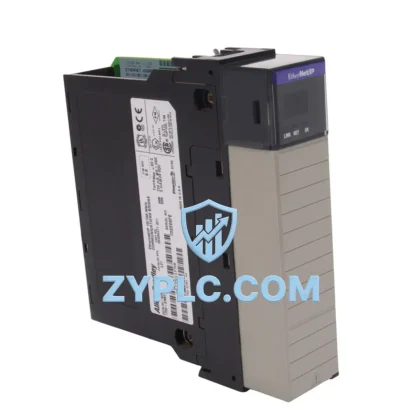
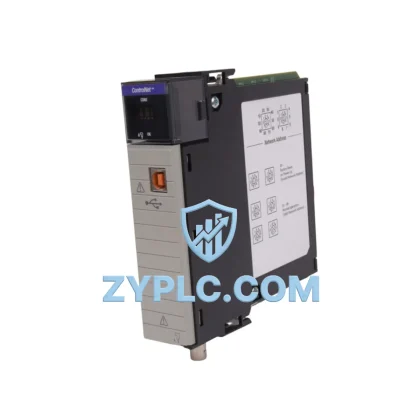
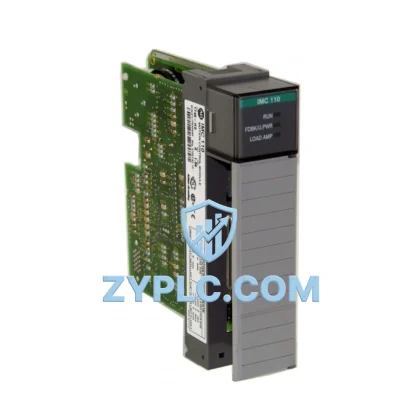
The GE IS215VCMIH2C is a VME-based communication interface module engineered specifically for deployment within GE’s Mark VI turbine control platform. Rather than functioning as a standalone component, this module occupies a critical position within the layered architecture of industrial automation systems — bridging the control layer, I/O layer, and network communication layer to ensure seamless signal flow, system redundancy, and long-term operational stability. Understanding its role within the full control system hierarchy is essential for engineers designing, commissioning, or maintaining gas turbine, steam turbine, or combined-cycle power generation facilities.
In a complete Mark VI control architecture, the IS215VCMIH2C serves as the communication backbone between the VME backplane and the broader plant network. It coordinates data exchange between the core processor modules — such as the IS215VCPCH1B or IS215VCPCH1C — and the distributed I/O racks, enabling real-time command transmission and feedback acquisition across the full control loop. This contextual integration capability ensures that every layer of the automation hierarchy, from field instruments to the operator HMI, maintains synchronized state awareness without latency or data loss.
Architecture Specification Table
| Parameter |
Specification |
| Part Number |
IS215VCMIH2C |
| Brand / Manufacturer |
GE (General Electric) |
| Product Series |
Mark VI Turbine Control System |
| Module Type |
VME Communication Interface Module |
| System Role |
Inter-rack and network communication bridge within VME backplane architecture |
| Form Factor |
VME (Versa Module Europa) card format |
| Communication Capability |
Supports IONet (GE proprietary Ethernet-based I/O network), compatible with Mark VI distributed I/O architecture |
| Backplane Interface |
VME64 backplane compatible |
| Operating Voltage |
+5 VDC via VME backplane (IS215VPWRH1B or equivalent power supply module) |
| Operating Temperature |
0°C to +60°C (standard industrial enclosure) |
| Mounting Environment |
Mark VI control cabinet / VCMI rack assembly |
| Redundancy Support |
Compatible with TMR (Triple Modular Redundancy) and simplex Mark VI configurations |
| Origin |
United States of America |
| Warranty |
12-Month Warranty — covers functional defects under normal operating conditions |
Coordinated Control System Design
The IS215VCMIH2C does not operate in isolation. Its value is fully realized only when integrated within a coherent Mark VI system architecture. At the processor level, it interfaces directly with the IS215VCPCH1B or IS215VCPCH1C CPU modules, which execute the turbine control logic and rely on the VCMI to relay I/O data with deterministic timing. The VME backplane — typically housed in a IS200VCMIG1B or equivalent rack assembly — provides the physical and electrical foundation for this communication path.
On the power supply side, the IS215VPWRH1B power module delivers regulated +5 VDC and ±15 VDC rails to the backplane, ensuring that the IS215VCMIH2C and co-resident modules receive stable, noise-free power even under fluctuating plant load conditions. This is particularly important in high-vibration environments such as gas turbine enclosures, where power quality directly affects communication integrity.
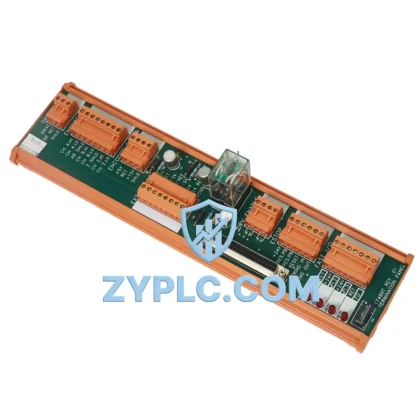
For I/O connectivity, the IS215VCMIH2C coordinates with terminal board assemblies such as the IS200TBAIH1C (analog input terminal board) and IS200TBCIH1C (contact input terminal board), which aggregate field signals from sensors, transmitters, and protective relays before routing them through the IONet to the communication interface. On the output side, modules like the IS200TTURH1C turbine trip relay board receive commands from the control processor via the same communication path, closing the control loop from sensor to actuator.
Network-layer integration is achieved through the IONet infrastructure, where the IS215VCMIH2C acts as the local network node for its rack. In multi-rack Mark VI configurations — common in large combined-cycle plants — multiple VCMI modules form a distributed communication mesh, with each rack maintaining local processing capability while sharing system-wide state data. This architecture supports the IS215VCMIH2C‘s role in TMR redundancy schemes, where three parallel control paths vote on output commands to eliminate single-point failures.
At the human-machine interface layer, operator workstations running GE’s Mark VIe Control System Toolbox or compatible SCADA platforms receive real-time process data routed through the VCMI’s network interface. This enables operators to monitor turbine speed, exhaust temperature, vibration levels, and protective relay status from a centralized display without direct rack access, reducing maintenance intervention time and improving situational awareness during startup and shutdown sequences.
Application in Layered Automation Systems
Power Generation (Gas & Steam Turbine Control): The IS215VCMIH2C is most commonly deployed in gas turbine and steam turbine control systems at power generation facilities. In these applications, the module manages communication between the turbine control processor and the distributed I/O racks monitoring compressor inlet temperature, fuel valve position, flame detection, and exhaust gas temperature. Its support for TMR architecture makes it suitable for critical protection systems where unplanned downtime carries significant financial and safety consequences.
Combined-Cycle Power Plants: In combined-cycle configurations, the Mark VI system controls both the gas turbine and the heat recovery steam generator (HRSG). The IS215VCMIH2C enables coordinated communication across multiple control racks, ensuring that the gas turbine exhaust temperature data is accurately relayed to the HRSG control logic without cross-rack communication delays that could compromise steam drum pressure regulation.
Petrochemical and Refinery Process Control: Beyond power generation, the Mark VI platform and its VCMI modules are applied in compressor control systems at petrochemical facilities. The IS215VCMIH2C supports anti-surge control loops by maintaining low-latency communication between the surge detection I/O and the compressor recycle valve actuator, preventing compressor damage during process upsets.
Industrial Utilities and Cogeneration: In cogeneration plants and industrial utility systems, the IS215VCMIH2C supports integration with plant-wide DCS networks, enabling the Mark VI turbine controller to exchange load demand signals and protective interlock status with the broader plant automation infrastructure. This contextual integration capability reduces the need for hardwired interlock panels and simplifies system-level commissioning.
Long-Term Maintenance and Spare Parts Strategy: For facilities operating aging Mark VI systems, maintaining a qualified spare inventory of IS215VCMIH2C modules is a recognized best practice. Communication interface modules are subject to wear from thermal cycling and connector oxidation over extended service periods. Having a tested, warranted spare on-site reduces mean time to repair (MTTR) during unplanned outages and supports planned maintenance windows without extended lead times from OEM channels.
Architecture Engineering FAQ
Q1: Is the IS215VCMIH2C compatible with both simplex and TMR Mark VI configurations?
Yes. The IS215VCMIH2C is designed to operate in both simplex (single-controller) and TMR (Triple Modular Redundancy) Mark VI architectures. In TMR configurations, three IS215VCMIH2C modules are installed in parallel racks, each independently processing I/O data and communicating with the voting logic in the IS215VCPCH1C processor modules. The system automatically manages inter-module synchronization, and the VCMI modules do not require individual configuration changes when transitioning between simplex and redundant architectures — the control toolbox handles redundancy mode assignment at the system level.
Q2: What commissioning steps are required when replacing an IS215VCMIH2C in a live Mark VI system?
Replacement of the IS215VCMIH2C in an operational Mark VI system should follow GE’s hot-swap procedure for VME modules where supported, or a controlled rack power-down sequence where hot-swap is not available. After physical installation, the replacement module must be recognized by the Mark VI Control System Toolbox, which will automatically download the rack configuration and I/O assignment data from the controller. Engineers should verify IONet communication status in the toolbox diagnostics panel and confirm that all I/O points are reporting correctly before returning the rack to service. The 12-Month Warranty covers functional defects identified during this commissioning process, provided the module has been installed and operated within GE’s specified environmental and electrical parameters.
Q3: How does the 12-Month Warranty apply to IS215VCMIH2C modules purchased from ZYPLC, and what support is available for long-term maintenance planning?
All IS215VCMIH2C modules supplied by ZYPLC are covered by a 12-Month Warranty against functional defects under normal operating conditions. This warranty period begins from the date of shipment and covers failures attributable to manufacturing defects or latent component faults, not damage resulting from incorrect installation, overvoltage events, or environmental conditions outside the module’s rated specifications. For long-term maintenance planning, ZYPLC recommends establishing a qualified spare inventory of one to two VCMI modules per Mark VI system, particularly for facilities with extended planned maintenance intervals. Our technical team is available to assist with compatibility verification, system architecture review, and spare parts strategy consultation prior to purchase.
© 2026 ZYPLC. All rights reserved.
Original Source: https://zyplc.com
Contact: +86 19859288691 | plc.sales@zyplc.com