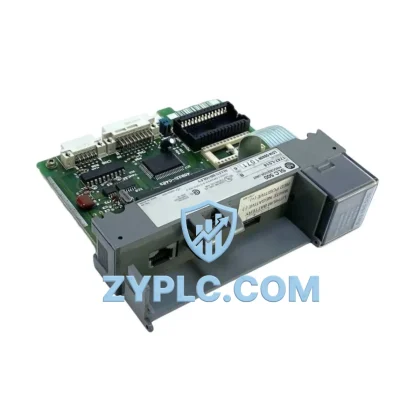
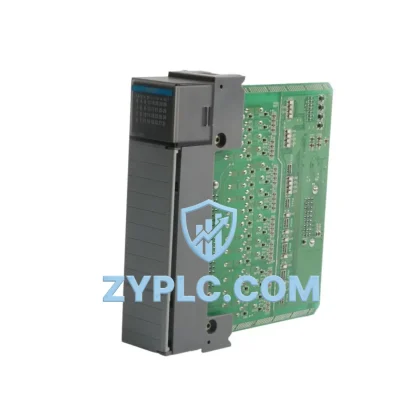
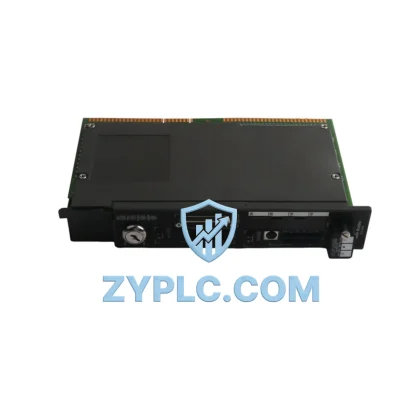
GE IS215VPROH1BE System-Ready VME Processor for Mark VIe Architecture: Control System Architecture and Upstream–Downstream Coordination
The GE IS215VPROH1BE is a VME-format processor board engineered for deployment within GE’s Mark VIe distributed control platform — one of the most widely adopted turbine and generator control architectures in the power generation, oil & gas, and heavy industrial sectors. Rather than functioning as a standalone compute module, the IS215VPROH1BE is designed from the ground up to operate as the central processing node within a layered, multi-tier automation system. Its role spans real-time control execution, I/O arbitration, inter-module communication, and system-level diagnostics — making it a foundational element in any Mark VIe control cabinet build or retrofit project.
Understanding the IS215VPROH1BE requires understanding the architecture it inhabits. The Mark VIe platform organizes control functions across a hierarchy of hardware layers: the controller layer (where this processor resides), the I/O pack layer, the network communication layer, the power distribution layer, the HMI layer, and the field device execution layer. Each layer depends on the others for signal integrity, timing synchronization, and fault tolerance. The IS215VPROH1BE sits at the apex of this hierarchy, coordinating data flow between all subordinate layers while executing the deterministic control logic that governs turbine speed, temperature, fuel flow, and protective shutdown sequences.
Architecture Specification Table
| Parameter |
Specification |
| Part Number |
IS215VPROH1BE |
| Manufacturer |
GE (General Electric) |
| Platform |
Mark VIe Distributed Control System |
| System Role |
Central VME Processor / Control Execution Engine |
| Form Factor |
VMEbus Board (6U VME) |
| Processor Architecture |
Real-Time Embedded Processor (PowerPC-based) |
| Operating Voltage |
+5 VDC / ±12 VDC via VME backplane |
| Communication Interfaces |
IONet (Ethernet-based I/O network), ARCNET, RS-485 |
| Redundancy Support |
TMR (Triple Modular Redundancy) and Dual Redundancy configurations |
| I/O Coordination |
Compatible with IS200, IS210, IS215 series I/O packs |
| Operating Temperature |
0°C to 60°C (standard industrial range) |
| Humidity |
5% to 95% non-condensing |
| Mounting |
VME rack / Mark VIe controller enclosure |
| Firmware Compatibility |
Mark VIe Toolbox (ToolboxST) configuration environment |
| Warranty |
12-Month Warranty — all units tested prior to shipment |
| Availability |
In stock — global export supported |
Coordinated Control System Design
The IS215VPROH1BE does not operate in isolation. Its value is realized through tight integration with the surrounding Mark VIe hardware ecosystem. In a typical turbine control cabinet, the processor board interfaces directly with the IS200VCRCH1B VME carrier card, which provides the physical backplane connectivity and signal routing between the processor and downstream I/O modules. The carrier card acts as the structural backbone of the controller chassis, and the IS215VPROH1BE slots into this assembly to assume command of all real-time control tasks.
On the I/O layer, the processor communicates over the IONet Ethernet network with distributed I/O packs such as the IS200TBCIH1B terminal board and associated I/O interface modules. These packs handle analog input conditioning, thermocouple signal processing, discrete I/O switching, and speed/vibration signal acquisition — all of which feed directly into the control algorithms running on the IS215VPROH1BE. The processor’s ability to poll, timestamp, and arbitrate these signals at deterministic scan rates is what enables precise turbine speed governing and protective relay coordination.
For power distribution, the Mark VIe architecture relies on dedicated power supply modules such as the IS200EPSMG1A power supply board, which conditions and distributes regulated DC power across the VME backplane. The IS215VPROH1BE depends on stable, clean power delivery to maintain processor clock integrity and prevent spurious resets during load transients — a critical consideration in high-vibration turbine environments.
Network communication between the controller and the plant DCS or SCADA layer is typically handled through dedicated communication gateway modules. In Mark VIe systems, the IS200VSVOH1B servo driver interface and the IS215VCMIH2B communication interface module extend the processor’s reach into the plant network, enabling OPC-DA/UA data exchange, Modbus TCP bridging, and historian connectivity. These modules allow the IS215VPROH1BE to serve not only as a local control engine but also as a data source for plant-wide performance monitoring and predictive maintenance platforms.
In redundant system configurations — particularly in critical power generation applications — the IS215VPROH1BE is deployed in TMR (Triple Modular Redundancy) arrangements alongside two additional processor boards. The IS200VTURH1BEE turbine control board and associated voting logic modules work in concert with the primary processor to ensure that any single-point hardware failure does not interrupt turbine operation. This redundancy architecture is essential for base-load power plants where unplanned shutdowns carry significant financial and grid-stability consequences.
At the human-machine interface layer, operator workstations running GE’s ToolboxST configuration software connect to the IS215VPROH1BE via the IONet network to perform online parameter tuning, alarm management, trend visualization, and firmware updates. The processor’s support for live configuration changes — without requiring a full system restart — significantly reduces maintenance windows and improves overall plant availability.
Application in Layered Automation Systems
Power Generation (Gas Turbine & Steam Turbine Plants): The IS215VPROH1BE is most commonly deployed in combined-cycle and simple-cycle gas turbine control systems, where it governs fuel valve positioning, compressor inlet guide vane control, exhaust temperature management, and overspeed protection. Its deterministic scan cycle — typically 10ms to 40ms depending on configuration — meets the stringent timing requirements of turbine protective systems classified under IEC 61511 and NFPA 85 standards.
Oil & Gas Processing: In upstream and midstream oil & gas facilities, the Mark VIe platform with IS215VPROH1BE processors is used to control gas compression trains, pipeline booster stations, and LNG liquefaction process units. The processor’s support for SIL-rated I/O packs and its integration with safety instrumented systems (SIS) make it suitable for applications requiring functional safety compliance.
Petrochemical & Refinery Applications: Refinery operators deploy Mark VIe systems for rotating equipment control — including centrifugal compressors, steam turbine-driven pumps, and expander-generator sets. The IS215VPROH1BE’s ability to handle high-speed analog inputs (vibration, speed, differential pressure) alongside discrete safety interlock logic in a single controller chassis reduces panel footprint and simplifies system integration.
Water Treatment & Utilities: Municipal water authorities and industrial utility operators use Mark VIe-based systems for pump station automation, variable-speed drive coordination, and SCADA integration. The IS215VPROH1BE’s Ethernet-based IONet architecture simplifies integration with modern SCADA platforms and supports remote diagnostics over standard TCP/IP infrastructure.
Mining & Metals Processing: In mineral processing plants and smelting operations, the IS215VPROH1BE controls large drive systems, conveyor interlocks, and process variable regulation. Its robust operating temperature range and vibration tolerance make it suitable for the harsh electrical environments typical of mining substations and motor control centers.
Architecture Engineering FAQ
Q1: Is the IS215VPROH1BE compatible with both Mark VI and Mark VIe control systems?
The IS215VPROH1BE is specifically designed for the Mark VIe platform and uses the IONet Ethernet-based I/O communication architecture introduced with Mark VIe. It is not directly interchangeable with earlier Mark VI hardware, which uses a different backplane and I/O communication protocol (IONET vs. legacy serial I/O bus). If you are upgrading from Mark VI to Mark VIe, a full controller chassis and I/O pack replacement is typically required. Our technical team can assist with migration planning and hardware compatibility assessment.
Q2: Can the IS215VPROH1BE be used in a TMR redundancy configuration, and what additional hardware is required?
Yes. The IS215VPROH1BE supports Triple Modular Redundancy (TMR) when deployed in sets of three within a Mark VIe TMR controller chassis. Each processor board independently executes the same control logic, and a hardware voting mechanism resolves any discrepancy between the three outputs before commanding field devices. To implement TMR, you will need three IS215VPROH1BE boards, a compatible TMR chassis (such as the IS200VCRCH1B carrier), three sets of I/O packs, and the appropriate TMR power supply modules. ZYPLC can supply complete TMR controller assemblies with all matched components.
Q3: What does the 12-Month Warranty cover, and what is the process for warranty claims?
All IS215VPROH1BE units supplied by ZYPLC are covered by a 12-Month Warranty from the date of shipment. The warranty covers hardware defects, functional failures under normal operating conditions, and firmware-related issues attributable to the board itself. Each unit undergoes functional testing prior to dispatch. In the event of a warranty claim, customers should contact our technical support team at plc.sales@zyplc.com with the order reference and a description of the fault. We will arrange for expedited replacement or repair, minimizing system downtime. Extended warranty and on-site support contracts are available upon request.
© 2026 ZYPLC. All rights reserved.
Original Source: https://zyplc.com
Contact: +86 19859288691 | plc.sales@zyplc.com