GE IS220PPRQH1A System-Ready Protective Processor for Mark VIe Architecture: Control System Architecture and Upstream-Downstream Coordination
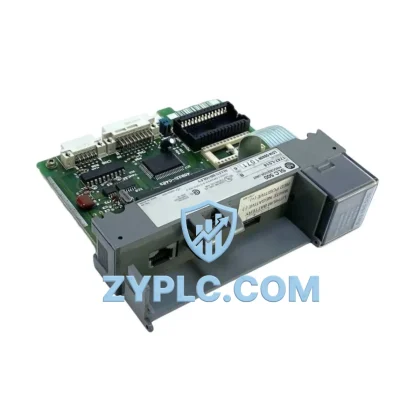
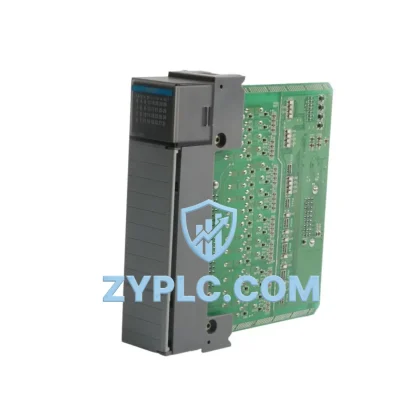
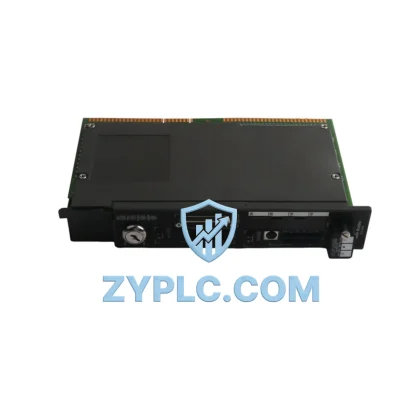
The GE IS220PPRQH1A is a dedicated protective processor module engineered for deployment within the GE Mark VIe distributed control system architecture. Rather than functioning as a standalone safety device, the IS220PPRQH1A occupies a critical position within a layered automation hierarchy — coordinating signal acquisition from field instrumentation, executing protection logic at the control layer, and communicating trip and alarm states to supervisory systems and human-machine interfaces. Its role is inseparable from the broader system context in which it operates, and understanding its value requires examining how it interacts with every layer of the control architecture.
In a complete Mark VIe turbine or generator protection system, the IS220PPRQH1A works in close coordination with the IS215VCMIH2B VME communication module, which manages high-speed data exchange across the IONet Ethernet backbone. The processor module receives analog and digital inputs from field transmitters and proximity probes routed through I/O packs such as the IS215VPROH1B vibration processor or the IS215VCMIH2B, processes these signals against configurable protection setpoints, and issues trip commands to downstream actuators and relay output modules including the IS200TRLYH1B. This signal flow — from field sensor through I/O pack, into the protective processor, and out to the relay or drive layer — defines the functional architecture of the protection system.
At the power layer, the IS220PPRQH1A is supported by the Mark VIe power distribution architecture, typically fed through the IS200EPCTG1A or equivalent power conditioning module. Stable, conditioned DC power is essential for the deterministic response times required in protective applications, where millisecond-level trip latency can determine whether a turbine is safely shut down or sustains mechanical damage. The module’s internal watchdog and self-diagnostic routines continuously verify power integrity and processor health, reporting status to the system controller via the IONet communication layer.
From a redundancy design perspective, the IS220PPRQH1A supports TMR (Triple Modular Redundancy) configurations when deployed alongside companion protective processor modules within the same Mark VIe rack. In TMR architecture, three IS220PPRQH1A modules process identical input signals independently, with voting logic determining the final trip decision. This eliminates single-point failures at the protection layer and is a standard requirement in API 670 compliant machinery protection systems for critical rotating equipment. The rack backplane, typically the IS200BPPBH1B or equivalent, provides the inter-module communication paths necessary for TMR voting and synchronization.
At the network and communication layer, the IS220PPRQH1A integrates with the Mark VIe IONet architecture, enabling real-time data exchange with the Mark VIe controller (VCMI) and upstream SCADA or DCS platforms via OPC-DA or OPC-UA gateways. This connectivity allows protection events, diagnostic data, and module health status to be visible at the operator workstation level, supporting both real-time monitoring and post-event analysis. In facilities where the Mark VIe system is integrated with a broader plant DCS — such as an Emerson DeltaV or Honeywell Experion system — the IS220PPRQH1A’s event data is typically forwarded through a dedicated gateway module, maintaining system-level visibility without compromising protection layer determinism.
For HMI integration, the IS220PPRQH1A’s protection states and diagnostic outputs are surfaced through the GE ToolboxST configuration and monitoring environment, which provides engineers with real-time signal visualization, setpoint management, and alarm configuration. During commissioning, ToolboxST enables loop-by-loop verification of protection logic, ensuring that each input channel, setpoint, and trip relay is correctly configured before the system is placed in service. This engineering workflow — from module installation through I/O verification, logic validation, and HMI integration — is a structured process that ZYPLC supports with pre-delivery testing and configuration documentation.
Architecture Specification Table
| Parameter |
Specification |
| Part Number |
IS220PPRQH1A |
| Manufacturer |
GE (General Electric) |
| Series |
Mark VIe Distributed Control System |
| Module Type |
Protective Processor Module |
| System Role |
Protection logic execution, trip command generation, TMR voting support |
| Communication Interface |
IONet Ethernet (Mark VIe backbone) |
| Redundancy Support |
TMR (Triple Modular Redundancy) capable |
| Power Supply |
24 VDC (via Mark VIe power distribution) |
| Operating Temperature |
0°C to 60°C (typical industrial enclosure) |
| Mounting |
Mark VIe rack backplane (DIN rail compatible enclosure) |
| Configuration Tool |
GE ToolboxST |
| Compliance |
API 670 machinery protection architecture compatible |
| Origin |
United States |
| Warranty |
12-Month Warranty (ZYPLC) |
| Availability |
In stock — global shipping available |
Coordinated Control System Design
The IS220PPRQH1A does not operate in isolation. Its effectiveness as a protective processor is entirely dependent on the quality and consistency of the surrounding system architecture. In a well-engineered Mark VIe protection system, the module is flanked by a set of coordinated components that together form a complete protection and control platform.
At the I/O layer, vibration and position signals from proximity probes and accelerometers are conditioned and digitized by I/O packs such as the IS215VPROH1B vibration processor pack, which feeds calibrated engineering-unit values to the IS220PPRQH1A for comparison against protection setpoints. Temperature inputs from thermocouple or RTD sensors are handled by dedicated thermocouple input modules, ensuring that exhaust temperature protection logic receives accurate, low-latency data. Discrete inputs from pressure switches and flow transmitters are routed through digital input modules such as the IS200DTURH1B, completing the sensor-to-processor signal chain.
At the output layer, trip commands from the IS220PPRQH1A are executed by relay output modules such as the IS200TRLYH1B, which drives solenoid valves, circuit breakers, and other actuators in the trip circuit. The relay module’s output contacts are wired into the turbine’s emergency shutdown system, ensuring that a protection trip results in a deterministic, hardware-level response independent of software state. This hardware trip path is a fundamental requirement of API 670 and IEC 61511 compliant protection systems.
For system-level communication, the IS215VCMIH2B VME communication interface module bridges the IS220PPRQH1A’s protection data to the Mark VIe IONet backbone, enabling real-time data exchange with the Mark VIe VCMI controller and upstream SCADA systems. In redundant architectures, companion IS220PPRQH1A modules in the TMR configuration communicate through the rack backplane IS200BPPBH1B, synchronizing protection states and voting results at each scan cycle. This architecture ensures that no single module failure can result in either a spurious trip or a failure to trip — the two fundamental failure modes that protection system design must address.
Application in Layered Automation Systems
The IS220PPRQH1A finds its primary application in critical rotating equipment protection across a range of heavy industries. In power generation facilities — including gas turbine, steam turbine, and combined-cycle plants — the module serves as the core of the turbine protection system, monitoring vibration, axial displacement, differential expansion, and exhaust temperature to protect against catastrophic mechanical failure. Its integration with the Mark VIe control system allows protection functions and control functions to share a common engineering environment while maintaining the independence required by functional safety standards.
In the petrochemical and refining sector, the IS220PPRQH1A is deployed in compressor train protection systems, where API 670 compliance is a contractual and regulatory requirement. The module’s TMR capability and deterministic trip response make it suitable for SIL 2 protection applications when properly configured and validated. Facilities operating large centrifugal or reciprocating compressors rely on the IS220PPRQH1A to provide continuous machinery health monitoring and automatic shutdown in the event of abnormal operating conditions.
In the mining and metals processing sector, the module is applied in mill drive protection systems, where high-inertia rotating equipment requires robust overspeed and vibration protection. The IS220PPRQH1A’s compatibility with the Mark VIe architecture allows it to be integrated into existing plant control infrastructure without requiring a separate, standalone protection system — reducing engineering complexity and long-term maintenance burden. Water treatment and municipal utility facilities also deploy the IS220PPRQH1A in pump and blower protection applications, where reliable, low-maintenance protection is essential for continuous operation.
Architecture Engineering FAQ
Q1: Is the IS220PPRQH1A compatible with both Mark VIe and Mark VI control systems, and can it be used in a mixed-generation architecture?
The IS220PPRQH1A is specifically designed for the Mark VIe platform and uses the IONet Ethernet communication architecture native to that generation. It is not directly interchangeable with Mark VI modules, which use a different backplane and communication protocol. In facilities operating a mixed Mark VI / Mark VIe architecture, a gateway or migration strategy is required to integrate protection data across generations. ZYPLC can advise on compatibility and migration options based on your specific system configuration.
Q2: What configuration and commissioning tools are required to deploy the IS220PPRQH1A in a new or replacement installation?
Deployment of the IS220PPRQH1A requires GE ToolboxST for configuration, I/O assignment, protection setpoint entry, and logic validation. The module must be assigned to the correct rack slot in the ToolboxST project, and all I/O channels must be verified against the field wiring schedule before the system is placed in service. For replacement installations, the existing ToolboxST project can typically be used with minor modifications, reducing commissioning time. ZYPLC supplies modules with pre-delivery functional testing and can provide configuration support documentation upon request.
Q3: What does the 12-Month Warranty cover, and what support is available for long-term maintenance of the IS220PPRQH1A?
ZYPLC’s 12-Month Warranty covers manufacturing defects and functional failures under normal operating conditions. Modules that fail within the warranty period are repaired or replaced at no additional cost. For long-term maintenance, ZYPLC maintains inventory of IS220PPRQH1A and related Mark VIe components, enabling rapid replacement in the event of module failure. We recommend maintaining at least one spare IS220PPRQH1A per TMR set in critical applications to minimize unplanned downtime. Our technical team is available to support troubleshooting, spare parts planning, and system architecture consultation.
© 2026 ZYPLC. All rights reserved.
Original Source: https://zyplc.com
Contact: +86 19859288691 | plc.sales@zyplc.com