GE MAO10 369B1842G5001 Industrial Network Interface for Mark VI Systems: Precision Analog Data Links in Smart Factory Automation
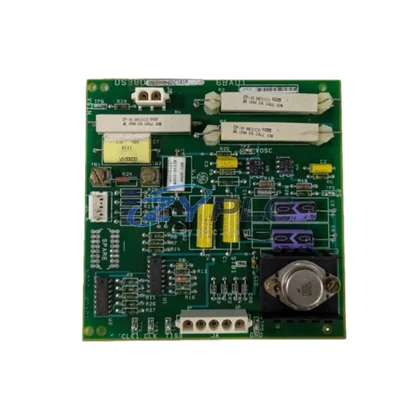
The GE MAO10 369B1842G5001 is a high-performance Analog Output Module engineered for GE’s Mark VI turbine control platform — one of the most widely deployed distributed control architectures in power generation, oil & gas, and heavy industrial environments. Designed to bridge the gap between digital control logic and physical field devices, the MAO10 module delivers precision analog signal conversion across the full data chain: from PLC command output through protocol translation, network transmission, real-time monitoring, alarm feedback, and remote diagnostics. In an era where smart factory connectivity defines operational efficiency, the MAO10 369B1842G5001 stands as a critical node in the industrial data flow architecture.
At its core, the MAO10 module accepts digital setpoint commands from the Mark VI controller core — typically issued via the GE IS215VCMIH2C VME Communication Interface or the IS200TREGH1B Turbine Regulation I/O board — and converts them into precise 4–20 mA or 0–10 V analog output signals. These signals drive downstream field actuators including control valves, variable frequency drives (VFDs), electro-hydraulic servo systems, and proportional solenoid valves. The module’s 12-bit resolution and ±0.1% full-scale accuracy ensure that even the most demanding closed-loop control applications — fuel flow regulation, inlet guide vane positioning, steam bypass control — maintain tight process stability.
Compatibility & Integration Notes
| Parameter |
Specification |
| Module SKU |
MAO10 / 369B1842G5001 |
| Brand / Platform |
GE / Mark VI Turbine Control System |
| Module Type |
Analog Output Module |
| Output Signal Protocol |
4–20 mA / 0–10 V DC Analog |
| Communication Interface |
Mark VI VME Backplane Bus |
| Network Compatibility |
GE Mark VI / Mark VIe DCS Architecture |
| Gateway Integration |
Compatible with Modbus RTU/TCP, PROFIBUS DP via protocol converters |
| SCADA / HMI Support |
GE iFIX, Cimplicity, Wonderware, Ignition SCADA |
| Output Channels |
Multi-channel analog output (per module configuration) |
| Resolution |
12-bit D/A conversion |
| Accuracy |
±0.1% Full Scale |
| Operating Temperature |
0°C to 60°C |
| System Application |
Power Generation, Oil & Gas, Petrochemical, Heavy Industry |
| Warranty |
Warranty and support terms confirmed before quote |
| Availability |
Confirmed via RFQ before quotation |
Connected Automation Data Flow
Understanding the MAO10 369B1842G5001’s role requires mapping the complete industrial data flow in which it operates. In a typical Mark VI-based turbine control system, the data journey begins at the sensor layer: thermocouples, RTDs, pressure transmitters, and vibration probes feed raw process signals into analog input modules such as the GE MAI10 (369B1841G001) — the input-side counterpart to the MAO10. These signals are digitized, conditioned, and passed over the VME backplane to the Mark VI controller core, where control algorithms execute in real time at scan rates of 10–100 ms.
Once the controller calculates the required output setpoint — for example, a fuel valve position command or a cooling fan speed reference — the digital value is written to the MAO10 369B1842G5001 via the backplane bus. The module performs D/A conversion and drives the corresponding field actuator with a calibrated 4–20 mA loop signal. For variable speed drive applications, the MAO10 output connects directly to the analog reference input of drives such as the GE AF-600 FP Series VFD, enabling smooth, closed-loop speed regulation without the latency introduced by serial communication protocols.
At the network layer, the Mark VI system communicates upstream to SCADA and HMI platforms via the GE IS215UCVEH2A UCV Ethernet Communication Board, which bridges the VME control network to plant-level Ethernet (IEEE 802.3). This allows real-time analog output values — including MAO10 channel setpoints and feedback status — to be visualized on GE Cimplicity HMI workstations or third-party SCADA platforms such as Ignition by Inductive Automation. For legacy integration scenarios where PROFIBUS DP or Modbus RTU is required, a protocol gateway such as the HMS Anybus X-Gateway AB7072 can be inserted between the Mark VI Ethernet port and the fieldbus segment, enabling seamless data exchange with older PLCs, remote I/O racks, or third-party DCS nodes.
Remote I/O expansion is another key dimension of the MAO10’s connectivity ecosystem. In distributed turbine installations — such as multi-unit power plants or offshore platforms — the Mark VI system may interface with remote terminal units (RTUs) or remote I/O modules like the GE RSTi-EP Series over EtherNet/IP or PROFINET, extending analog output capability to field junction boxes located hundreds of meters from the main control cabinet. The MAO10 module’s deterministic output timing ensures that even in these extended topologies, actuator response remains synchronized with the controller scan cycle.
For alarm management and remote diagnostics, the Mark VI platform leverages its built-in diagnostic registers to report MAO10 channel health — including open-loop detection, output saturation, and D/A conversion faults — directly to the SCADA alarm server. Maintenance engineers can access these diagnostics remotely via the GE Toolbox software over a secure VPN connection, enabling predictive maintenance workflows without requiring physical access to the control cabinet. This remote diagnostic capability is increasingly integrated with edge computing platforms such as the GE Predix Edge Gateway, which aggregates MAO10 output trends alongside vibration, temperature, and flow data for AI-driven anomaly detection and digital twin synchronization.
Solving Data Isolation in Industrial Sites
One of the most persistent challenges in legacy industrial facilities is protocol fragmentation — the coexistence of incompatible communication standards across different generations of equipment. A typical power plant may simultaneously operate GE Mark VI turbine controllers, Siemens S7-series PLCs on PROFIBUS DP, Allen-Bradley ControlLogix systems on EtherNet/IP, and legacy Modbus RTU field instruments. In this environment, the MAO10 369B1842G5001 plays a dual role: as a precision output device within the Mark VI domain, and as a protocol boundary point where analog signals cross into the physical world, bypassing the need for complex digital protocol translation at the actuator level.
Data silos — where process data is trapped within a single control system and invisible to plant-level MES or ERP platforms — are directly addressed by the Mark VI’s open Ethernet architecture. By exposing MAO10 output values through OPC-UA servers or REST API endpoints (via the Predix Edge layer), operators gain full production line transparency: every valve position, every drive speed reference, and every analog setpoint is available for real-time KPI dashboards, shift reports, and predictive maintenance models.
System scalability is another area where the MAO10 architecture excels. As production capacity expands, additional MAO10 modules can be inserted into existing Mark VI I/O racks without controller reconfiguration, provided rack slot capacity permits. For larger expansions requiring new I/O racks or remote cabinets, the Mark VI’s distributed I/O architecture — using fiber-optic IONet connections — allows analog output capacity to scale linearly while maintaining deterministic network performance. This modular scalability model significantly reduces the capital cost and engineering risk of plant expansion projects compared to proprietary, closed-architecture control systems.
Pre-shipment testing is a standard part of our supply process for the MAO10 369B1842G5001. Each module undergoes functional verification including channel-by-channel output accuracy testing, loop integrity checks, and backplane communication validation before dispatch. Modules are shipped with full test documentation, and our warranty and support terms confirmed before quote covers all manufacturing defects and functional failures under normal operating conditions. Global logistics via DHL Express and FedEx International Priority ensures delivery to power plants, refineries, and industrial facilities worldwide within 3–7 business days.
Industrial Connectivity FAQ
Q1: What communication protocols does the GE MAO10 369B1842G5001 support for SCADA integration?
The MAO10 module communicates natively over the GE Mark VI VME backplane bus. At the system level, the Mark VI platform supports Modbus TCP, OPC-DA/UA, and proprietary GE IONet protocols for SCADA connectivity. Integration with PROFIBUS DP or EtherNet/IP networks requires an external protocol gateway. The module’s analog output signals (4–20 mA / 0–10 V) are protocol-agnostic at the field device level, ensuring compatibility with any analog-input-capable actuator or drive.
Q2: How does the MAO10 perform in high-noise industrial environments, and what is the network stability guarantee?
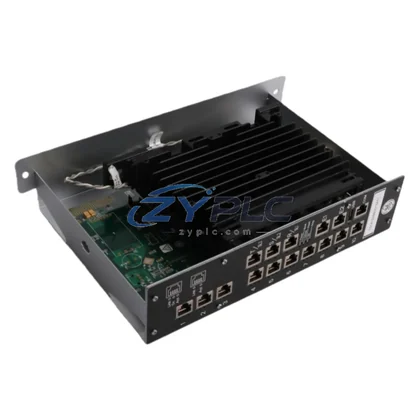
The MAO10 369B1842G5001 is designed to GE’s Mark VI environmental specifications, including EMC immunity per IEC 61000-4 series standards. The 4–20 mA current loop output is inherently noise-resistant over long cable runs (up to 500m with appropriate cable selection). The VME backplane communication is shielded and deterministic, with no packet collision risk. For network-level stability in Ethernet-connected Mark VI systems, we recommend managed industrial switches with QoS prioritization for IONet traffic.
Q3: Can the MAO10 369B1842G5001 be integrated into a Mark VIe system, and is it backward compatible?
The MAO10 is designed for the Mark VI platform. Compatibility with Mark VIe systems depends on the specific I/O rack and backplane configuration. In many Mark VI to Mark VIe migration projects, existing MAO10 modules are retained in legacy I/O racks interfaced via the Mark VIe VCMI communication module. We recommend consulting GE’s migration documentation or contacting our technical team for site-specific compatibility assessment before ordering.
Q4: What does the warranty and support terms confirmed before quote cover, and what is the return process?
Our warranty and support terms confirmed before quote covers all manufacturing defects, component failures, and functional non-conformance under normal operating conditions as specified in GE’s Mark VI installation guidelines. The warranty period begins from the date of shipment. In the event of a warranty claim, customers ship the module to our facility for inspection and repair or replacement at no charge. Expedited replacement units are available from stock to minimize control system downtime during the warranty process.