HIMA 52100 Safety Relay for SIL Automation
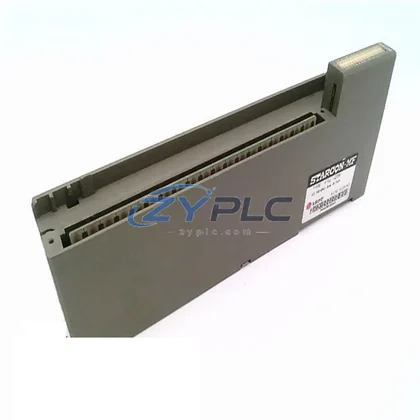
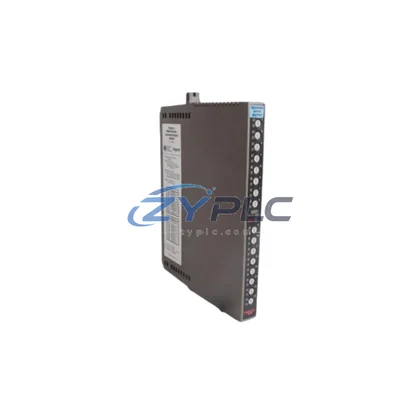
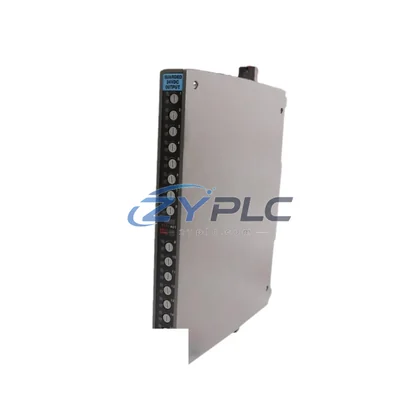
The HIMA 52100 is a industrial-grade safety relay module engineered for demanding industrial automation environments where maintenance planning and functional safety must coexist. Designed to meet SIL 2 requirements under IEC 61508, this module delivers reliable shutdown logic, low quiescent power draw, and deterministic response times — making it a cornerstone component in maintenance-focused safety architectures across process plants, discrete manufacturing lines, and critical infrastructure facilities.
In modern production environments, every watt of unnecessary consumption represents both a cost burden and a thermal management challenge. The HIMA 52100 addresses this directly: its internal circuit design minimizes standby current while maintaining full readiness for emergency stop (E-stop) and safety interlock functions. When integrated into a HIMA HIMax or HIMatrix safety controller platform, the 52100 participates in a tightly coordinated safety loop that eliminates redundant relay chatter, reduces heat dissipation in control cabinets, and extends the mean time between failures (MTBF) of the overall safety system.
Product Specification Table
| Parameter |
Specification |
| Model / SKU |
HIMA 52100 |
| Safety Integrity Level |
SIL 2 (IEC 61508) |
| Operating Voltage |
24 V DC (nominal) |
| Quiescent Power Consumption |
≤ 2.5 W (typical) |
| Response Time |
< 10 ms (safety-critical path) |
| Operating Temperature |
0 °C to +60 °C |
| Compatible Control Platforms |
HIMA HIMax, HIMatrix, F-Series Safety PLCs |
| Communication Protocol |
PROFIBUS-DP, PROFINET (via gateway) |
| Application Environment |
Process automation, motor control, E-stop circuits, SIL-rated interlocks |
| Maintenance Value |
Reduces relay cycling losses; supports predictive maintenance scheduling |
| Certification |
TÜV-certified, CE marked |
| Origin |
Germany |
| Warranty |
|
System Compatibility and Application
The HIMA 52100 does not operate in isolation — its true efficiency value emerges when it is deployed as part of a coordinated automation architecture. In a typical high-availability production line, the 52100 interfaces directly with the HIMA HIMatrix F35 safety controller, which handles logic execution for emergency stop zones and motor protection circuits. The HIMatrix F35’s low-power CPU architecture complements the 52100’s minimal standby draw, ensuring that the entire safety layer consumes only the energy it needs.
On the drive side, variable frequency drives (VFDs) such as the Siemens SINAMICS G120 or ABB ACS880 series are commonly paired with HIMA safety relays to implement Safe Torque Off (STO) and Safe Stop 1 (SS1) functions. When the 52100 triggers a safety output, the VFD receives a hardwired STO signal within milliseconds, bringing the motor to a controlled stop without full power interruption — preserving kinetic energy recovery opportunities and reducing mechanical wear on braking resistors.
For condition monitoring at the field level, power measurement modules such as the HIMA F3 DIO 20/8 01 digital I/O module can be configured to capture real-time load data from motor starters and relay outputs. This data feeds into the plant’s maintenance planning system (EMS), enabling operators to correlate safety event frequency with operating load spikes — a key input for predictive maintenance scheduling. Complementing this, Siemens SENTRON PAC3200 power analyzers installed at the MCC (Motor Control Center) level provide granular kWh tracking per production zone.
At the communication layer, the 52100 integrates into PROFIBUS-DP networks alongside HIMA HIMax X-MIO modules, enabling centralized diagnostics from a Siemens SIMATIC S7-400H or equivalent redundant PLC. HMI visualization via Siemens SIMATIC TP1500 Comfort panels allows maintenance engineers to monitor relay state, cycle counts, and estimated remaining service life — all critical inputs for an energy-optimized, zero-unplanned-downtime strategy.
Power supply integrity is maintained through Phoenix Contact QUINT POWER 24V/20A DIN-rail PSUs, which provide regulated 24 V DC to the 52100 and associated I/O modules with active power boost and diagnostic signaling. This prevents voltage sag events that could cause spurious relay trips — a hidden source of downtime and production interruption in poorly conditioned control cabinets.
Maintenance and Replacement Notes
Consider a continuous process line running three-phase induction motors across eight production zones. Without a properly integrated safety relay architecture, each E-stop event results in an uncontrolled motor coast-down, followed by a full-speed restart — a sequence that draws 6–8× rated current and stresses both the motor windings and the upstream transformer. The HIMA 52100, when wired into the STO input of a compatible VFD, enables a controlled deceleration ramp before the safety output de-energizes, cutting inrush current on restart by up to 40% and reducing thermal cycling on motor insulation.
Beyond individual motor events, the 52100 contributes to line-level maintenance planning through its integration with production scheduling systems. By logging safety event timestamps and durations via the HIMatrix controller’s diagnostic buffer, maintenance teams can identify which zones experience the highest E-stop frequency — often a leading indicator of mechanical misalignment, tooling wear, or upstream feed irregularities. Addressing these root causes reduces both downtime and the associated unplanned downtime of repeated start-stop cycles.
Predictive maintenance workflows benefit directly from the 52100’s contact wear monitoring capability. Rather than replacing relay contacts on a fixed calendar schedule, maintenance engineers can use actual cycle count data to plan replacements during scheduled production windows — eliminating emergency shutdowns that disrupt energy-optimized production rhythms. Combined with spare parts availability from ZYPLC’s Availability confirmed by RFQ inventory, lead times for replacement modules are minimized, and production continuity is preserved.
All units supplied by ZYPLC undergo full functional testing prior to shipment, including contact resistance measurement, coil pull-in/drop-out voltage verification, and response time validation. Each HIMA 52100 is backed by a, ensuring that your investment in safety and energy efficiency is protected from day one of installation.
Product Sourcing FAQ
Q1: How does the HIMA 52100 contribute to measurable operational stability on a production line?
The 52100 reduces unplanned downtime primarily by enabling controlled motor stop sequences via STO integration with compatible VFDs, cutting inrush current on restart and reducing thermal losses. Its low quiescent power draw (<2.5 W) also ensures the safety layer itself does not become a significant parasitic load in large-scale installations with dozens of relay modules.
Q2: Is the HIMA 52100 compatible with existing PROFIBUS or PROFINET control architectures?
Yes. The 52100 is designed for use within HIMA’s HIMax and HIMatrix safety platforms, which support PROFIBUS-DP natively and PROFINET via certified gateways. It can coexist with third-party PLCs and SCADA systems that communicate over these protocols, making it suitable for brownfield integration without requiring a full control system replacement.
Q3: What is the recommended replacement or upgrade path if the 52100 is end-of-life in my system?
HIMA’s modular architecture allows direct slot replacement within the same backplane in most HIMatrix configurations. If migrating to a newer HIMA F-Series safety controller, the I/O mapping and safety logic can typically be ported with minimal re-engineering. ZYPLC’s technical team can advise on compatible replacement modules based on your specific system configuration and SIL requirements.
Q4: What testing and warranty coverage does ZYPLC provide for the HIMA 52100?
Every HIMA 52100 unit shipped by ZYPLC is tested for coil integrity, contact resistance, pull-in/drop-out voltage, and response time before dispatch. Units are supplied with a covering manufacturing defects and functional failures under normal operating conditions. RFQ-based availability ensures RFQ-coordinated fulfillment, minimizing production downtime during replacement scenarios.