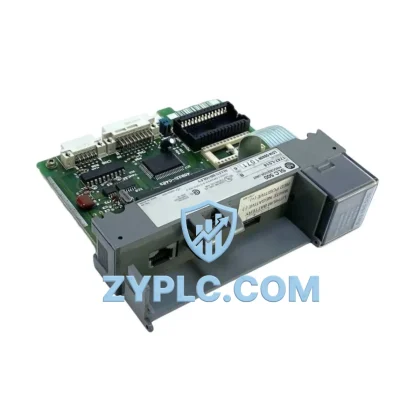
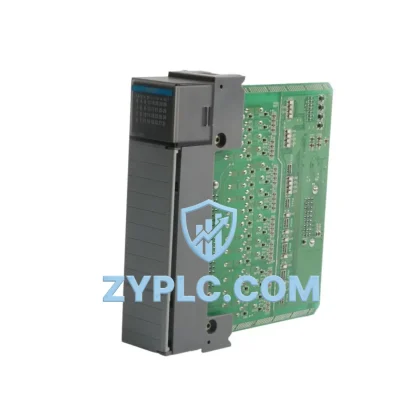
Hitachi LYA210A Energy-Saving PLC Output Module HIDIC H: Precision Output Control for Energy-Optimized Automation
The Hitachi LYA210A is a high-performance transistor output module designed for the HIDIC H-Series programmable logic controller platform. In modern industrial environments where energy accountability is no longer optional, the LYA210A delivers the output switching precision and load management capability that production engineers rely on to reduce unnecessary power draw, tighten cycle times, and extend the operational lifespan of connected actuators and drives. Whether deployed in discrete manufacturing, process control, or mixed-signal automation architectures, this module provides the reliable digital output foundation that energy-aware control systems demand.
At ZYPLC, every Hitachi LYA210A unit is sourced from verified supply channels, subjected to pre-shipment functional testing, and backed by a 12-month warranty — giving procurement and maintenance teams the confidence to plan replacements and expansions without operational risk.
Efficiency Performance Table
| Parameter |
Specification |
| Model / SKU |
Hitachi LYA210A |
| Module Type |
Transistor Output Module (Sink Type) |
| Compatible Platform |
Hitachi HIDIC H-Series PLC |
| Output Points |
16 Points |
| Output Voltage Range |
12–24 VDC |
| Max Load Current per Point |
0.5 A |
| Response Time (OFF→ON) |
≤ 1 ms |
| Power Consumption |
Low-dissipation transistor switching; no mechanical wear |
| Operating Temperature |
0°C to 55°C |
| Application Environment |
Industrial automation, motor control panels, conveyor systems, energy management cabinets |
| Energy Efficiency Value |
Eliminates relay coil losses; supports high-frequency switching without energy penalty |
| Origin |
Japan |
| Warranty |
12-Month Warranty (ZYPLC) |
| Availability |
In Stock — Pre-shipment tested |
Energy-Aware Automation Architecture
The LYA210A does not operate in isolation — its value is fully realized when integrated into a coherent, energy-aware control architecture. In a typical HIDIC H-Series installation, the Hitachi H-4PU CPU module serves as the central processing unit, executing ladder logic that governs when and how the LYA210A activates downstream loads. By programming precise ON/OFF timing sequences, engineers can eliminate the idle-state energy consumption that plagues systems relying on older relay-based output modules.
On the drive side, the LYA210A output signals are frequently used to command Hitachi SJ700 series inverters — variable frequency drives that regulate motor speed in response to real-time production demand. When the LYA210A issues a run/stop command to the SJ700, the drive adjusts motor frequency accordingly, preventing the full-voltage starts that spike energy consumption and accelerate motor winding degradation. This combination alone can reduce motor-related energy waste by 20–40% in variable-load applications such as conveyor systems, fans, and pumps.
For servo-driven axes — common in pick-and-place, packaging, and precision assembly lines — the LYA210A interfaces with Hitachi servo amplifier units to deliver enable and inhibit signals that prevent servo motors from drawing holding current during idle production windows. Paired with the Hitachi EH-150 series I/O expansion modules, the control system can scale output capacity across multi-zone production cells without introducing additional CPU overhead or communication latency.
Energy monitoring is equally critical. When the LYA210A is deployed alongside Hitachi WP-C series power monitoring units or compatible third-party power meters connected via the HIDIC H-Series communication bus, plant engineers gain real-time visibility into load-side power consumption at the output channel level. This granularity enables targeted energy audits — identifying which actuators, solenoids, or motor starters are consuming disproportionate power relative to their production contribution.
Communication integration is handled through the HIDIC H-Series’ native support for Modbus RTU and optional PROFIBUS-DP interface modules, allowing the LYA210A’s output states to be reflected in SCADA dashboards and MES platforms. When combined with an Hitachi HMI panel (DOP series), operators can monitor output channel status, acknowledge fault conditions, and adjust production parameters without interrupting the control cycle — reducing the manual intervention time that contributes to unplanned energy waste during line restarts.
For power supply integrity, the LYA210A relies on stable 24 VDC rail voltage typically provided by Hitachi or compatible DIN-rail power supply units rated for industrial environments. Voltage fluctuations at the supply rail directly affect output switching accuracy; a regulated, low-ripple supply ensures that the LYA210A’s transistor outputs switch cleanly, avoiding the partial-conduction states that generate heat and reduce efficiency in the output stage.
Power Optimization in Real Production Lines
In automotive sub-assembly lines, the LYA210A is commonly used to control pneumatic valve solenoids that actuate clamping fixtures. Traditional relay output modules introduce coil resistance losses and contact bounce that degrade switching accuracy over time. The LYA210A’s solid-state transistor outputs eliminate both failure modes — reducing maintenance callouts and ensuring that solenoid actuation timing remains consistent across thousands of daily cycles. Consistent actuation timing directly translates to tighter production cycle times and reduced compressed-air waste, since solenoids are not held energized longer than necessary.
In food and beverage processing, where conveyor speed must be dynamically adjusted to match upstream filling or labeling rates, the LYA210A provides the output switching speed needed to command VFD run/stop and speed-reference signals without introducing control lag. Eliminating lag in speed-reference signaling prevents the motor overshoot conditions that force operators to run conveyors at conservative speeds — recovering throughput capacity without increasing installed motor power.
Predictive maintenance programs benefit directly from the LYA210A’s output cycle count data, accessible through the HIDIC H-Series CPU’s internal registers. Maintenance teams can track cumulative switching events per output channel and correlate them with connected actuator service intervals — scheduling replacements before failure rather than reacting to unplanned downtime. Each avoided unplanned stop eliminates the energy cost of a cold restart: re-heating process equipment, re-pressurizing pneumatic systems, and re-synchronizing drive axes all consume significantly more energy than maintaining a controlled, scheduled production pause.
ZYPLC maintains ready inventory of the Hitachi LYA210A to support both planned maintenance schedules and emergency replacement scenarios. All units are functionally tested prior to shipment, with test records available on request. The 12-month warranty covers manufacturing defects and ensures that your production investment is protected from day one of installation.
Energy Optimization FAQ
Q1: How does the Hitachi LYA210A contribute to measurable energy savings compared to relay output modules?
The LYA210A uses transistor switching instead of electromechanical relays, eliminating coil power draw (typically 1–3 W per relay) and contact resistance losses. In a 16-point output module operating at high duty cycles, this difference accumulates meaningfully over a production shift. Additionally, the faster switching response (≤1 ms vs. 10–20 ms for relays) allows tighter control of actuator energization time, reducing unnecessary hold-on periods.
Q2: Is the LYA210A compatible with my existing HIDIC H-Series rack and CPU configuration?
Yes. The LYA210A is designed as a native I/O module for the Hitachi HIDIC H-Series platform and slots directly into standard H-Series base units. It is recognized automatically by the H-4PU and compatible CPU modules without requiring additional configuration files. If you are expanding an existing rack, verify available slot count and total I/O point budget against your CPU’s supported maximum.
Q3: What is the recommended replacement and testing procedure when substituting an LYA210A in a live production environment?
Before replacement, back up the current PLC program from the CPU module. Power down the affected rack section, swap the LYA210A module, and restore power. Use the HIDIC H-Series programming software to perform an I/O force test on each output channel before returning the line to automatic mode. ZYPLC’s pre-shipment tested units reduce the risk of DOA replacements, and the 12-month warranty covers any module-level defects discovered during commissioning.
Q4: Does ZYPLC offer expedited shipping for the LYA210A, and what does the 12-month warranty cover?
Yes, expedited shipping options are available for in-stock units. The 12-month warranty covers manufacturing defects and functional failures under normal operating conditions as specified in the Hitachi HIDIC H-Series documentation. It does not cover damage resulting from incorrect installation, overvoltage conditions, or operation outside the rated temperature range. Contact ZYPLC’s technical team for warranty claims or pre-purchase compatibility verification.
© 2026 ZYPLC. All rights reserved.
Original Source: https://zyplc.com
Contact: +86 19859288691 | plc.sales@zyplc.com