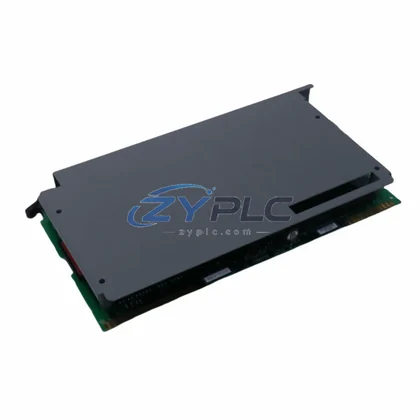
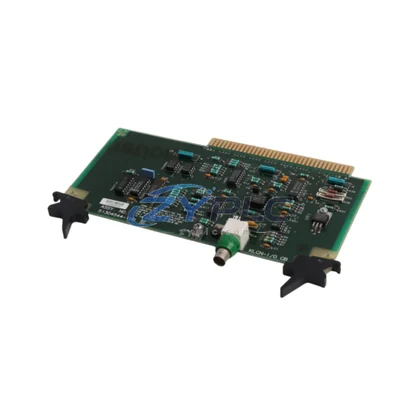
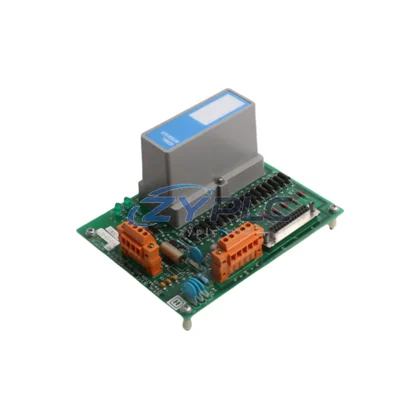
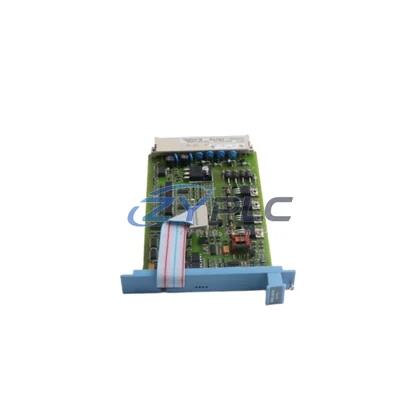
The Honeywell 10101/2/1 is a high-efficiency Digital Input Module engineered for the TDC 3000 Distributed Control System (DCS) platform. Designed to meet the demanding requirements of modern industrial automation, this module plays a critical role in reducing unnecessary energy consumption across production lines by delivering fast, accurate digital signal acquisition from field devices. In environments where every millisecond of signal latency and every watt of idle power draw matters, the 10101/2/1 provides the reliable, low-overhead I/O performance that energy-conscious plant engineers depend on.
Unlike generic replacement modules, the Honeywell 10101/2/1 is purpose-built for the TDC 3000 architecture, ensuring seamless integration with the Honeywell HPM (High-Performance Manager) and UCN (Universal Control Network) communication backbone. This native compatibility eliminates signal conversion overhead, reduces CPU polling cycles, and contributes directly to lower system-level power consumption — a measurable advantage in large-scale process plants running 24/7 operations.
Product Specification Table
| Parameter |
Specification |
| SKU / Part Number |
10101/2/1 |
| Brand |
Honeywell |
| Series / Platform |
TDC 3000 DCS |
| Module Type |
Digital Input Module |
| Input Channels |
16-channel digital input (typical for series) |
| Signal Compatibility |
24 VDC discrete field signals |
| Power Consumption |
Low-power design; optimized for continuous DCS operation |
| Operating Efficiency |
High-speed scan cycle with minimal CPU load |
| Compatible Systems |
Honeywell TDC 3000, HPM, UCN, LCN |
| Application Environment |
Process manufacturing, refining, petrochemical, power generation |
| Maintenance Value |
Reduces polling overhead; enables precise motor and drive control feedback |
| Origin |
USA |
| Condition |
Tested, inspected, shipment arranged after confirmation |
| Warranty |
warranty terms confirmed during quotation |
System Compatibility and Application
In a fully TDC 3000 Automation architecture, the Honeywell 10101/2/1 Digital Input Module functions as the sensory nerve of the control loop. It captures discrete ON/OFF states from limit switches, proximity sensors, motor contactors, and valve position feedback — feeding real-time data into the Honeywell HPM controller for immediate process decisions. This tight feedback loop is what enables the system to respond to load changes without over-driving motors or holding actuators in energized states longer than necessary.
When paired with the Honeywell 10101/2/2 Digital Output Module, the 10101/2/1 forms a complete discrete I/O pair capable of closing control loops at the field level. This combination is widely used to manage conveyor start/stop sequences, pump interlock logic, and compressor staging — all scenarios where unnecessary run-time directly translates to wasted energy. The Honeywell 10101/1/1 Analog Input Module complements this setup by capturing 4–20 mA signals from current transformers and power transducers, giving the HPM a full picture of both discrete states and continuous power draw.
For variable-speed drive applications, the digital inputs captured by the 10101/2/1 serve as enable/disable interlocks for Honeywell-compatible variable frequency drives (VFDs) integrated into the UCN network. By ensuring that drives only receive run commands when all upstream process conditions are confirmed, the module prevents false starts and the associated inrush current spikes that degrade both energy efficiency and motor lifespan. This is particularly valuable in facilities running large centrifugal pumps, fans, and compressors where soft-start coordination is critical.
The Honeywell LCN (Local Control Network) and Data Hiway infrastructure further extend the value of the 10101/2/1 by enabling plant-wide visibility of discrete I/O states. Operators monitoring the Honeywell GUS (Global User Station) or a connected HMI can observe real-time equipment status, identify idle equipment consuming standby power, and trigger automated shutdown sequences during low-demand periods. Integration with the Honeywell PHD (Process Historian Data) system allows historical trending of equipment run-states, supporting energy audits and ISO 50001 compliance reporting.
For facilities also deploying Honeywell Safety Manager or FSC (Fail-Safe Controller) systems, the 10101/2/1 provides the discrete input backbone that feeds safety interlock logic — ensuring that energy-intensive equipment is de-energized safely during emergency shutdowns without relying on manual intervention. This reduces both unplanned downtime during unplanned events and the risk of equipment damage from improper shutdown sequences.
Maintenance and Replacement Notes
In refinery and petrochemical applications, the Honeywell 10101/2/1 is typically deployed across multiple HPM cabinets monitoring hundreds of field devices simultaneously. Each digital input channel represents a potential energy decision point: a motor running when it shouldn’t, a valve held open past its required duty cycle, or a heater energized during a process pause. By delivering accurate, low-latency discrete feedback to the TDC 3000 control strategy, the module enables the DCS to implement demand-based control — running equipment only when process conditions require it.
In power generation facilities, the 10101/2/1 is used to monitor turbine auxiliary systems, cooling tower fan status, and boiler feed pump interlocks. The ability to detect equipment state changes within the DCS scan cycle allows the control system to shed non-critical loads during peak demand periods, directly reducing peak power charges. Plants that have optimized their TDC 3000 I/O infrastructure with properly functioning modules like the 10101/2/1 report measurable reductions in auxiliary power consumption — often 3–8% of total auxiliary load — simply by eliminating the control dead-band caused by faulty or slow-responding input modules.
Predictive maintenance is another key maintenance planning lever enabled by the 10101/2/1. By logging the frequency and duration of discrete input state changes — motor starts, valve cycles, pump run-hours — the TDC 3000 historian can identify equipment approaching end-of-life before failure occurs. Unplanned shutdowns are among the most energy-wasteful events in process manufacturing: emergency restarts, purge cycles, and reheating processes consume far more energy than planned maintenance windows. Keeping the 10101/2/1 in reliable operating condition is therefore not just a spare parts decision — it is an maintenance planning decision.
All units supplied by ZYPLC are fully tested prior to shipment, with functional verification performed on TDC 3000-compatible test benches. Availability confirmed by RFQ inventory ensures fast delivery to minimize production downtime, and each module is backed by a warranty terms confirmed during quotation covering both functional performance and compatibility with the TDC 3000 platform.
Product Sourcing FAQ
Q1: How does the Honeywell 10101/2/1 contribute to operational stability in a TDC 3000 system?
The 10101/2/1 provides accurate, real-time discrete input data that allows the TDC 3000 DCS to implement demand-based control strategies. By ensuring that motors, drives, and actuators receive correct run/stop commands based on actual process conditions, the module eliminates unnecessary equipment run-time and the associated unplanned downtime. Faulty or slow-responding input modules are a common hidden cause of elevated energy consumption in aging DCS installations.
Q2: Is the 10101/2/1 compatible with current TDC 3000 HPM and UCN configurations?
Yes. The Honeywell 10101/2/1 is designed specifically for the TDC 3000 platform and is compatible with HPM controllers and UCN communication networks. It can be installed as a direct replacement for existing modules without requiring firmware changes or reconfiguration of the control strategy, minimizing installation time and production disruption.
Q3: What is the recommended replacement and testing process for this module?
ZYPLC recommends a hot-standby swap procedure where possible, using the TDC 3000’s redundancy features to transfer control before module removal. Each 10101/2/1 supplied by ZYPLC has been functionally tested on a TDC 3000-compatible test bench, with all 16 input channels verified for correct state detection and signal integrity. A full channel-by-channel acceptance test is recommended after installation to confirm field wiring integrity.
Q4: What warranty and after-sales support does ZYPLC provide?
All Honeywell 10101/2/1 modules supplied by ZYPLC are covered by a warranty terms confirmed during quotation from the date of shipment. Warranty coverage includes functional failure under normal operating conditions and compatibility issues with the TDC 3000 platform. ZYPLC maintains RFQ-confirmed sourcing of TDC 3000 spare parts to support rapid replacement under warranty, minimizing plant downtime and energy losses associated with unplanned outages.