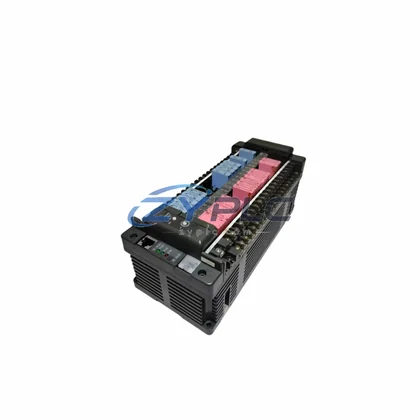
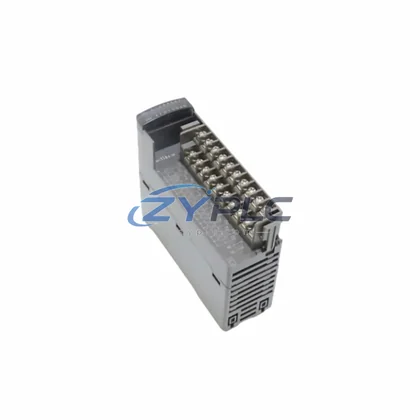
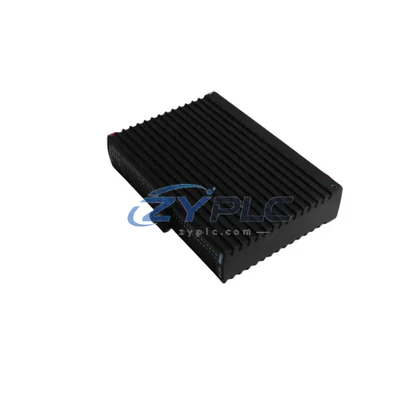
The ProSoft 3100-MDA4 is a 4-channel analog input module engineered for seamless integration within the ProSoft 3100 Series modular control platform. Rather than functioning as a standalone acquisition device, the 3100-MDA4 is designed from the ground up to operate as a precision signal-conditioning layer within a fully coordinated industrial control system architecture. Its role spans the boundary between field instrumentation and the control layer, translating real-world process variables — pressure, temperature, flow, and level — into structured digital data that the system CPU can act upon with deterministic accuracy. In distributed manufacturing, power generation, petrochemical processing, and water treatment environments, the quality of analog signal acquisition directly determines the reliability of closed-loop control. The 3100-MDA4 addresses this requirement by providing stable, low-noise analog conversion with the electrical isolation and resolution necessary for demanding process environments.
Within a complete 3100 Series control cabinet, the 3100-MDA4 occupies a defined slot on the 3100 Series backplane, sharing a high-speed internal bus with the system CPU module and peer I/O modules. This backplane architecture eliminates the latency and wiring complexity associated with remote I/O drops for analog signals that require tight scan-cycle synchronization. Engineers integrating the 3100-MDA4 into a new or retrofit control system benefit from a consistent module form factor, unified configuration toolset, and a common power distribution scheme shared across the 3100 Series rack — reducing both commissioning time and long-term spare-parts inventory overhead.
Product Specification Table
| Parameter |
Specification |
| System Role |
Analog Input Signal Acquisition — Control Layer Interface |
| Compatible Platform |
ProSoft 3100 Series Modular Control System |
| Number of Channels |
4 Differential Analog Input Channels |
| Input Signal Range |
0–20 mA / 4–20 mA / 0–10 VDC / ±10 VDC (software-selectable per channel) |
| Resolution |
16-bit A/D Conversion |
| Electrical Isolation |
Channel-to-backplane isolation for noise immunity |
| Communication Interface |
3100 Series internal backplane bus |
| Power Supply |
Supplied via 3100 Series backplane (compatible with 3100-PWR power supply modules) |
| Installation Environment |
DIN rail / rack-mount within 3100 Series chassis; IP20 enclosure rating |
| Operating Temperature |
0°C to +60°C |
| Certifications |
CE, UL (subject to revision — verify current datasheet) |
| Warranty |
warranty terms confirmed during quotation — covers manufacturing defects and functional failure under normal operating conditions |
System Compatibility Notes
The 3100-MDA4 achieves its full value when deployed as part of a coherent 3100 Series system architecture rather than as an isolated module. A typical process control panel built around the ProSoft 3100 platform begins with the 3100-CPU processor module, which executes the control program and manages all I/O data exchange across the backplane. The CPU’s scan cycle directly governs how frequently the 3100-MDA4 updates its channel values, making CPU selection and scan-time configuration a critical upstream decision when analog loop performance is a priority.
Power integrity for the entire rack is maintained by the 3100-PWR power supply module, which distributes regulated DC power across the backplane to all installed modules including the 3100-MDA4. In applications requiring continuous operation — such as substation automation or chemical dosing control — a redundant power supply configuration using a secondary 3100-PWR unit with automatic switchover ensures that analog acquisition is never interrupted by a single power component failure.
On the output side, the 3100-MDA4 works in close coordination with the 3100-MDA2 analog output module, which closes the control loop by driving actuators, control valves, and variable-frequency drives based on the setpoints calculated from the analog input data. Together, these two modules form the analog I/O layer of the control architecture, with the CPU acting as the intermediary that applies PID algorithms, scaling functions, and alarm logic between acquisition and actuation.
For discrete signal handling within the same cabinet, the 3100-DI16 digital input module and 3100-DO16 digital output module complement the analog layer by managing on/off signals from limit switches, motor contactors, and solenoid valves. This mixed I/O architecture — combining the 3100-MDA4 with digital I/O modules on a shared backplane — is the standard approach for process control panels that must handle both continuous process variables and discrete machine states within a single control program.
Network connectivity and remote supervisory access are provided by the 3100-ENET Ethernet communication module, which enables the 3100 Series system to exchange data with SCADA platforms, historian servers, and MES systems using standard industrial Ethernet protocols. The analog data acquired by the 3100-MDA4 — including scaled engineering-unit values and channel diagnostic status — is made available to upstream systems through this communication gateway, supporting real-time process monitoring and long-term data trending without requiring additional hardware.
For installations where the 3100 Series rack must interface with legacy serial networks or third-party devices using Modbus RTU or DF1 protocols, the 3100-SER serial communication module provides the necessary protocol bridge. This is particularly relevant in retrofit projects where the 3100-MDA4 is being introduced into an existing control architecture that includes older PLCs, remote terminal units, or intelligent field devices with serial interfaces.
Human-machine interface requirements for systems incorporating the 3100-MDA4 are typically addressed by ProSoft-compatible HMI panels or third-party operator terminals connected via the Ethernet network. Analog channel values, alarm states, and trend data from the 3100-MDA4 are displayed in real time, giving operators immediate visibility into process conditions without requiring direct access to the control cabinet.
Industrial Application Notes
In manufacturing and packaging lines, the 3100-MDA4 is used to monitor tension, pressure, and temperature signals from process sensors, feeding this data to the 3100 CPU for real-time adjustment of drive speeds and valve positions. The module’s 16-bit resolution ensures that fine process variations are captured accurately, preventing product quality deviations caused by undetected signal drift.
In power generation and substation automation, the 3100-MDA4 acquires current transformer and voltage transducer signals for load monitoring and protection relay coordination. Its electrical isolation characteristics are essential in high-voltage environments where ground loops and common-mode noise would otherwise corrupt analog measurements and trigger false alarms.
In water and wastewater treatment, the module interfaces with flow meters, pH sensors, dissolved oxygen probes, and level transmitters across multiple treatment stages. The 4-channel configuration allows a single 3100-MDA4 to cover a complete treatment zone — for example, monitoring influent flow, effluent turbidity, chemical dosing rate, and tank level simultaneously — reducing the number of modules required and simplifying cabinet layout.
In petrochemical and oil & gas processing, the 3100-MDA4 supports continuous monitoring of pressure differential across heat exchangers, flow rates through pipeline segments, and temperature profiles in reactor vessels. The module’s compatibility with 4–20 mA HART-capable transmitters (where supported by the system configuration) enables additional diagnostic data to be extracted from smart field instruments without additional wiring infrastructure.
In mining and metallurgical applications, the 3100-MDA4 is deployed in conveyor tension monitoring, crusher load measurement, and flotation cell level control. The harsh electrical environment typical of mining operations — characterized by high-power motor drives, variable-frequency drives, and long cable runs — makes the module’s channel isolation and noise rejection capabilities particularly valuable for maintaining measurement accuracy.
Product Compatibility FAQ
Q1: Is the 3100-MDA4 compatible with existing 3100 Series racks, and can it be added to a running system without replacing the CPU or backplane?
The 3100-MDA4 is designed for direct installation into any available slot on a 3100 Series backplane. In most configurations, adding the module to an existing rack requires only a firmware-level configuration update in the CPU program to recognize the new I/O slot assignment. Physical installation is non-destructive to existing modules. However, it is recommended to perform module additions during a scheduled maintenance window rather than on a live running system, and to verify backplane power budget margins before installation to ensure the existing 3100-PWR supply can support the additional module load.
Q2: How does the 3100-MDA4 support long-term maintenance and spare-parts management in multi-site installations?
The 3100-MDA4’s standardized form factor and consistent firmware interface across the 3100 Series platform mean that a single spare module can serve as a replacement for any installed unit across multiple control panels using the same platform. Channel configuration is stored in the CPU program rather than in the module itself, so a replacement 3100-MDA4 is operational immediately upon installation without requiring module-level reconfiguration. ZYPLC supports RFQ sourcing for the 3100-MDA4 with a warranty terms confirmed during quotation on all supplied units, supporting both emergency replacement and planned maintenance programs for industrial operators.
Q3: What does the warranty terms confirmed during quotation cover, and what is the process for warranty claims on the 3100-MDA4?
The warranty terms confirmed during quotation provided by ZYPLC covers manufacturing defects and functional failures occurring under normal operating conditions within twelve months of the shipment date. This includes analog channel measurement failure, backplane communication faults, and power regulation issues attributable to the module itself. Warranty claims are initiated by contacting ZYPLC directly at plc.sales@zyplc.com or +86 19859288691 with the order reference and a description of the observed fault. ZYPLC will coordinate return, inspection, and replacement or repair in accordance with the warranty terms. Damage resulting from incorrect installation, overvoltage conditions, or unauthorized modification is excluded from warranty coverage.