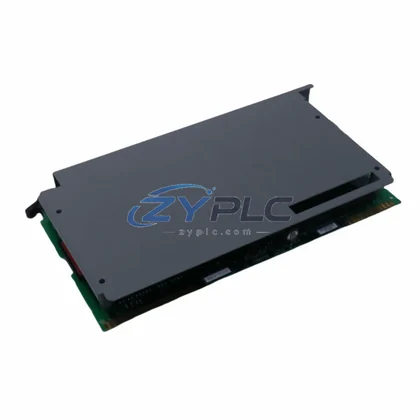
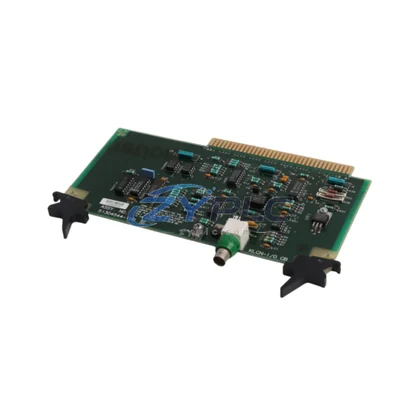
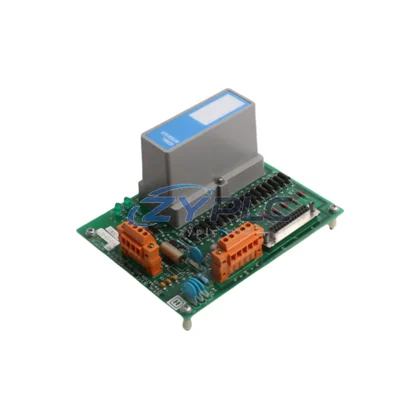
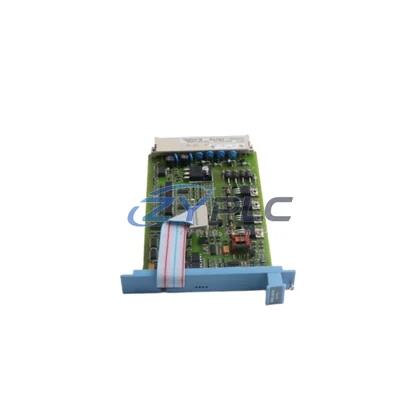
The Honeywell 10209/2/1 is a high-efficiency Digital Output Module engineered for the TDC 3000 Distributed Control System (DCS) platform. Designed for demanding industrial process environments — including petrochemical, refining, power generation, and continuous manufacturing — this module delivers reliable discrete output control that directly contributes to reduced unplanned downtime, improved equipment utilization, and lower total cost of ownership. With a proven track record in legacy and hybrid automation architectures, the 10209/2/1 remains a critical component for facilities seeking to extend the operational life of their TDC 3000 infrastructure while meeting modern energy efficiency targets.
In today’s industrial landscape, maintenance planning is no longer optional. Every unnecessary switching cycle, every uncontrolled actuator response, and every unmonitored output state translates into measurable energy loss and accelerated equipment wear. The Honeywell 10209/2/1 addresses these challenges by providing deterministic, high-speed digital output signals that enable precise control over field devices — from solenoid valves and motor starters to relay-driven actuators and safety interlocks — ensuring that energy is consumed only when and where it is needed.
Product Specification Table
| Parameter |
Specification / Value |
| SKU / Part Number |
10209/2/1 |
| Module Type |
Digital Output Module |
| Compatible Platform |
Honeywell TDC 3000 DCS |
| Output Channels |
16-point discrete output (typical for series) |
| Operating Voltage |
24 VDC nominal field power |
| Power Consumption |
Low-standby design; active only on commanded state change |
| Running Efficiency |
Deterministic output response; minimizes spurious switching losses |
| Compatible Systems |
TDC 3000 HPM, LCN, UCN, AM, PM subsystems |
| Application Environment |
Process automation, refining, power, chemical, utilities |
| Energy Saving Value |
Eliminates uncontrolled actuator cycling; reduces reactive energy demand |
| Condition |
Tested & verified; full functional inspection prior to shipment |
| Warranty |
warranty terms confirmed during quotation |
| Origin |
USA |
System Compatibility and Application
The Honeywell 10209/2/1 does not operate in isolation — its maintenance planning value is fully realized when integrated within a well-structured TDC 3000 automation architecture. At the controller level, the Honeywell TDC 3000 High-Performance Manager (HPM) coordinates process logic and issues output commands to the 10209/2/1 with millisecond-level precision, eliminating the unplanned downtime associated with delayed or redundant switching events. Paired with the Honeywell PM (Process Manager) or AM (Application Module), the system can execute advanced maintenance-focused control strategies such as load shedding, demand response, and optimized start/stop sequencing for motor-driven equipment.
On the drive side, facilities running Honeywell variable frequency drives (VFDs) or compatible third-party drives — such as those integrated via the Honeywell UCN (Universal Control Network) — benefit directly from the 10209/2/1’s clean digital output signals. These signals trigger drive enable/disable commands, speed reference switching, and fault reset sequences without introducing signal noise or timing jitter that could cause unnecessary motor re-acceleration events, which are among the highest energy-consumption moments in a production cycle.
For power monitoring and energy data acquisition, the 10209/2/1 works alongside Honeywell Digital Input Modules (such as the 10209/1/1 series) and Analog Input Modules to form a closed-loop energy feedback architecture. Current transformers and power transducers feed real-time consumption data back through the analog input layer, while the digital output module executes corrective switching actions — turning off non-essential loads during peak demand windows, for example — based on logic executed in the HPM or AM.
Communication integrity is maintained through the Honeywell LCN (Local Control Network), which connects the 10209/2/1’s host controller to operator workstations running Honeywell GUS (Global User Station) or compatible HMI platforms. Operators can monitor output states, review switching histories, and configure operational-efficiency interlocks in real time, enabling proactive maintenance planning rather than reactive fault response. Integration with Honeywell’s Plant Information Network (PIN) further allows energy KPIs to be trended, reported, and benchmarked against production targets.
For facilities managing mixed-generation control infrastructure, the 10209/2/1 also supports coexistence with Honeywell Safety Manager systems and Fail-Safe Output Modules, ensuring that maintenance planning strategies do not compromise process safety integrity. The module’s deterministic output behavior is fully compatible with SIL-rated interlock architectures, making it suitable for deployment in safety-instrumented loops where controlled de-energization is a key energy and safety objective.
Maintenance and Replacement Notes
In a typical continuous process plant — a refinery, a chemical reactor train, or a utility boiler island — the Honeywell 10209/2/1 contributes to maintenance planning across multiple operational dimensions. First, by providing reliable, noise-immune digital output signals to motor control centers (MCCs), the module ensures that pump motors, compressor auxiliaries, and conveyor drives are started and stopped only on valid process commands, eliminating the energy penalty of nuisance trips and unplanned restarts.
Second, the module’s integration with the TDC 3000 HPM enables implementation of production line pacing (takt time optimization) strategies. By coordinating the sequential activation of downstream equipment — rather than running all assets simultaneously at full load — the control system can flatten the facility’s energy demand curve, reducing peak kW draw and associated demand charges. This is particularly impactful in batch processing environments where equipment utilization rates are highly variable.
Third, predictive maintenance workflows benefit from the 10209/2/1’s output state logging capabilities. By correlating output switching frequency with equipment runtime data available through the TDC 3000 historian, maintenance teams can identify actuators and drives that are being cycled excessively — a leading indicator of mechanical wear and energy inefficiency. Early intervention reduces both unplanned downtime and the unplanned downtime associated with degraded equipment operating outside its efficiency curve.
Finally, for facilities managing inventory of spare control system components, the 10209/2/1 is available from stock with pre-shipment functional testing completed. Each unit undergoes output channel verification, isolation resistance testing, and communication handshake validation before dispatch, ensuring that replacement modules restore full energy-optimized control capability without extended commissioning delays. Combined with a warranty terms confirmed during quotation, this makes the 10209/2/1 a low-risk, high-value choice for both planned upgrades and emergency replacements.
Product Sourcing FAQ
Q1: How does the Honeywell 10209/2/1 contribute to measurable operational stability on the production floor?
The 10209/2/1 enables deterministic, command-driven switching of field devices, eliminating spurious actuator cycling and uncontrolled motor starts that are primary sources of reactive energy demand. When integrated with TDC 3000 HPM-based load management logic, facilities typically achieve measurable reductions in peak demand draw by sequencing equipment activation rather than simultaneous startup.
Q2: Is the 10209/2/1 compatible with current TDC 3000 system configurations, and can it coexist with newer Honeywell platforms?
Yes. The 10209/2/1 is fully compatible with TDC 3000 HPM, PM, and AM subsystems operating on the LCN and UCN networks. It can coexist with Honeywell Experion PKS migration overlays in hybrid architectures, allowing facilities to modernize incrementally without replacing the entire control infrastructure — preserving capital while improving maintenance planning capabilities.
Q3: What is the recommended replacement and testing process when substituting a failed digital output module?
Each 10209/2/1 supplied by ZYPLC is pre-tested prior to shipment, including output channel functional verification and isolation testing. Upon installation, the TDC 3000 system’s built-in module diagnostics will confirm communication handshake and output integrity. No special tools are required beyond standard TDC 3000 commissioning procedures. Replacement typically restores full output control capability within one maintenance window.
Q4: What warranty coverage is provided, and what does it include?
All Honeywell 10209/2/1 modules supplied by ZYPLC are covered by a warranty terms confirmed during quotation from the date of shipment. The warranty covers functional defects identified under normal operating conditions consistent with TDC 3000 system specifications. Our technical team provides pre-sales compatibility consultation and post-sales support to ensure the module performs as expected within your specific automation architecture.