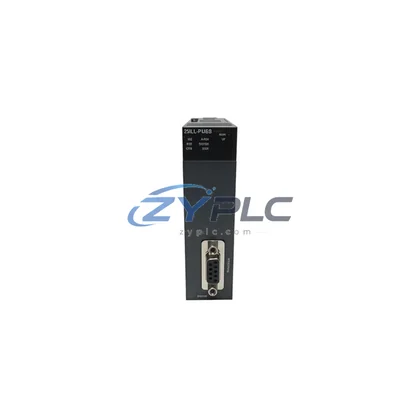
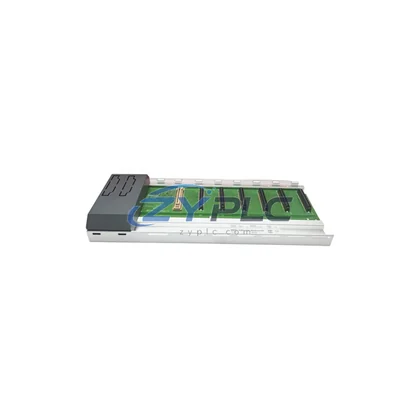
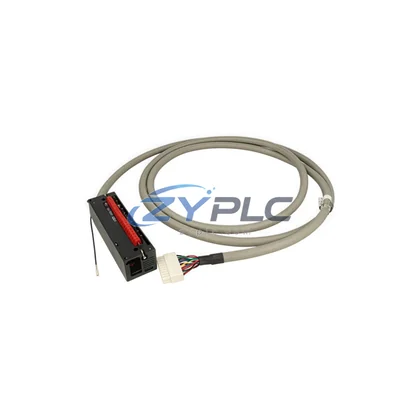
Honeywell 2MLC-E102 Extension Cable: Precision Signal Control for 2MLC Automation
The Honeywell 2MLC-E102 is an industrial-grade extension cable engineered for the Honeywell TDC 3000 Distributed Control System (DCS) within the 2MLC series architecture. In modern process manufacturing environments — from petrochemical refineries to power generation facilities — signal integrity between controllers and field devices is a direct determinant of energy efficiency. A degraded or mismatched cable introduces resistive losses, communication retries, and controller polling overhead that collectively inflate operating load and reduce system throughput. The 2MLC-E102 eliminates these inefficiencies by providing a low-impedance, shielded signal path that maintains clean data transmission between the Honeywell 2MLF Local Control Network (LCN) nodes and associated I/O subsystems.
When integrated into a TDC 3000 architecture, the 2MLC-E102 works in close coordination with components such as the Honeywell 2MLC-E101 primary extension cable and the Honeywell 51304485-100 cable assembly to form a complete, low-loss interconnect backbone. Proper cabling reduces the frequency of communication errors that force the Honeywell HPM (High-Performance Process Manager) to re-execute control loops — a hidden but measurable source of CPU load and unplanned downtime in continuous process plants.
Product Specification Table
| Parameter |
Specification / Value |
| SKU |
2MLC-E102 |
| Series |
Honeywell 2MLC / TDC 3000 |
| Product Category |
Industrial DCS Extension Cable |
| Compatible System |
Honeywell TDC 3000 DCS, LCN, HPM |
| Application Environment |
Process Automation, Petrochemical, Power, Pulp & Paper |
| Signal Integrity |
Shielded, low-impedance construction minimizes signal loss |
| Maintenance Value |
Reduces controller retry cycles; lowers CPU polling overhead |
| Origin |
United States |
| Warranty |
warranty terms confirmed during quotation |
| Stock Status |
RFQ Available — Tested & shipment arranged after confirmation |
System Compatibility and Application
The 2MLC-E102 sits at the physical layer of a broader industrial control architecture. In a well-configured TDC 3000 plant, the cable connects the Honeywell 2MLC-E101 extension segment to downstream I/O racks, ensuring that field signals from transmitters, actuators, and sensors reach the Honeywell PM I/O (Process Manager Input/Output) modules without degradation. Clean signal delivery means the Honeywell Universal Control Network (UCN) operates at its designed polling rate without compensatory retries that consume additional processing cycles.
On the drive and motor control side, plants running Honeywell HC900 hybrid controllers or third-party variable frequency drives (VFDs) integrated via the LCN benefit from stable reference signals delivered through properly rated extension cables. A marginal cable that introduces noise into a speed reference signal can cause a VFD to hunt — oscillating around the setpoint — which directly increases motor load. The 2MLC-E102’s shielded construction prevents this class of interference.
For power monitoring integration, the cable supports reliable data paths between field-mounted Honeywell Experion PKS I/O cards and energy metering subsystems. When energy data from power meters flows cleanly into the DCS historian, operators can identify high-consumption equipment, schedule predictive maintenance, and implement demand-response strategies — all of which depend on the foundational signal quality that the 2MLC-E102 provides. Complementary components such as the Honeywell 51401642-150 cable and Honeywell 51304485-200 assembly are often deployed in parallel cable runs within the same control cabinet to maintain redundancy and signal continuity.
Maintenance and Replacement Notes
In continuous process industries, unplanned downtime caused by cable failures or signal degradation is among the most costly operational events. A single controller communication fault in a TDC 3000 system can trigger a process upset that requires hours of energy-intensive restart procedures — purging lines, re-establishing temperature profiles, and re-synchronizing drive systems. By using a tested, OEM-specification cable like the 2MLC-E102, maintenance teams eliminate a common root cause of these events.
From a production line rhythm (takt time) perspective, stable DCS communication directly supports consistent batch cycle times. When the Honeywell HPM receives clean I/O data without retransmission delays, control loop execution remains on schedule, and downstream equipment — including conveyors, pumps, compressors, and heat exchangers — operates at its designed duty cycle rather than in a degraded, energy-wasteful compensatory mode.
Predictive maintenance programs also benefit. Plants using Honeywell Experion PKS with asset monitoring modules rely on continuous, high-fidelity signal streams to detect early signs of motor bearing wear, pump cavitation, or heat exchanger fouling. The 2MLC-E102 ensures that these diagnostic signals are not corrupted in transit, enabling maintenance teams to act on accurate data rather than noise-induced false alarms — reducing both unnecessary maintenance energy expenditure and the risk of catastrophic failures.
All units supplied by ZYPLC are individually tested prior to shipment, verifying continuity, shielding integrity, and connector seating. This pre-shipment validation process ensures that the cable performs to specification from day one of installation, avoiding the energy and productivity losses associated with field commissioning failures.
Product Sourcing FAQ
Q1: How does the 2MLC-E102 contribute to operational stability in a TDC 3000 system?
By maintaining low-impedance, noise-free signal paths between LCN nodes and I/O modules, the 2MLC-E102 reduces communication retries and controller polling overhead. This keeps the HPM operating at its designed efficiency point, minimizing unnecessary CPU cycles and the associated power draw of the control system infrastructure.
Q2: Is the 2MLC-E102 compatible with current Honeywell Experion PKS environments?
The 2MLC-E102 is designed for the TDC 3000 / 2MLC series architecture. In hybrid environments where TDC 3000 hardware coexists with Experion PKS, the cable continues to serve its role within the legacy LCN segment. Compatibility with specific Experion migration configurations should be verified against the plant’s network topology documentation.
Q3: What is the recommended replacement interval, and how does timely replacement reduce unplanned downtime?
Honeywell recommends replacing DCS cables showing measurable impedance drift or shielding degradation. Degraded cables increase signal error rates, forcing controllers to increase retry frequency — a process that incrementally raises system operating load. Proactive replacement based on periodic cable testing is more energy-efficient than reactive replacement after a process upset.
Q4: What warranty and testing does ZYPLC provide with the 2MLC-E102?
Every 2MLC-E102 supplied by ZYPLC carries a warranty terms confirmed during quotation and undergoes pre-shipment functional testing covering continuity, shielding effectiveness, and connector integrity. This ensures the cable meets OEM performance specifications and supports reliable, energy-efficient operation from the moment of installation.