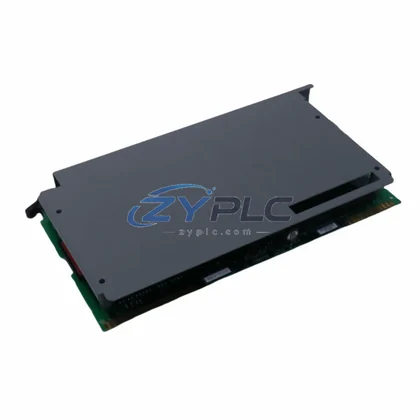
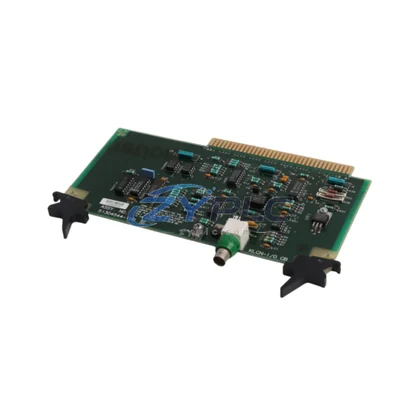
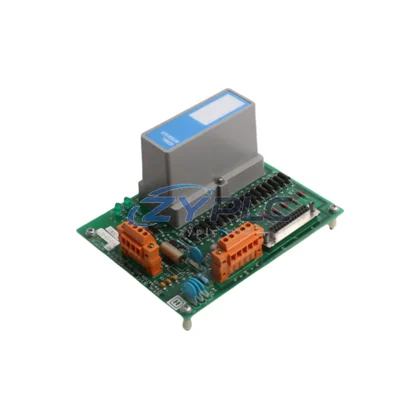
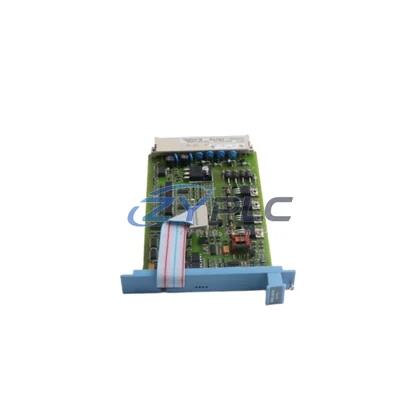
The Honeywell 2MLF-AC4H is a high-efficiency analog input module engineered for the Honeywell TDC 3000 and TPS Distributed Control System (DCS) platforms. Designed to meet the rigorous demands of modern industrial maintenance planning, the 2MLF-AC4H delivers precise signal acquisition from field instruments — enabling plant operators to monitor real-time operating load, reduce idle power draw, and make data-driven decisions that directly improve equipment utilization and production line throughput.
In energy-intensive manufacturing environments — from petrochemical refineries to pharmaceutical batch processing — the accuracy of analog signal input is the foundation of every efficiency gain. The 2MLF-AC4H captures 4–20 mA and voltage signals from transmitters, flow meters, pressure sensors, and temperature probes with high resolution, feeding clean process data into the TDC 3000 control loop. This allows the system’s regulatory controllers to respond faster to process deviations, minimizing unplanned downtime caused by over-correction, oscillation, or delayed actuation.
Product Specification Table
| Parameter |
Specification / Value |
| SKU / Part Number |
2MLF-AC4H |
| Brand |
Honeywell |
| Series |
2MLF / TDC 3000 – TPS DCS |
| Module Type |
Analog Input Module (AI) |
| Signal Input Range |
4–20 mA / 1–5 V (field configurable) |
| Channel Count |
4 Channels (AC-type, high-density) |
| Operating Efficiency |
High-resolution signal acquisition, low self-consumption |
| Compatible Systems |
Honeywell TDC 3000, TPS, HPM, LCN, UCN |
| Application Environment |
Petrochemical, Power Generation, Pharmaceutical, Pulp & Paper, Water Treatment |
| Maintenance Value |
Enables closed-loop condition monitoring; reduces process deviation and over-actuation energy loss |
| Communication Protocol |
LCN / UCN (Honeywell proprietary network) |
| Origin |
USA |
| Warranty |
warranty terms confirmed during quotation |
| Stock Status |
RFQ Available — Ships After Outgoing Test |
System Compatibility and Application
The 2MLF-AC4H does not operate in isolation — it is a critical node within a broader industrial automation system. In a typical TDC 3000 installation, the module sits within the High-Performance Process Manager (HPM) cabinet, receiving signals from field-mounted transmitters and forwarding digitized process values to the Local Control Network (LCN). This data is then consumed by regulatory and advanced control strategies running on the Application Module (AM) or History Module (HM), where energy KPIs are trended and alarmed.
For motor-driven loads — pumps, compressors, fans, and conveyors — the analog inputs captured by the 2MLF-AC4H feed directly into control loops that govern Honeywell Variable Frequency Drive (VFD) setpoints. When flow demand drops, the control system reduces motor speed proportionally, cutting operating load by up to 50% compared to throttle-valve control. This integration between the 2MLF-AC4H, the HPM controller, and the drive system is the backbone of pump and fan maintenance planning in process plants.
On the I/O side, the 2MLF-AC4H works alongside Honeywell 2MLF-DC8H digital input modules and 2MLF-AO4H analog output modules within the same card file, forming a complete signal conditioning layer. The analog outputs drive control valves and positioners, while the digital inputs capture equipment status — together creating a closed feedback loop that the TDC 3000 uses to minimize energy-wasting process upsets.
For plants that have integrated Honeywell Experion PKS as an overlying supervisory layer, the data from the 2MLF-AC4H is accessible through the Universal Control Network (UCN) gateway, enabling enterprise-level energy dashboards and MES integration. The Honeywell PHD (Process Historian Database) logs every analog value at configurable scan rates, supporting energy audits, ISO 50001 compliance reporting, and predictive maintenance analytics.
In servo and motion-intensive lines, the 2MLF-AC4H captures feedback from Honeywell position transmitters and torque sensors, providing the TDC 3000 with the real-time data needed to optimize servo cycle times and reduce unnecessary actuator travel — directly improving production line beat rate (takt time) while lowering mechanical wear and energy draw per cycle.
Communication integrity is maintained through the Honeywell LCN redundant coaxial network, ensuring that analog data from the 2MLF-AC4H reaches the control room without latency or packet loss — a critical requirement for energy-sensitive control loops where a 100 ms delay can result in valve over-travel and wasted compressed air or steam.
Maintenance and Replacement Notes
In a refinery crude distillation unit, the 2MLF-AC4H monitors temperature profiles across multiple trays simultaneously. The TDC 3000 uses this multi-point analog data to optimize reboiler duty — reducing furnace fuel consumption by maintaining the minimum heat input required to achieve separation targets. Without accurate, low-drift analog input, the control system defaults to conservative (energy-wasteful) setpoints to avoid product quality risk.
In a power plant auxiliary system, the 2MLF-AC4H reads flow and pressure transmitters on boiler feedwater lines. The HPM controller uses this data to modulate feedwater pump speed via VFD commands, eliminating the energy penalty of constant-speed pumping against a throttled valve. Plants that have implemented this closed-loop strategy report feedwater pump operational stability of Actual operating results depend on the installed system, load profile, and commissioning parameters.
For pharmaceutical clean-room HVAC systems, the 2MLF-AC4H captures differential pressure and humidity signals, enabling the TDC 3000 to implement demand-controlled ventilation. Rather than running air handling units at full capacity continuously, the system ramps fan speed to the minimum required to maintain room classification — a direct reduction in HVAC operating load that can represent Actual operating results depend on the installed system, load profile, and commissioning parameters.
Predictive maintenance is another dimension of maintenance planning enabled by the 2MLF-AC4H. By trending analog signals — vibration proxies via current draw, temperature rise on motor windings, pressure drop across heat exchangers — the PHD historian can flag developing faults before they cause unplanned shutdowns. Unplanned stops are among the highest energy-cost events in process manufacturing: restarting a cold furnace or compressor consumes 3–5× the energy of normal steady-state operation. Early detection, enabled by clean analog data from the 2MLF-AC4H, directly reduces this energy penalty.
Every unit shipped by ZYPLC undergoes a full outgoing functional test — channel-by-channel signal injection, loop-back verification, and communication handshake confirmation — before dispatch. This ensures that the 2MLF-AC4H arrives ready for installation without the energy and time cost of field troubleshooting a faulty module. All units are covered by a warranty terms confirmed during quotation, with availability confirmed by RFQ availability supporting rapid deployment for both planned upgrades and emergency replacements.
Product Sourcing FAQ
Q1: How does the 2MLF-AC4H contribute to measurable operational stability in a TDC 3000 plant?
The 2MLF-AC4H provides the high-accuracy analog data that closed-loop energy control strategies depend on. By eliminating signal drift and noise, it allows the TDC 3000 to operate control loops at tighter setpoints — reducing the energy buffer that operators add to compensate for measurement uncertainty. In pump, fan, and furnace applications, tighter control directly translates to lower average operating load.
Q2: Is the 2MLF-AC4H compatible with both TDC 3000 and TPS systems?
Yes. The 2MLF-AC4H is designed for the Honeywell 2MLF card file used across TDC 3000 and TPS (Total Plant Solution) platforms. It is compatible with HPM, PM, and APM process managers and communicates over the LCN/UCN network without requiring firmware modification or hardware adapters.
Q3: What is the recommended replacement procedure when substituting a failed analog input module on a live plant?
For hot-swap replacement, the HPM should be placed in manual control for the affected loops before module extraction. After inserting the 2MLF-AC4H, perform a channel calibration check using a loop calibrator before returning loops to automatic. ZYPLC recommends keeping one spare 2MLF-AC4H per HPM cabinet to minimize mean time to repair (MTTR) and avoid extended manual operation energy penalties.
Q4: What does the warranty terms confirmed during quotation cover, and what testing is performed before shipment?
The warranty terms confirmed during quotation covers manufacturing defects and functional failures under normal operating conditions. Prior to shipment, each 2MLF-AC4H undergoes a full outgoing test: analog signal injection across all four channels, accuracy verification against calibrated references, and LCN communication handshake testing. A test report is available upon request. Warranty claims are processed directly through ZYPLC with a target replacement lead time of 3–5 business days.