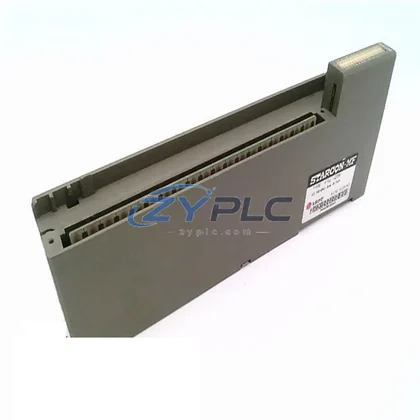
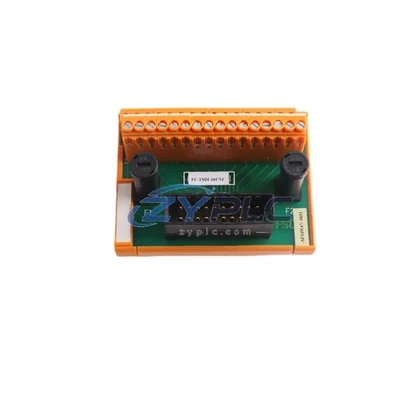
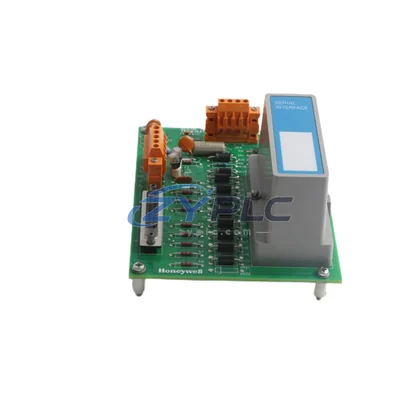
The Honeywell 2MLF-AD16A-CC is a high-performance 16-channel analog input module engineered for the Honeywell TDC 3000 and TPS Distributed Control System (DCS) platform. In modern industrial facilities where energy accountability is no longer optional, this module serves as a critical data acquisition node — capturing real-time process signals from field transmitters, thermocouples, RTDs, and pressure sensors, and converting them into actionable digital values that drive maintenance-focused control decisions across the entire production line.
Unlike generic I/O modules, the 2MLF-AD16A-CC is purpose-built for the TDC 3000 architecture, ensuring seamless integration with Honeywell’s High-Level Manager (HLM), Local Control Network (LCN), and Universal Control Network (UCN). This native compatibility eliminates signal conversion overhead, reduces scan cycle latency, and allows the control system to respond faster to process deviations — directly contributing to reduced downtime caused by over-actuation, hunting, or delayed corrective action.
Product Specification Table
| Parameter |
Specification / Value |
| Model |
2MLF-AD16A-CC |
| Brand |
Honeywell |
| Series |
TDC 3000 / TPS DCS |
| Channel Count |
16-Channel Analog Input |
| Signal Types Supported |
4–20 mA, 0–10 V, Thermocouple, RTD |
| Operating Efficiency |
High-resolution A/D conversion, low drift |
| Compatible Systems |
Honeywell TDC 3000, TPS, LCN, UCN |
| Application Environment |
Process manufacturing, energy plants, petrochemical, utilities |
| Maintenance Value |
Real-time multi-point monitoring reduces energy deviation response time |
| Warranty |
|
| Availability |
RFQ Available — shipment arranged after outgoing test |
| Origin |
United States |
System Compatibility and Application
The 2MLF-AD16A-CC does not operate in isolation — its value is fully realized when integrated within a coordinated automation architecture designed for energy efficiency. In a typical TDC 3000 installation, this analog input module works alongside the Honeywell PM I/O Link Module and Honeywell UCN Node Interface Module (NIM) to form a distributed sensing backbone. Field signals collected by the 2MLF-AD16A-CC are transmitted over the UCN to the Honeywell Advanced Process Manager (APM), where control algorithms execute PID loops, cascade strategies, and feedforward compensation — all of which depend on the accuracy and scan speed of the upstream analog input layer.
On the drive side, variable frequency drives such as the Honeywell SmartVFD HVAC or compatible third-party drives receive setpoint commands derived from the process values read by this module. When the 2MLF-AD16A-CC accurately reports a drop in flow demand, the control system can instruct the VFD to reduce motor speed proportionally — a direct energy saving that compounds across multiple pump and fan circuits running simultaneously. In facilities with dozens of motor-driven loads, this closed-loop interaction between analog input accuracy and drive response is one of the highest-leverage points for energy reduction.
For power quality and energy metering, the 2MLF-AD16A-CC integrates naturally with Honeywell Experion PKS energy dashboards when paired with dedicated power monitoring I/O cards. Operators can configure alarm thresholds on specific analog channels to flag abnormal current draw, temperature excursions, or pressure anomalies — enabling predictive maintenance actions before equipment degradation leads to downtime and the associated energy spikes of emergency restarts. The Honeywell Data Hiway Gateway further extends this capability by bridging legacy TDC 3000 data into modern SCADA and MES environments, where energy KPIs can be tracked at the enterprise level.
Communication integrity is maintained through the LCN fiber optic network, and the module’s onboard diagnostics report channel-level fault status to the Honeywell Universal Station (US) or Global User Station (GUS) operator consoles. This means maintenance teams receive precise fault localization rather than system-wide alarms, reducing mean time to repair (MTTR) and keeping production lines running at optimal throughput. When combined with Honeywell HPM (High-Performance Process Manager) controllers, the 2MLF-AD16A-CC supports high-speed scan rates that are essential for tight energy control in fast-responding processes such as combustion management and steam header pressure regulation.
Maintenance and Replacement Notes
In a refinery or chemical plant running continuous processes, unplanned downtime rarely comes from a single source — it accumulates from hundreds of small inefficiencies: a control valve hunting around its setpoint, a pump running at full speed when 70% would suffice, a heat exchanger operating outside its optimal temperature band. The Honeywell 2MLF-AD16A-CC addresses this at the data acquisition layer, which is where all maintenance planning ultimately begins.
By providing 16 simultaneous analog input channels with high-resolution conversion, this module allows engineers to instrument more measurement points without adding additional I/O racks. Denser instrumentation means tighter process visibility — and tighter visibility means control loops can be tuned more aggressively without risking instability. The result is reduced process variability, which directly translates to lower operating load per unit of output.
In steam generation systems, for example, the 2MLF-AD16A-CC can simultaneously monitor feedwater flow, drum pressure, flue gas temperature, and fuel flow — giving the combustion controller enough information to maintain optimal air-to-fuel ratios across load changes. This prevents the common unplanned downtime of excess air combustion, which can account for 3–8% of total fuel consumption in poorly instrumented boiler systems.
For motor-driven systems, the module’s analog inputs can be configured to monitor motor current signals from current transformers, enabling the DCS to calculate real-time power factor and load efficiency for each drive circuit. When a motor begins drawing more current than its baseline for a given load — a classic early indicator of bearing wear or impeller fouling — the system can schedule maintenance before the fault progresses to a failure that requires emergency shutdown and restart, both of which carry significant energy penalties.
Every unit shipped from our facility undergoes a full outgoing functional test to verify channel accuracy, signal integrity, and communication handshake with the TDC 3000 backplane. This pre-shipment validation ensures that the module performs to specification from day one, eliminating the commissioning delays and rework that waste both time and energy on the plant floor. Combined with our , customers can deploy the 2MLF-AD16A-CC with confidence in both performance and supply continuity.
Product Sourcing FAQ
Q1: How does the 2MLF-AD16A-CC contribute to measurable operational stability on the production line?
The module enables high-density analog signal acquisition across 16 channels simultaneously, giving the TDC 3000 DCS the process data density needed to run tighter control loops. Tighter control reduces process variability, which in turn reduces the unplanned downtimed on over-correction, excess heating or cooling, and unnecessary motor load. In multi-loop systems, the cumulative effect of improved measurement accuracy can reduce operating load by 5–15% depending on process type and baseline instrumentation quality.
Q2: Is the 2MLF-AD16A-CC compatible with both TDC 3000 and TPS systems?
Yes. The 2MLF-AD16A-CC is designed for the Honeywell TDC 3000 platform and is also compatible with the TPS (Total Plant Solution) architecture, which shares the same LCN and UCN infrastructure. It slots into standard TDC 3000 I/O racks and communicates natively with APM, HPM, and PM controllers without requiring additional interface hardware or firmware modifications.
Q3: What is the recommended replacement or upgrade path if this module is being used in a modernization project?
For facilities migrating from TDC 3000 to Honeywell Experion PKS, the 2MLF-AD16A-CC can continue to operate as a field I/O node via the Series C I/O migration path, preserving existing field wiring investments. For full modernization, Honeywell’s CIOM-A or equivalent Experion-native analog input modules provide a direct functional replacement with enhanced diagnostics and HART pass-through capability. We recommend consulting your system integrator to evaluate the migration scope before replacing functional TDC 3000 I/O.
Q4: What does the cover, and what is the testing process before shipment?
Our covers manufacturing defects and functional failures under normal operating conditions from the date of shipment. Before dispatch, every 2MLF-AD16A-CC unit undergoes a full outgoing functional test that verifies analog channel accuracy across the full input range, backplane communication integrity, and module self-diagnostics. Test records are available upon request. Warranty claims are processed with priority turnaround to minimize production impact.