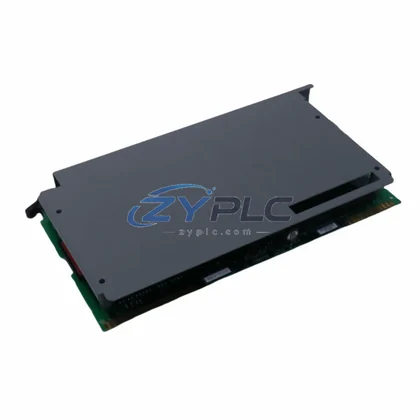
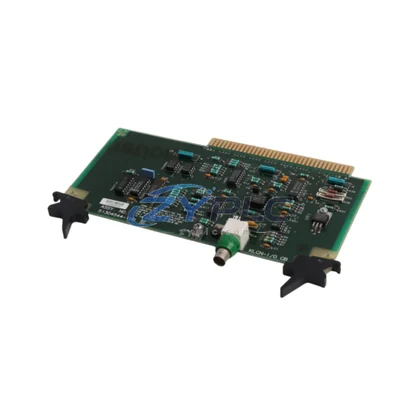
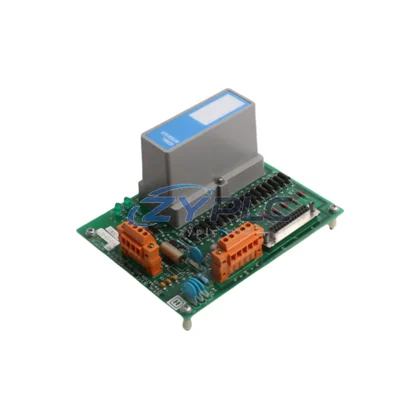
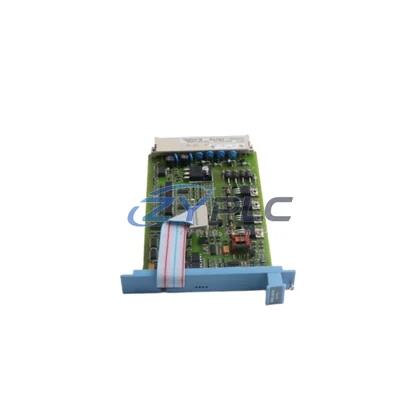
Honeywell 2MLF-DC4S Analog Output Module for TDC 3000 Automation
The Honeywell 2MLF-DC4S is a high-performance analog output module engineered for the TDC 3000 Distributed Control System (DCS) platform. Designed to deliver precise 4–20 mA signal output to field devices, this module plays a critical role in industrial automation — enabling factories to reduce unnecessary actuator cycling, minimize signal drift losses, and maintain tight control over process variables that directly impact operating load. Whether deployed in chemical processing, oil refining, power generation, or advanced manufacturing, the 2MLF-DC4S ensures that every control command is executed with accuracy, reducing the energy overhead associated with overcorrection and process instability.
Product Specification Table
| Parameter |
Specification |
| SKU / Part Number |
2MLF-DC4S |
| Brand / Manufacturer |
Honeywell |
| Series / Platform |
TDC 3000 DCS |
| Module Type |
Analog Output Module |
| Output Signal |
4–20 mA (standard industrial analog) |
| Operating Efficiency |
High-linearity output, minimal signal loss |
| Power Consumption |
Low-power design optimized for continuous DCS operation |
| Compatible Systems |
Honeywell TDC 3000, LCN, UCN, HPM, AM, APM subsystems |
| Application Environment |
Industrial process control, maintenance planning, refining, utilities |
| Energy Saving Value |
Reduces actuator overcorrection; stabilizes loop control to cut unplanned downtime |
| Origin |
United States |
| Warranty |
warranty terms confirmed during quotation — tested and verified before shipment |
System Compatibility and Application
In a fully integrated TDC 3000 environment, the 2MLF-DC4S analog output module operates as the final control element interface — translating digital process commands from the Honeywell HPM (High-Performance Process Manager) into precise analog signals that drive control valves, variable speed drives, and actuators on the plant floor. This tight integration with the HPM ensures that control loop execution is deterministic and energy-efficient, eliminating the wasted energy caused by sluggish or imprecise output signals.
Upstream, the 2MLF-DC4S receives setpoint data from the Honeywell AM (Application Module), which handles advanced regulatory and supervisory control strategies. When paired with the Honeywell APM (Advanced Process Manager), the module supports multivariable control schemes that simultaneously optimize throughput and operating load across interconnected process units. The Honeywell UCN (Universal Control Network) provides the high-speed communication backbone that links the 2MLF-DC4S to other I/O modules, ensuring real-time data exchange with minimal latency — a key factor in maintaining energy-efficient closed-loop control.
For condition monitoring and power quality analysis, the 2MLF-DC4S integrates seamlessly with Honeywell PM I/O modules and third-party power meters connected via the Honeywell Data Hiway or LCN (Local Control Network). This allows plant operators to correlate analog output commands with real-time operating load data, identifying inefficiencies in motor drives, heat exchangers, and compressor systems. When combined with Honeywell 621-series analog input modules for feedback signal acquisition, the 2MLF-DC4S forms a complete measurement-and-control loop that continuously self-optimizes for minimum energy use.
In drive control applications, the 2MLF-DC4S analog output directly commands variable frequency drives (VFDs) — such as those in the Honeywell-compatible drive ecosystem — to modulate motor speed in response to process demand. This demand-driven speed control is one of the most impactful operational-efficiency strategies available in industrial automation, capable of reducing motor load by 30–50% compared to fixed-speed operation. The module’s high output resolution ensures smooth speed transitions, preventing the mechanical stress and energy spikes associated with abrupt motor acceleration.
For HMI integration, the 2MLF-DC4S status and output values are visualized through the Honeywell GUS (Global User Station) or compatible Honeywell Experion PKS operator stations, giving control room engineers real-time visibility into output signal quality and loop performance. This transparency enables proactive maintenance planning — operators can identify drifting control loops before they escalate into energy-wasting process upsets.
Maintenance and Replacement Notes
On active production lines, the Honeywell 2MLF-DC4S contributes to maintenance planning through several interconnected mechanisms. First, its high-accuracy analog output minimizes control loop hunting — the oscillatory behavior that occurs when an output module cannot deliver a stable, precise signal. Loop hunting forces actuators to continuously adjust position, consuming excess energy and accelerating mechanical wear. By delivering a clean, stable 4–20 mA signal, the 2MLF-DC4S keeps control valves and drives in their optimal operating range, reducing both operating load and maintenance frequency.
Second, in batch and continuous process environments, the 2MLF-DC4S supports predictive maintenance strategies by providing consistent, reliable output signals that serve as a baseline for anomaly detection. When output signal quality degrades — indicating potential module wear or wiring issues — maintenance teams can schedule proactive replacements during planned downtime rather than responding to unplanned failures. This shift from reactive to predictive maintenance directly reduces production unplanned downtime caused by emergency restarts, equipment warm-up cycles, and off-spec production runs.
Third, in utilities and maintenance planning applications, the 2MLF-DC4S is frequently deployed to control cooling water flow, compressed air pressure, and steam distribution — three of the largest energy consumers in industrial facilities. Precise analog output control of these utilities, synchronized with production demand signals from the TDC 3000 supervisory layer, enables demand-side maintenance planning: utilities are supplied at exactly the level required by current production activity, eliminating the chronic over-supply that accounts for a significant portion of industrial unplanned downtime.
All units are fully tested and verified prior to shipment, with comprehensive functional checks covering output linearity, signal stability, and communication integrity within the TDC 3000 architecture. Each module is backed by a warranty terms confirmed during quotation, ensuring operational confidence from day one of installation. Availability confirmed by RFQ availability supports rapid deployment for both planned upgrades and emergency replacement scenarios, minimizing production downtime and the associated energy costs of extended shutdowns.
Product Sourcing FAQ
Q1: How does the Honeywell 2MLF-DC4S contribute to measurable operational stability in a TDC 3000 system?
The 2MLF-DC4S reduces unplanned downtime by delivering precise, stable analog output signals that minimize control loop hunting and actuator overcorrection. In motor and drive control applications, this precision enables demand-driven speed modulation via VFDs, which can help restore stable operation when a compatible replacement is required. Stable loop control also reduces process variability, lowering the energy cost of off-spec production and rework.
Q2: Is the 2MLF-DC4S compatible with modern Honeywell systems beyond the original TDC 3000 platform?
The 2MLF-DC4S is natively designed for the Honeywell TDC 3000 DCS architecture, including HPM, APM, AM, UCN, and LCN subsystems. For facilities migrating toward Honeywell Experion PKS, the module can continue to operate within legacy TDC 3000 I/O subsystems that are integrated into the Experion environment via standard migration pathways. Compatibility with specific configurations should be verified against your system’s I/O subsystem revision level.
Q3: What is the recommended replacement and testing process for the 2MLF-DC4S?
Each 2MLF-DC4S unit supplied by ZYPLC undergoes a comprehensive pre-shipment test protocol covering output signal linearity across the full 4–20 mA range, power supply integrity, and communication handshake verification within a TDC 3000 test environment. Upon receipt, installation should follow Honeywell’s standard HPM I/O module replacement procedure. Hot-swap capability (where supported by the HPM configuration) allows replacement without process interruption, minimizing energy costs associated with shutdown and restart cycles.
Q4: What warranty and after-sales support is provided with the 2MLF-DC4S?
All 2MLF-DC4S modules are covered by a warranty terms confirmed during quotation from the date of shipment. This warranty covers functional defects identified under normal operating conditions consistent with TDC 3000 system specifications. ZYPLC maintains RFQ-confirmed sourcing of the 2MLF-DC4S to support rapid replacement under warranty claims, minimizing production downtime. For technical support, contact our industrial automation team directly.