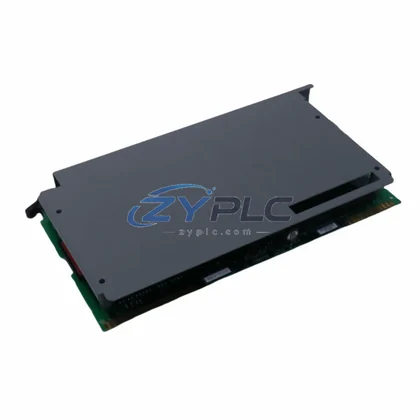
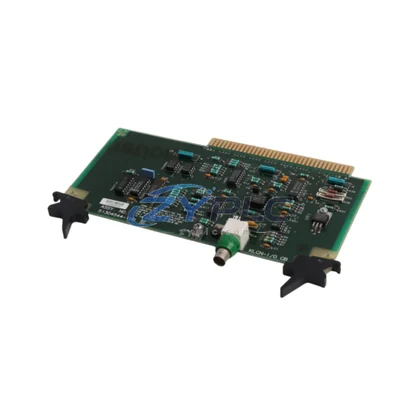
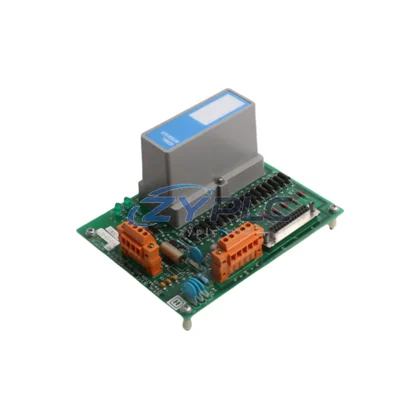
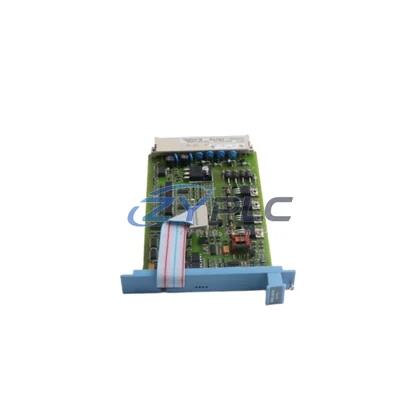
Honeywell 2MLF-RD4A Relay Output for Safety Manager
The Honeywell 2MLF-RD4A is a safety-rated relay output module engineered for seamless integration within the Honeywell Safety Manager (SM) platform — a dedicated safety instrumented system (SIS) designed to meet IEC 61508 and IEC 61511 functional safety standards. In modern industrial automation, the integrity of a safety instrumented function (SIF) depends not only on the logic solver but on the coordinated performance of every layer in the control architecture. The 2MLF-RD4A occupies a critical position in the output layer, translating safety logic decisions into reliable relay-driven actuator commands across process-critical applications.
Unlike general-purpose relay modules, the 2MLF-RD4A is purpose-built for the Safety Manager chassis environment. It interfaces directly with the SM controller backplane, ensuring deterministic signal propagation from the safety CPU to field-level actuators such as solenoid valves, motor contactors, and emergency shutdown (ESD) devices. This tight architectural coupling eliminates signal conversion latency and reduces the probability of dangerous failure on demand (PFDavg), which is the core metric in SIL verification calculations.
Within a layered automation architecture, the 2MLF-RD4A operates at the output execution layer, receiving validated commands from the Safety Manager CPU module — such as the SM-CPU or SM-SCU — after those commands have been processed through the safety logic engine. The module’s relay contacts provide galvanic isolation between the safety system bus and field wiring, protecting the controller backplane from voltage transients, ground loops, and inductive kickback generated by actuator coils. This isolation is essential in high-noise industrial environments such as petrochemical plants, offshore platforms, and power generation facilities.
System architects integrating the 2MLF-RD4A into a redundant safety architecture will find it compatible with the Safety Manager’s 1oo2 (one-out-of-two) and 2oo3 (two-out-of-three) voting configurations. When paired with redundant SM power supply modules — such as the SM-PS or equivalent 24 VDC rail-mount units — the output layer maintains availability even during single-point power failures. The relay output module also supports diagnostic coverage requirements mandated by SIL 2 and SIL 3 loop assessments, contributing to the overall system’s hardware fault tolerance (HFT) calculations.
From a system integration perspective, the 2MLF-RD4A is designed to coexist within the same chassis as digital input modules (such as the 2MLF-DI series), analog input modules for 4–20 mA HART field instruments, and communication gateway modules that bridge the Safety Manager to the distributed control system (DCS) via Modbus RTU, PROFIBUS DP, or OPC DA/UA interfaces. This multi-protocol communication capability ensures that safety system status — including relay output states, diagnostic alarms, and bypass conditions — is continuously visible to the plant DCS, historian, and operator HMI stations without requiring additional signal conditioning hardware.
In process industries such as oil and gas, chemical manufacturing, and water treatment, the 2MLF-RD4A is commonly deployed in emergency shutdown (ESD) panels, burner management systems (BMS), and high-integrity pressure protection systems (HIPPS). In each of these applications, the relay output module must perform reliably across the full lifecycle of the safety function — from initial commissioning and proof testing through to long-term maintenance and eventual decommissioning. The module’s robust relay contact ratings and diagnostic self-test capabilities support the periodic proof test intervals required by IEC 61511 safety lifecycle management.
For engineering teams managing spare parts and lifecycle inventory, the 2MLF-RD4A is available as a direct replacement module compatible with existing Safety Manager chassis installations. Its hot-swap capability — where supported by the SM platform configuration — minimizes process downtime during corrective maintenance. Maintaining a dedicated inventory of 2MLF-RD4A modules alongside complementary components such as SM terminal boards, field wiring assemblies, and chassis backplane connectors is a recognized best practice in safety system asset management programs.
ZYPLC supplies the Honeywell 2MLF-RD4A with a Warranty and support terms confirmed before quote, covering manufacturing defects and functional performance. Each unit undergoes pre-shipment inspection to verify relay contact integrity, module identification, and physical condition. Global logistics support ensures export shipping options after RFQ confirmation to project sites across Asia, the Middle East, Europe, and the Americas, with full documentation available for customs clearance and site acceptance testing.
Product Specification Table
| Parameter |
Specification |
| System Role |
Safety Relay Output Module — Output Execution Layer |
| Compatible Platform |
Honeywell Safety Manager (SM) System |
| Safety Standard |
IEC 61508 / IEC 61511 (SIL 2 / SIL 3 capable) |
| Output Type |
Relay Contact Output (Dry Contact) |
| Relay Contact Rating |
Typically 24 VDC / 230 VAC, resistive load (refer to SM documentation) |
| Isolation |
Galvanic isolation between backplane bus and field wiring |
| Voting Architecture |
Compatible with 1oo2 and 2oo3 safety voting configurations |
| Communication |
Backplane-integrated; DCS interface via SM gateway (Modbus, PROFIBUS, OPC) |
| Diagnostic Coverage |
High DC supporting SIL 2/3 hardware fault tolerance requirements |
| Installation Environment |
Industrial control cabinet, DIN rail or chassis-mount per SM platform |
| Operating Temperature |
0°C to +60°C (typical industrial range) |
| Warranty |
Warranty and support terms confirmed before quote — manufacturing defects and functional performance |
System Compatibility Notes
The 2MLF-RD4A achieves its full architectural value when deployed as part of a coordinated Safety Manager system rather than as a standalone component. At the controller layer, the Safety Manager CPU module — responsible for executing the safety application program and performing self-diagnostics — generates the output commands that the 2MLF-RD4A translates into relay contact closures. The CPU communicates with output modules across the SM chassis backplane, ensuring synchronized, deterministic command execution within the safety scan cycle.
Power integrity across the safety system is maintained by dedicated SM power supply modules, which provide regulated 24 VDC to the chassis backplane and all installed I/O modules including the 2MLF-RD4A. In redundant power configurations, dual power supply modules with automatic switchover prevent relay output interruption during power supply maintenance or failure events.
On the input side, the 2MLF-RD4A works in conjunction with digital input modules from the 2MLF-DI series, which acquire field sensor signals — including emergency stop pushbuttons, pressure switches, and gas detector contacts — and feed them into the safety logic solver. Analog input modules handling 4–20 mA HART signals from transmitters such as pressure, temperature, and flow instruments provide the process variable data that the safety CPU evaluates against configured trip setpoints before commanding the 2MLF-RD4A relay outputs to actuate.
At the network and integration layer, Safety Manager communication gateway modules bridge the SIS to the plant DCS — commonly a Honeywell Experion PKS or equivalent distributed control platform — via PROFIBUS DP or Modbus TCP/IP. This integration allows DCS operator stations and historian servers to monitor 2MLF-RD4A relay output states, bypass status, and diagnostic alarms in real time, supporting both operational visibility and regulatory compliance reporting.
Human-machine interface (HMI) stations connected to the DCS network display safety system status derived from the Safety Manager, including the active state of relay outputs controlled by the 2MLF-RD4A. In facilities using Honeywell Experion or third-party SCADA platforms, custom faceplates can be configured to show individual relay channel states, enabling operators to verify ESD valve positions and motor contactor status without accessing the safety cabinet directly.
Terminal modules and field wiring assemblies mounted adjacent to the Safety Manager chassis provide the physical connection point between the 2MLF-RD4A relay contacts and field cable terminations. Proper selection of terminal blocks — including fused terminal modules for output circuit protection — is essential to maintaining the wiring integrity and diagnostic coverage required by the safety loop design. Surge protection devices installed at the field wiring interface further protect relay contacts from transient overvoltages in electrically noisy plant environments.
Industrial Application Notes
In oil and gas processing facilities, the 2MLF-RD4A is a standard component in emergency shutdown (ESD) systems protecting wellheads, separators, compressor trains, and pipeline segments. The module’s relay outputs drive solenoid valve coils on hydraulic actuators, initiating controlled shutdown sequences when the Safety Manager detects process exceedances such as high-high pressure or low-low flow conditions. The SIL-rated performance of the 2MLF-RD4A ensures that ESD functions meet the risk reduction requirements defined in the facility’s layer of protection analysis (LOPA).
In power generation plants — including gas turbines, steam turbines, and combined-cycle facilities — the 2MLF-RD4A supports turbine protection systems (TPS) by providing relay outputs to trip breakers, close fuel shutoff valves, and activate fire suppression systems. The module’s high diagnostic coverage and low spurious trip rate are critical in power generation applications where both safety and availability must be balanced to minimize unplanned generation outages.
Chemical and petrochemical plants deploy the 2MLF-RD4A in reactor protection systems, where the module’s relay outputs initiate quench valve opening, agitator shutdown, and cooling system activation in response to runaway reaction detection. The galvanic isolation provided by the relay contacts prevents safety system ground faults from propagating into reactor control circuits, maintaining the independence required between the safety instrumented system and the basic process control system (BPCS).
Water and wastewater treatment facilities use the 2MLF-RD4A in high-integrity protection systems for chlorination dosing, pump protection, and overflow prevention. In these applications, the module’s long-term reliability and low maintenance requirements reduce the total cost of ownership over the 20+ year operational lifecycle typical of water infrastructure assets.
Mining and minerals processing operations integrate the 2MLF-RD4A into conveyor protection systems, crusher interlock circuits, and ventilation safety systems. The module’s robust relay contact ratings accommodate the inductive loads associated with large motor contactors and solenoid-operated pneumatic valves common in heavy industrial environments.
Product Compatibility FAQ
Q1: Is the 2MLF-RD4A compatible with all Safety Manager chassis configurations, and can it be mixed with other SM I/O modules in the same chassis?
A: The 2MLF-RD4A is designed for the Honeywell Safety Manager platform and is compatible with SM chassis configurations that support the 2MLF module family. It can be installed alongside other SM I/O modules — including digital input, analog input, and communication modules — within the same chassis, provided that the chassis slot assignment and SM configuration software (typically Safety Builder) are correctly configured to recognize the module type and assign it to the appropriate safety function. Always verify module compatibility against the specific SM system version and firmware revision in use at your site.
Q2: What proof test procedures are required for the 2MLF-RD4A to maintain SIL compliance over the safety lifecycle?
A: IEC 61511 requires periodic proof testing of safety instrumented functions to detect dangerous undetected (DU) failures that are not covered by the module’s automatic diagnostics. For the 2MLF-RD4A, proof testing typically involves forcing the relay output to both energized and de-energized states and verifying that the field actuator responds correctly. The proof test interval is determined by the SIL verification calculation for each safety function and is documented in the safety requirements specification (SRS). ZYPLC recommends maintaining a spare 2MLF-RD4A module on-site to minimize proof test duration and support rapid replacement if a DU failure is detected during testing. The Warranty and support terms confirmed before quote covers the module during the initial post-installation period, supporting early-life failure detection.
Q3: How does the Warranty and support terms confirmed before quote apply to the 2MLF-RD4A, and what support is available for system integration into existing Safety Manager installations?
A: The Warranty and support terms confirmed before quote provided by ZYPLC covers manufacturing defects and functional performance failures identified during normal operation. Warranty claims are supported by pre-shipment inspection records and module serial number traceability. For system integration into existing Safety Manager installations — including chassis slot assignment, SM configuration software updates, and field wiring termination — ZYPLC’s technical team can provide documentation support and sourcing guidance for complementary components such as SM terminal boards, power supply modules, and communication gateways. Contact our team at plc.sales@zyplc.com or +86 19859288691 for project-specific integration support.