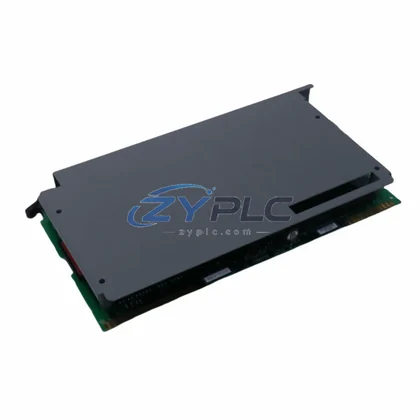
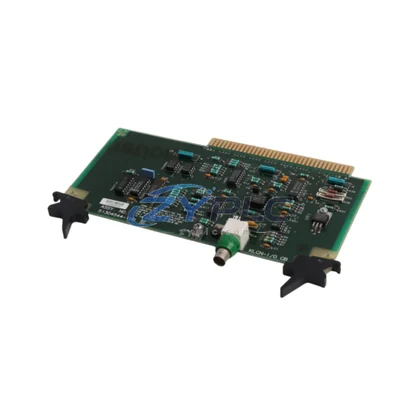
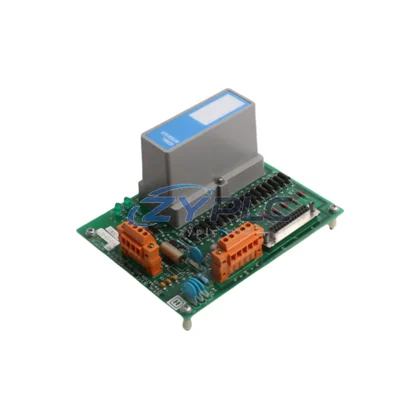
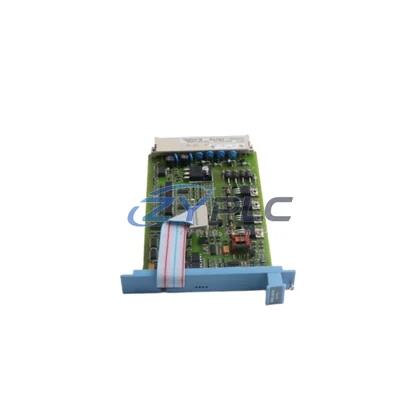
The Honeywell 2MLI-D21D is a industrial-grade Digital Input Module engineered for the TDC 3000 Distributed Control System (DCS) platform. Designed to meet the demanding requirements of continuous process industries — including petrochemical, power generation, pulp and paper, and refining — this module delivers reliable, low-latency digital signal acquisition that directly contributes to reduced operating load, improved equipment utilization, and optimized production line throughput.
In modern industrial facilities, unmonitored or poorly managed digital I/O points are a hidden source of downtime and unplanned downtime. The 2MLI-D21D addresses this by providing accurate, real-time digital status feedback to the TDC 3000 control network, enabling the process controller to make faster, more maintenance decisions across the entire automation loop.
Product Specification Table
| Parameter |
Specification / Value |
| SKU / Part Number |
2MLI-D21D |
| Brand |
Honeywell |
| Series / Platform |
TDC 3000 DCS |
| Module Type |
Digital Input Module |
| Input Channels |
16-channel digital input (typical for MLI series) |
| Operating Voltage |
24 VDC (field-side, isolated) |
| Power Consumption |
Low-power design; minimizes backplane load |
| Signal Compatibility |
Dry contact / wet contact digital signals |
| Compatible Systems |
Honeywell TDC 3000, LCN, UCN, HPM subsystems |
| Application Environment |
Process plants, refineries, power stations, chemical facilities |
| Maintenance Value |
Enables real-time status monitoring to eliminate idle-state unplanned downtime |
| Warranty |
Warranty and support terms confirmed before quote |
| Condition |
Tested & Verified | shipment timing confirmed after RFQ |
System Compatibility and Application
The 2MLI-D21D does not operate in isolation — it is a critical node within a broader industrial automation system. Within the TDC 3000 environment, digital input data collected by the 2MLI-D21D feeds directly into the Honeywell HPM (High-Performance Process Manager), which coordinates control execution across the plant. When field devices such as motor starters, valve limit switches, or pump status contacts report their state through the 2MLI-D21D, the HPM can immediately adjust setpoints, reduce unnecessary actuator cycling, and prevent energy-intensive restart sequences.
Upstream, the Honeywell LCN (Local Control Network) carries this digital status data to operator consoles and historian nodes, where the Honeywell Universal Station (US) or GUS (Global User Station) displays real-time process graphics. Operators can identify energy anomalies — such as a motor running without load or a valve cycling excessively — and intervene before waste accumulates.
On the output side, the 2MLI-D21D works in tandem with Honeywell Digital Output Modules (2MLO series) to form a complete digital I/O subsystem. Together, they manage the on/off control of field devices including contactors, solenoid valves, and relay-driven actuators. Proper digital I/O management through these modules reduces unnecessary switching events, which directly lowers wear on field equipment and cuts reactive energy demand.
For variable-speed drive applications, the digital status signals from the 2MLI-D21D are often used to interlock Variable Frequency Drives (VFDs) connected to pumps, fans, and compressors. When the 2MLI-D21D confirms a permissive condition — such as a flow switch closed or a pressure switch satisfied — the VFD can ramp up smoothly rather than starting at full load, significantly reducing inrush current and energy peaks. This integration is common in facilities running Honeywell Experion PKS alongside legacy TDC 3000 infrastructure.
Power quality and energy metering at the panel level are often handled by dedicated Power Monitoring Modules or third-party energy meters communicating via Modbus RTU or HART protocol back to the TDC 3000 data highway. The 2MLI-D21D’s digital inputs can capture alarm contacts from these meters, ensuring that power anomalies are immediately visible to the control system without requiring manual inspection rounds.
In facilities with complex motor control centers (MCCs), the 2MLI-D21D interfaces with Honeywell Smart Transmitters and motor protection relays to provide run/fault/trip status for each driven load. This data, aggregated at the HPM level, supports predictive maintenance scheduling — allowing maintenance teams to service equipment based on actual operating hours and fault history rather than fixed calendar intervals, reducing both maintenance costs and unplanned energy-wasting shutdowns.
Maintenance and Replacement Notes
In a typical continuous process plant, dozens of pumps, agitators, conveyors, and HVAC units run simultaneously. Without accurate digital status feedback, control systems cannot distinguish between a motor that is running productively and one that is spinning under no-load conditions — wasting energy with every revolution. The Honeywell 2MLI-D21D eliminates this blind spot by delivering reliable, scan-cycle-accurate digital input data to the TDC 3000 controller.
Consider a refinery cooling water system: multiple pump motor starters report their run/stop status through 2MLI-D21D channels. The HPM uses this data to implement a lead-lag pump control strategy, ensuring only the minimum number of pumps required to meet cooling demand are running at any given time. During low-demand periods — such as overnight or during planned production slowdowns — the system automatically sheds unnecessary pump loads, reducing electricity consumption without operator intervention.
Similarly, in batch chemical processes, the 2MLI-D21D captures agitator motor status, valve position feedback, and level switch states. The TDC 3000 uses this information to tighten batch cycle times, reducing the duration of energy-intensive heating and mixing phases. Shorter, more precisely controlled batch cycles mean lower operating load per unit of product — a direct improvement in production line energy efficiency.
From a maintenance perspective, the 2MLI-D21D’s consistent signal quality reduces nuisance alarms caused by contact bounce or signal noise. Fewer false alarms mean fewer unnecessary operator responses, less unplanned equipment cycling, and a more stable operating load profile across the plant. Combined with ZYPLC’s pre-shipment functional testing and warranty and support terms confirmed before quote, the 2MLI-D21D arrives ready to install and contribute to operational stability from day one.
Stock availability is maintained to support urgent replacement needs, minimizing the downtime window when a module failure occurs. Rapid restoration of digital I/O capability means the control system returns to full energy-optimized operation as quickly as possible, avoiding the unplanned downtime associated with manual override operation or degraded automatic control.
Product Sourcing FAQ
Q1: How does the Honeywell 2MLI-D21D contribute to operational stability in a TDC 3000 system?
The 2MLI-D21D provides accurate, real-time digital status data to the TDC 3000 HPM controller. This enables operational-efficiency control strategies such as lead-lag pump sequencing, motor load shedding during low-demand periods, and precise interlock management for VFDs — all of which reduce downtime risk without compromising process performance.
Q2: Is the 2MLI-D21D compatible with both legacy TDC 3000 and newer Honeywell Experion PKS environments?
The 2MLI-D21D is designed for the TDC 3000 platform, including HPM and LCN subsystems. In facilities running hybrid TDC 3000 / Experion PKS architectures, the module continues to function within its native TDC 3000 subsystem while Experion PKS provides supervisory oversight. Compatibility with specific firmware revisions should be confirmed against your system’s hardware revision documentation.
Q3: What is the recommended replacement process, and how quickly can the module be deployed?
Each 2MLI-D21D unit supplied by ZYPLC undergoes functional testing prior to shipment. Upon receipt, the module can typically be installed and commissioned within a standard maintenance window. No special calibration is required for digital input modules — channel configuration is managed through the TDC 3000 engineering console. The warranty and support terms confirmed before quote covers defects in materials and workmanship from the date of shipment.
Q4: Can the 2MLI-D21D support predictive maintenance programs?
Yes. By providing reliable run/fault/trip status data for motors, valves, and other field devices, the 2MLI-D21D feeds the operational data needed for condition-based maintenance programs. When integrated with historian software and condition monitoring tools, the accumulated digital event data helps identify equipment degradation trends — enabling maintenance intervention before failures occur and avoiding the unplanned downtime associated with degraded or failing equipment.