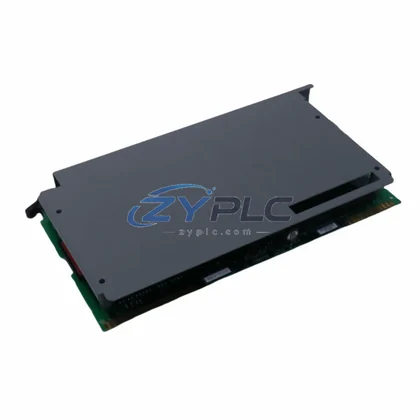
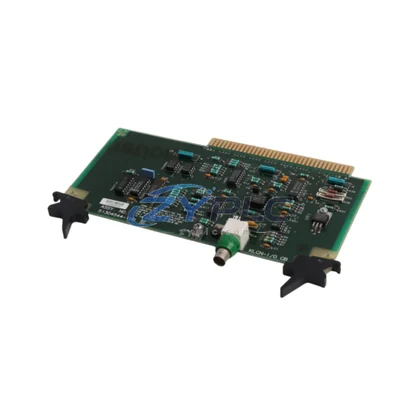
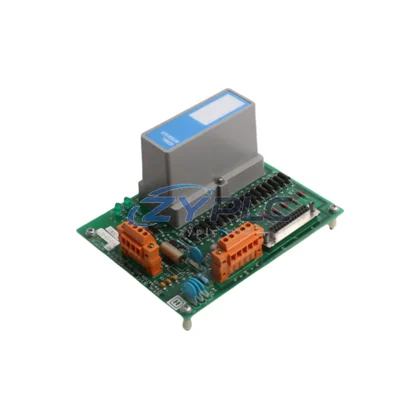
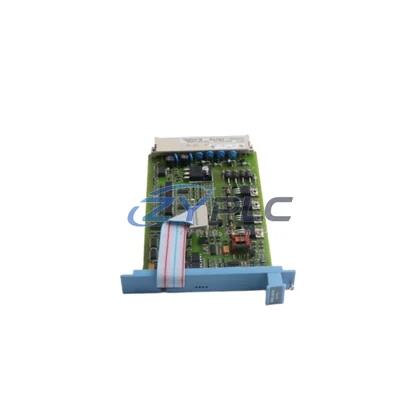
The Honeywell 2MLI-D22B-CC is a high-performance digital input module engineered for the Honeywell TDC 3000 and TPS Distributed Control System (DCS) platforms. Designed to meet the rigorous demands of modern industrial automation, this module plays a pivotal role in reducing unplanned downtime risk, improving equipment utilization rates, and enabling smarter, data-driven production line management. Whether deployed in petrochemical refining, power generation, pharmaceutical manufacturing, or continuous process industries, the 2MLI-D22B-CC delivers the signal integrity and system responsiveness that energy-conscious plant operators depend on.
In today’s industrial environment, every millisecond of signal latency and every watt of wasted energy translates directly into operational cost. The 2MLI-D22B-CC addresses this challenge by providing reliable, low-latency digital input acquisition that feeds accurate real-time data into the control loop — enabling the DCS to make faster, more precise decisions about motor control, valve actuation, and drive regulation. When paired with Honeywell’s CC-TDIL01 digital input link controller and the TC-CCR014 controller redundancy module, the system achieves a level of fault tolerance and maintenance-focused automation that significantly reduces unplanned downtime and the energy spikes associated with emergency restarts.
Product Specification Table
| Parameter |
Specification |
| SKU / Part Number |
2MLI-D22B-CC |
| Brand |
Honeywell |
| Series |
2MLI / TDC 3000 / TPS DCS |
| Module Type |
Digital Input Module |
| Input Channels |
32 Channels (Discrete Digital Input) |
| Operating Voltage |
24V DC (Nominal) |
| Power Consumption |
Low-power design, optimized for continuous 24/7 operation |
| Running Efficiency |
High-speed scan cycle; minimizes CPU load and bus traffic |
| Compatible Systems |
Honeywell TDC 3000, TPS, PlantScape, Experion PKS (legacy integration) |
| Application Environment |
Petrochemical, Power, Pharmaceutical, Pulp & Paper, Water Treatment |
| Energy Saving Value |
Reduces false triggering and redundant polling; lowers overall DCS bus load |
| Communication Protocol |
Honeywell UCN / LCN proprietary network |
| Origin |
United States |
| Warranty |
warranty terms confirmed during quotation — Fully tested before shipment |
| Stock Status |
RFQ Available — shipment arranged after confirmation |
System Compatibility and Application
Achieving genuine energy efficiency in a process plant requires more than installing efficient equipment — it demands a tightly integrated automation architecture where every layer communicates with precision. The Honeywell 2MLI-D22B-CC sits at the field signal acquisition layer, capturing discrete on/off states from limit switches, pressure switches, motor run feedback contacts, and safety interlocks. This data is transmitted with minimal latency to the DCS controller, where it informs decisions across the entire control hierarchy.
In a typical energy-optimized plant configuration, the 2MLI-D22B-CC works in concert with the MC-PAIH03 analog input module to provide a complete picture of both discrete and continuous process variables. While the 2MLI-D22B-CC captures digital status signals — such as whether a pump is running or a valve is open — the MC-PAIH03 simultaneously monitors analog parameters like flow rate, pressure, and temperature. Together, these two modules give the DCS controller the full situational awareness needed to optimize motor start sequences, reduce idle running time, and prevent energy-wasting process upsets.
For drive-level energy regulation, the 2MLI-D22B-CC integrates seamlessly with variable frequency drive (VFD) control loops managed through the TC-IDD321 digital output module. When the 2MLI-D22B-CC detects that a downstream process condition has been met — for example, a tank reaching its high-level setpoint — it signals the controller, which then commands the TC-IDD321 to reduce motor speed via the VFD, cutting operating load proportionally to the reduction in load. This closed-loop interaction between digital input acquisition and drive output control is one of the most effective mechanisms for reducing motor unplanned downtime in continuous process industries.
Power quality monitoring is another critical dimension of maintenance-focused automation. When the 2MLI-D22B-CC is deployed alongside the 51309276-150 power supply module and the TC-FPDXX2 field power distributor, plant engineers gain granular visibility into power distribution health across the I/O subsystem. Abnormal power draw patterns — often the first indicator of a failing motor bearing or a partially blocked valve — can be detected early, enabling predictive maintenance interventions before they escalate into costly unplanned shutdowns.
For facilities running Honeywell’s Experion PKS or legacy TPS environments, the 51405040-175 communication interface module and the TC-PRS021 process controller provide the backbone for system-wide data aggregation. The 2MLI-D22B-CC feeds its digital status data into this architecture, where it becomes part of the plant historian record — enabling energy analysts to correlate equipment run states with consumption data, identify inefficient operating patterns, and build the case for targeted energy reduction initiatives.
HMI visibility is equally important. When operators at a 900H32-0101 Honeywell operator station can see real-time digital input states from the 2MLI-D22B-CC overlaid on process graphics, they can make faster, better-informed decisions about equipment sequencing and load shedding — reducing both unplanned downtime and the risk of process upsets that consume additional energy to recover from.
Maintenance and Replacement Notes
In real-world production environments, the operational stability delivered by the Honeywell 2MLI-D22B-CC are most visible in three areas: motor control optimization, production line pacing, and predictive maintenance enablement.
Motor Control Optimization: Motors are the single largest energy consumer in most industrial facilities, accounting for 60–70% of total electrical load. The 2MLI-D22B-CC enables the DCS to implement sophisticated motor management strategies — including soft-start sequencing, load-based speed adjustment via VFD feedback, and automatic shutdown of idle equipment — by providing reliable, real-time digital status feedback from motor control centers. A plant running 50 motors that reduces average idle running time by just 10% through better digital input monitoring can achieve operational stability equivalent to thousands of operating-hours per month.
Production Line Pacing: In batch and continuous process industries, production line pacing — the ability to match equipment throughput to actual demand — is a key lever for energy reduction. The 2MLI-D22B-CC captures the discrete signals that define production state: conveyor running, filling station active, packaging line ready. By feeding this data into the DCS in real time, the system can automatically adjust upstream equipment speeds and downstream buffer management, eliminating the unplanned downtime associated with running equipment at full speed when the line is not ready to receive product.
Predictive Maintenance and Downtime Reduction: Unplanned equipment failures are among the most energy-intensive events in a plant, because emergency restarts, purge cycles, and process recovery sequences consume far more energy than normal steady-state operation. The 2MLI-D22B-CC contributes to predictive maintenance programs by providing high-resolution digital status data that can be trended over time. Changes in the timing patterns of limit switch activations, for example, can indicate mechanical wear in actuators or conveyors — allowing maintenance teams to intervene during planned shutdowns rather than emergency stoppages.
Every unit of Honeywell 2MLI-D22B-CC supplied by ZYPLC undergoes comprehensive functional testing prior to shipment, including channel-by-channel input verification, power supply integrity checks, and communication bus validation. This ensures that the module performs to specification from the moment it is installed, eliminating the unplanned downtime and production disruption associated with infant-failure returns.
Product Sourcing FAQ
Q1: How does the Honeywell 2MLI-D22B-CC contribute to measurable operational stability in a DCS-controlled plant?
The 2MLI-D22B-CC reduces unplanned downtime by providing accurate, low-latency digital input data that enables the DCS to implement precise motor control, equipment sequencing, and load management strategies. By eliminating the signal errors and polling delays that cause unnecessary equipment cycling, the module helps plants reduce motor idle time, optimize VFD speed profiles, and prevent the energy-intensive process upsets caused by false input readings.
Q2: Is the 2MLI-D22B-CC compatible with both TDC 3000 and TPS DCS platforms?
Yes. The 2MLI-D22B-CC is designed for use within the Honeywell 2MLI series I/O subsystem, which is compatible with both the TDC 3000 and TPS (Total Plant Solution) DCS architectures. It communicates via Honeywell’s UCN/LCN network and can be integrated into existing system configurations without requiring controller replacement or major network reconfiguration.
Q3: What is the recommended replacement or upgrade path for aging 2MLI-D22B-CC modules?
For plants looking to extend the life of their TDC 3000 or TPS systems, direct replacement with a tested 2MLI-D22B-CC module from ZYPLC’s inventory is the most cost-effective approach. For plants planning a longer-term migration to Experion PKS, Honeywell’s Series C I/O modules — such as the CC-TDIL01 — offer a migration path that preserves existing field wiring investments while enabling access to modern maintenance planning and predictive maintenance capabilities.
Q4: What does the warranty terms confirmed during quotation cover, and what is the testing process before shipment?
All 2MLI-D22B-CC modules supplied by ZYPLC are covered by a warranty terms confirmed during quotation against manufacturing defects and functional failures. Prior to shipment, each module undergoes a multi-stage testing process that includes power-on self-test verification, individual channel input simulation, communication bus integrity testing, and visual inspection for component condition. Test records are available upon request. Modules that do not pass all test criteria are not shipped.