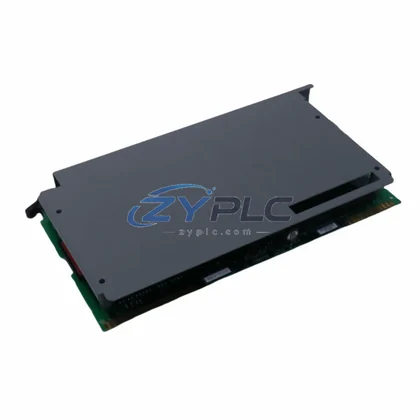
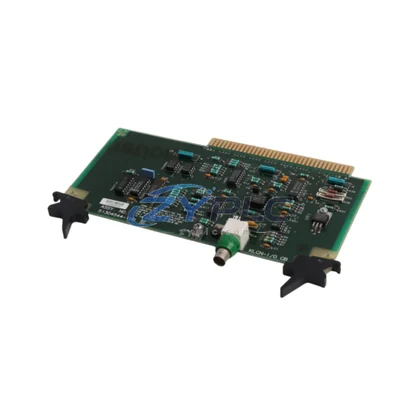
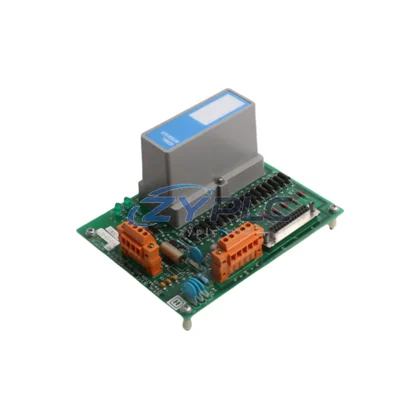
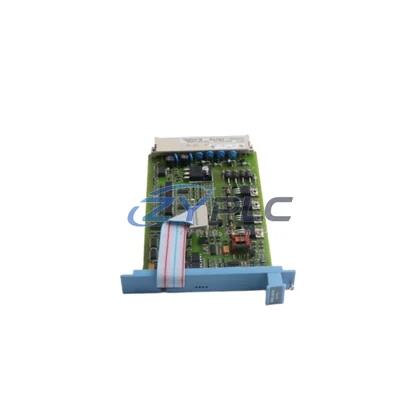
Honeywell 2MLQ-RY2B Industrial Network Interface for TDC 3000 Systems: Precision Data Links for Smart Factory Connectivity
The Honeywell 2MLQ-RY2B is a high-reliability digital output module engineered for the TDC 3000 Distributed Control System (DCS) platform — one of the most widely deployed process automation architectures in refining, petrochemical, power generation, and advanced manufacturing environments. Designed to bridge the gap between field-level actuators and upper-layer control networks, the 2MLQ-RY2B delivers deterministic relay output switching, seamless protocol integration, and robust signal conditioning that modern smart factories demand.
In today’s industrial landscape, data isolation between field devices and supervisory systems is one of the most persistent barriers to operational efficiency. The 2MLQ-RY2B addresses this challenge directly by providing a stable, low-latency digital output interface that connects TDC 3000 controllers to downstream actuators, motor starters, solenoid valves, and alarm annunciators — ensuring that control commands are executed with precision and that feedback signals are accurately reflected in SCADA and HMI dashboards.
Compatibility & Integration Notes
| Parameter |
Specification |
| Product SKU |
2MLQ-RY2B |
| Brand |
Honeywell |
| Series |
TDC 3000 DCS |
| Module Type |
Digital Output Module (Relay) |
| Communication Protocol |
Honeywell Data Hiway / Local Control Network (LCN) |
| Interface Type |
Relay Contact Output |
| Output Channels |
Multi-channel relay digital output |
| Network Compatibility |
TDC 3000 LCN, UCN, Data Hiway |
| System Application |
DCS, SCADA, PLC Integration, HMI, Process Control |
| Transmission Capability |
Deterministic, real-time control signal output |
| Operating Environment |
Industrial panel-mount, DIN rail compatible |
| Origin |
USA |
| Warranty |
warranty terms confirmed during quotation |
| Availability |
RFQ Available — shipment arranged after confirmation |
Connected Automation Data Flow
The 2MLQ-RY2B sits at a critical junction in the TDC 3000 control architecture. Signal acquisition begins at the field level, where sensors, transmitters, and process analyzers feed real-time process data — temperature, pressure, flow, and level — into Honeywell’s Field Control Processor (FCP) or Advanced Process Manager (APM). These controllers process the incoming data and issue digital output commands that are routed through modules like the 2MLQ-RY2B to actuate field devices with millisecond-level response times.
Within the TDC 3000 network hierarchy, the Local Control Network (LCN) serves as the high-speed backbone connecting the 2MLQ-RY2B’s host controller to the Honeywell Universal Station (US) and Global User Station (GUS) HMI platforms. Operators monitoring the plant from these HMI workstations receive live status feedback from the relay outputs — confirming valve positions, motor run/stop states, and alarm acknowledgments — without any perceptible delay. This closed-loop visibility is essential for maintaining process safety and regulatory compliance in continuous process industries.
For facilities integrating legacy TDC 3000 infrastructure with modern Ethernet-based supervisory systems, the 2MLQ-RY2B is commonly deployed alongside Honeywell’s Application Module (AM) and History Module (HM), which aggregate process data and push it upstream to Honeywell Experion PKS or third-party SCADA platforms via OPC-DA or OPC-UA gateways. This architecture enables plant-wide data transparency — from the relay contact level all the way to enterprise MES and ERP systems — without requiring a full DCS migration.
In multi-loop control scenarios, the 2MLQ-RY2B works in concert with Honeywell’s Digital Input Module (2MLF-DI) and Analog Output Module (2MLQ-AO) to form a complete I/O subsystem. The relay outputs from the 2MLQ-RY2B can trigger interlock sequences managed by the Honeywell Safety Manager or initiate alarm escalation workflows visible on Honeywell’s Uniformance Process History Database (PHD). For remote I/O expansion, the module integrates with Honeywell’s Remote Intelligent Gateway (RIG), extending the TDC 3000 control reach to geographically distributed process units without additional engineering overhead.
Edge computing nodes and industrial IoT gateways — such as those running Honeywell’s Connected Plant suite — can subscribe to the digital output state data published by the 2MLQ-RY2B’s host controller, enabling predictive maintenance algorithms and real-time KPI dashboards at the operations center level. Variable frequency drives (VFDs) and soft starters connected to the relay outputs can also report back their operational status through the same LCN data path, creating a fully bidirectional data loop between the field and the control room.
Solving Data Isolation in Industrial Sites
Many industrial facilities operating TDC 3000 systems face a common set of integration challenges: protocol fragmentation between legacy DCS networks and modern Ethernet/IP or PROFINET infrastructure, data silos that prevent real-time visibility across production lines, and the inability to perform remote diagnostics without dispatching field technicians.
The 2MLQ-RY2B directly addresses protocol fragmentation by operating natively within the TDC 3000 LCN and Data Hiway communication framework, eliminating the need for external protocol converters in pure Honeywell environments. For hybrid architectures where the TDC 3000 must coexist with Siemens SIMATIC S7, Allen-Bradley ControlLogix, or Mitsubishi MELSEC PLCs, the 2MLQ-RY2B’s relay outputs provide a universal, protocol-agnostic hardwired interface that any control system can read — making it an ideal bridge component in multi-vendor automation environments.
Production line transparency is achieved through the module’s deterministic output behavior: every relay state change is logged with a timestamp in the TDC 3000 History Module, providing a complete audit trail for quality management systems and regulatory reporting. This data can be visualized in real time on Honeywell GUS workstations or exported to third-party SCADA platforms such as Wonderware InTouch, Ignition by Inductive Automation, or Siemens WinCC, enabling cross-platform operational intelligence without data loss.
Remote diagnostics are supported through the TDC 3000’s built-in network health monitoring tools, which continuously track the communication status of every module on the LCN — including the 2MLQ-RY2B. Fault conditions, relay welding events, and communication timeouts are automatically flagged in the alarm management system and can be routed to mobile notification platforms, allowing maintenance teams to respond proactively before process disruptions occur. System expansion is equally straightforward: additional 2MLQ-RY2B modules can be added to the TDC 3000 I/O subsystem without reconfiguring the network backbone, supporting phased capacity growth aligned with production scale-up plans.
Every 2MLQ-RY2B unit supplied by ZYPLC undergoes pre-shipment functional testing, including relay contact continuity verification, communication handshake validation with a TDC 3000 test bench, and visual inspection for component integrity. Units are shipped with full documentation and are backed by a warranty terms confirmed during quotation covering manufacturing defects and communication failures under normal operating conditions.
Industrial Connectivity FAQ
Q1: What communication protocols does the Honeywell 2MLQ-RY2B support?
The 2MLQ-RY2B operates within the Honeywell TDC 3000 Local Control Network (LCN) and Data Hiway protocol framework. It does not require an external protocol converter when used in a native TDC 3000 environment. For integration with Ethernet-based SCADA or OPC-UA systems, an upstream gateway module such as the Honeywell Application Module (AM) or a third-party OPC server is used to bridge the LCN to modern network layers.
Q2: How does the 2MLQ-RY2B ensure network stability and low-latency output?
The module uses Honeywell’s deterministic LCN communication protocol, which guarantees fixed scan cycle times and prioritized message delivery for critical control outputs. This architecture eliminates the variable latency associated with standard Ethernet TCP/IP networks, ensuring that relay switching commands are executed within the controller’s defined scan period — typically in the range of 100–500 milliseconds depending on system configuration.
Q3: Can the 2MLQ-RY2B be integrated with third-party SCADA or HMI systems?
Yes. While the 2MLQ-RY2B communicates natively over the TDC 3000 LCN, its relay output states are accessible to any SCADA or HMI platform that connects to the TDC 3000 via OPC-DA, OPC-UA, or Modbus TCP gateways. Platforms such as Wonderware InTouch, Ignition, Siemens WinCC, and GE iFIX have been successfully integrated with TDC 3000 systems using this approach, providing operators with unified process visibility across multi-vendor control environments.
Q4: What does the warranty terms confirmed during quotation cover, and has the unit been tested before shipment?
Every 2MLQ-RY2B supplied by ZYPLC is covered by a warranty terms confirmed during quotation from the date of shipment, covering manufacturing defects, relay contact failures, and communication faults under normal industrial operating conditions. Prior to shipment, each unit undergoes a pre-delivery inspection (PDI) that includes relay contact testing, LCN communication handshake verification, and physical integrity checks. A test report is available upon request.
—