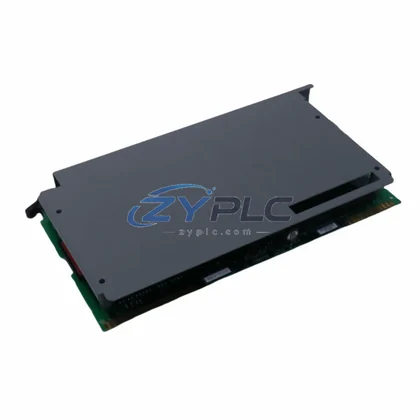
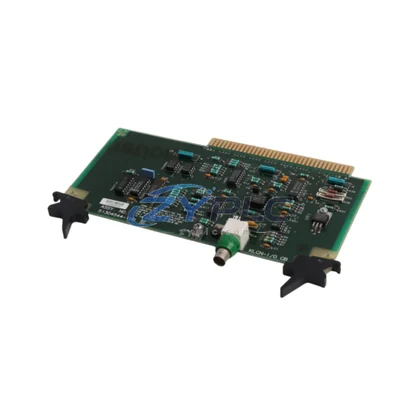
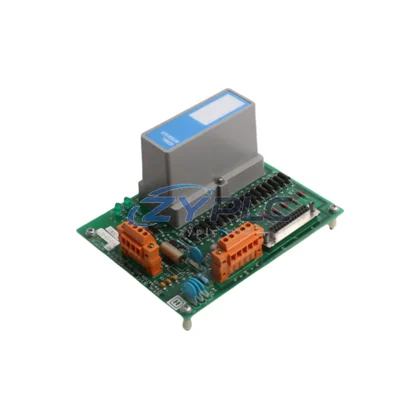
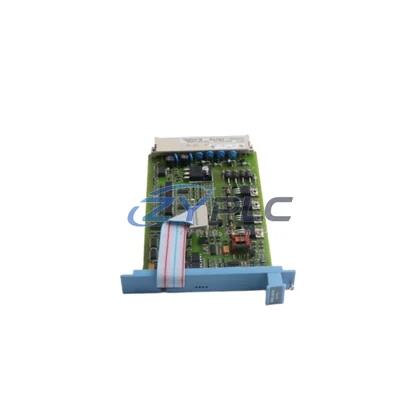
Honeywell 2MLQ-TR1C Relay Output for 2MLQ Control System
The Honeywell 2MLQ-TR1C is a relay output module engineered for seamless integration within the Honeywell 2MLQ distributed control system architecture. In modern industrial automation, no single module operates in isolation — every relay output, every signal path, and every communication link is a node in a larger, interdependent control hierarchy. The 2MLQ-TR1C is designed with this systems-first philosophy at its core, delivering reliable discrete output switching capability that anchors the field device layer while maintaining full coherence with the supervisory, network, and power layers above it.
Within a layered automation architecture, the 2MLQ-TR1C occupies the critical junction between the control layer and the execution layer. Its relay contacts provide galvanically isolated switching for actuators, solenoid valves, motor starters, and alarm annunciators — the physical endpoints of any process control loop. By providing clean, bounce-free relay switching with defined contact ratings, the module ensures that control commands issued by the 2MLQ system controller are faithfully executed at the field level, without introducing noise or signal degradation into adjacent I/O channels.
System architects integrating the 2MLQ-TR1C into a new or retrofit installation will find that the module’s mechanical and electrical footprint is fully compatible with the 2MLQ backplane and rack infrastructure. This compatibility eliminates the need for custom wiring adapters or signal conditioning, reducing both commissioning time and long-term maintenance overhead. The module slots directly into the 2MLQ I/O rack alongside analog input modules, digital input modules, and communication gateway cards, forming a unified I/O assembly that can be configured, diagnosed, and replaced without disrupting adjacent channels.
Product Specification Table
| Parameter |
Specification |
| System Role |
Discrete Relay Output Module — Execution Layer Interface |
| Compatible Platform |
Honeywell 2MLQ Distributed Control System |
| Output Type |
Relay Contact (Form A / SPST or equivalent per series standard) |
| Contact Rating |
Rated for industrial-grade switching loads (resistive & inductive) |
| Isolation |
Galvanic isolation between control logic and field contacts |
| Backplane Interface |
2MLQ I/O rack — direct slot insertion, no adapter required |
| Communication |
Integrated via 2MLQ system bus; status readable by system controller |
| Operating Temperature |
0°C to 60°C (standard industrial panel environment) |
| Mounting |
DIN rail / rack-mount within 2MLQ I/O chassis |
| Diagnostic Support |
Module-level fault detection via 2MLQ controller diagnostics |
| Warranty |
warranty terms confirmed during quotation — tested, verified, ready for system deployment |
System Compatibility Notes
The 2MLQ-TR1C achieves its full value when considered as part of a coordinated control system rather than a standalone component. In a typical 2MLQ-based control cabinet, the relay output module works in concert with a range of complementary hardware. The Honeywell 2MLQ system controller (CPU module) issues discrete output commands based on ladder logic or function block programs, routing those commands through the 2MLQ backplane to the 2MLQ-TR1C’s relay contacts. Alongside the relay output module, 2MLQ analog input modules and 2MLQ digital input modules feed process variable data back to the controller, closing the control loop.
Power integrity is maintained by the 2MLQ power supply module, which conditions incoming AC or DC supply voltage and distributes regulated power across the I/O rack. In redundant architectures, a secondary power supply module operates in hot-standby, ensuring that a single power supply failure does not interrupt relay output operation — a critical requirement in continuous process industries such as petrochemical refining and power generation.
Network connectivity is handled by 2MLQ communication gateway modules, which bridge the 2MLQ system bus to plant-level networks including Modbus TCP, PROFIBUS DP, or Ethernet/IP. This allows SCADA systems and historian servers to monitor relay output states in real time, supporting both operational visibility and post-event analysis. At the human-machine interface layer, Honeywell HMI terminals compatible with the 2MLQ platform display relay output status, alarm conditions, and maintenance prompts, giving operators a unified view of the control system without requiring direct access to the I/O rack.
For installations requiring terminal block flexibility, 2MLQ terminal modules and marshalling panels provide field wiring termination points that are electrically and mechanically compatible with the 2MLQ-TR1C’s output contacts. In applications where relay output switching must be coordinated with variable-speed drives or soft starters, Honeywell drive interface modules within the same control cabinet provide the necessary signal conditioning and interlock logic, ensuring that relay commands are executed safely within the drive’s operating envelope.
Industrial Application Notes
The Honeywell 2MLQ-TR1C finds application across a broad spectrum of industrial sectors where reliable discrete output switching is a non-negotiable system requirement. In power generation and electrical substation automation, the module controls circuit breaker trip coils, transformer tap changers, and alarm relay panels, where contact reliability and isolation integrity are paramount. The galvanic isolation provided by the relay contacts prevents ground loop interference from propagating into the 2MLQ control bus, protecting the integrity of the entire control system.
In petrochemical and refinery process control, the 2MLQ-TR1C drives solenoid valves on safety instrumented system (SIS) loops, motor control center (MCC) start/stop circuits, and emergency shutdown (ESD) relay panels. Its compatibility with the 2MLQ architecture means that relay output states are fully visible to the plant DCS historian, supporting regulatory compliance and process audit requirements. In water and wastewater treatment facilities, the module controls pump motor starters, valve actuators, and chemical dosing systems, where the combination of relay isolation and system-level diagnostics reduces unplanned downtime and simplifies preventive maintenance scheduling.
Mining and mineral processing applications leverage the 2MLQ-TR1C in conveyor control systems, crusher interlock circuits, and ventilation fan control panels, where the module’s industrial temperature rating and robust relay contact design ensure reliable operation in dusty, high-vibration environments. In metallurgical and steel plant automation, the module interfaces with furnace control systems, rolling mill interlock circuits, and cooling water pump controls, where precise relay switching timing is critical to product quality and equipment protection. Packaging and discrete manufacturing lines use the 2MLQ-TR1C to control pneumatic actuators, reject gates, and conveyor diverters, integrating seamlessly with the broader 2MLQ I/O architecture to support high-speed production line control.
Product Compatibility FAQ
Q1: Is the Honeywell 2MLQ-TR1C compatible with existing 2MLQ I/O racks, and can it be installed without modifying the backplane or power supply configuration?
A: Yes. The 2MLQ-TR1C is designed for direct slot insertion into standard 2MLQ I/O racks without backplane modification. The module draws power from the existing 2MLQ rack power supply, and its relay output channels are automatically recognized by the 2MLQ system controller upon insertion. No additional configuration of the power supply or backplane is required, making it suitable for both new installations and retrofit expansions of existing 2MLQ control systems.
Q2: How does the 2MLQ-TR1C support long-term maintenance and system availability in continuous process environments?
A: The module supports hot-swap replacement in systems configured for online I/O replacement, allowing maintenance teams to substitute a faulty relay output module without shutting down the entire I/O rack. The 2MLQ system controller’s diagnostic functions provide module-level fault detection, enabling predictive maintenance scheduling before relay contact wear causes a process interruption. Combined with our warranty terms confirmed during quotation and pre-tested module supply, the 2MLQ-TR1C supports a low-risk, long-term maintenance strategy for critical control infrastructure.
Q3: What is the recommended approach for verifying relay output channel integrity during system commissioning and after long-term storage?
A: During commissioning, relay output channels should be verified using the 2MLQ controller’s forced output function, which allows individual relay contacts to be energized and de-energized under controlled conditions without running the full control program. Contact continuity and isolation resistance should be measured at the field terminal block using a calibrated insulation resistance tester. Modules supplied by ZYPLC are pre-tested prior to shipment and covered by a warranty terms confirmed during quotation, providing documented assurance of contact integrity and reducing the risk of commissioning delays caused by latent module defects.