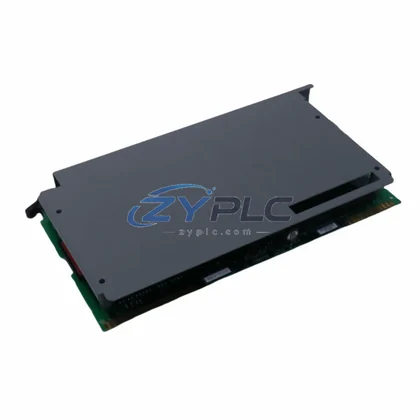
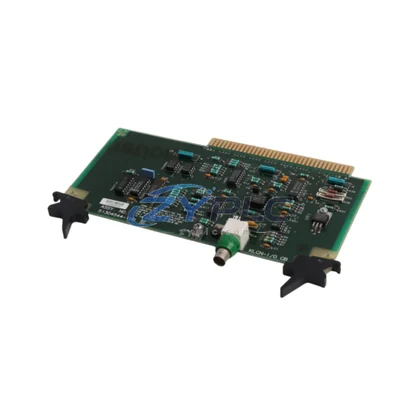
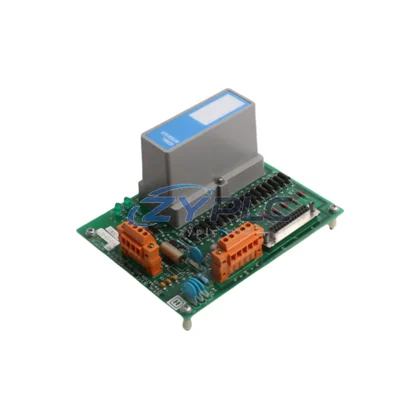
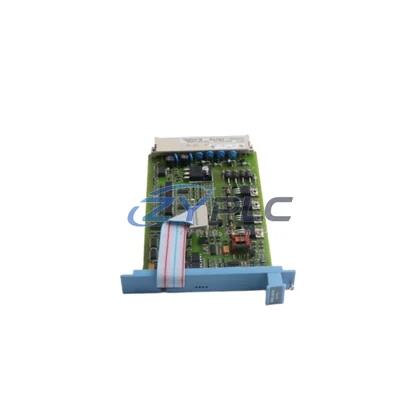
Honeywell 2MLQ-TR8B Transistor Output Module: Precision I/O Control for 2MLQ Series Automation
The Honeywell 2MLQ-TR8B is a high-efficiency transistor output module engineered for demanding industrial automation environments where energy accountability and control precision are non-negotiable. As part of the Honeywell 2MLQ Series, this module delivers fast, reliable digital output switching with minimal power dissipation — making it a cornerstone component in maintenance-focused PLC architectures across discrete manufacturing, process control, and motion-intensive production lines.
In modern factories striving to reduce idle operating load and improve equipment utilization rates, the quality of I/O execution directly impacts overall system efficiency. The 2MLQ-TR8B’s transistor-based output design eliminates the mechanical wear and coil-driven power draw associated with relay output alternatives, enabling tighter control cycles, faster response times, and a measurable reduction in per-cycle energy overhead. When integrated into a well-structured automation architecture, this module contributes directly to lower kWh consumption per production unit — a metric increasingly tracked by maintenance planning systems on the plant floor.
Product Specification Table
| Parameter |
Specification |
| SKU |
2MLQ-TR8B |
| Brand / Series |
Honeywell / 2MLQ Series |
| Output Type |
Transistor (NPN/Solid-State) |
| Number of Output Points |
8 Points |
| Operating Voltage |
24V DC (Typical) |
| Power Dissipation |
Low — No Coil Drive Loss |
| Switching Speed |
High-Speed Transistor Switching |
| Compatible Systems |
Honeywell 2MLQ Series PLC, Compatible Backplanes & Racks |
| Application Environment |
Discrete Manufacturing, Process Automation, Motion Control |
| Energy Saving Value |
Eliminates relay coil draw; reduces per-cycle energy overhead |
| Warranty |
warranty terms confirmed during quotation |
| Stock Status |
RFQ Available — Tested Before Shipment |
| Origin |
United States |
System Compatibility and Application
Achieving genuine energy efficiency in industrial automation requires more than selecting a single efficient component — it demands a coherent system architecture where every layer, from field-level sensing to supervisory control, is optimized for minimal waste and maximum throughput. The Honeywell 2MLQ-TR8B occupies a critical position in this architecture as the execution endpoint for digital control commands.
At the controller level, the Honeywell HC900 Process Controller or compatible 2MLQ Series CPU modules generate the output commands that the 2MLQ-TR8B executes. The speed and accuracy of transistor switching directly supports the controller’s ability to maintain tight loop timing — essential for energy-efficient motor sequencing and actuator control. Paired with Honeywell 2MLQ analog input modules that feed real-time process variables back to the CPU, the system can dynamically adjust output states to match actual load demand rather than running at fixed, energy-wasteful setpoints.
On the drive side, the 2MLQ-TR8B’s digital outputs are commonly wired to variable frequency drives (VFDs) — such as those in the Honeywell or compatible third-party drive families — to trigger speed changes, enable/disable commands, and fault resets. This transistor-to-VFD interface is fundamental to motor maintenance planning: by issuing precise start/stop and speed-reference signals with zero contact bounce and microsecond-level response, the 2MLQ-TR8B enables the VFD to execute smooth acceleration ramps that eliminate inrush current spikes and reduce mechanical stress on motors and couplings.
For servo-driven axes, the module’s fast transistor outputs integrate cleanly with servo drive enable and inhibit circuits, allowing the PLC to cut power to idle servo axes between production cycles — a straightforward operational-efficiency measure that can reduce servo system standby consumption by 30–60% depending on cycle duty. When combined with Honeywell 2MLQ digital input modules monitoring position sensors and limit switches, the control loop becomes fully closed, enabling the CPU to make maintenance decisions based on actual machine state.
Power quality and consumption monitoring is increasingly integrated at the panel level using power monitoring relays and energy meters — devices that measure real-time kW, kWh, power factor, and harmonic distortion. The 2MLQ-TR8B can interface with these monitoring systems through its output channels, triggering load-shedding routines or alerting supervisory systems when consumption thresholds are exceeded. This closes the energy feedback loop between measurement and control action.
At the communication layer, Honeywell 2MLQ communication modules supporting protocols such as Modbus RTU, PROFIBUS, or Ethernet/IP allow the PLC system — including the 2MLQ-TR8B’s output status — to be visible to plant-level SCADA and MES platforms. This transparency is essential for energy reporting, OEE (Overall Equipment Effectiveness) tracking, and identifying which production segments consume disproportionate energy relative to output. HMI panels connected to the same network give operators real-time visibility into output module states, enabling manual intervention when automated operational-efficiency routines require override.
The power supply infrastructure supporting the 2MLQ rack — typically 24V DC industrial power supplies with high conversion efficiency ratings — also contributes to the overall energy budget. Selecting power supplies with active power factor correction and high efficiency ratings (≥90%) ensures that the clean, stable DC voltage the 2MLQ-TR8B requires is delivered without unnecessary conversion losses upstream.
Maintenance and Replacement Notes
In a typical discrete manufacturing cell — such as an automotive component assembly line or a packaging machine — the Honeywell 2MLQ-TR8B controls solenoid valves, conveyor motor starters, indicator lights, and actuator enable signals. Each of these loads represents an energy cost that accumulates across thousands of daily cycles. The transistor output’s ability to switch loads in under a millisecond, without the 5–20ms bounce characteristic of relay contacts, means that the PLC program can implement tighter timing windows — reducing the duration that solenoids and motors are energized beyond what the process actually requires.
Consider a pneumatic clamping station where a solenoid valve holds a workpiece during a 3-second machining operation. With relay outputs, contact bounce and slower response times often lead to conservative programming — the solenoid is energized 200–500ms earlier than necessary and de-energized with similar conservatism. Over 10,000 cycles per shift, this adds up to significant compressed-air waste (pneumatic energy is among the most expensive utilities in manufacturing). The 2MLQ-TR8B’s transistor precision allows the program to trim these margins, reducing solenoid on-time and the associated compressor load.
For conveyor and transfer systems, the module’s outputs drive motor starter contactors or directly interface with VFD run commands. By enabling the PLC to implement demand-based motor control — starting conveyors only when upstream sensors confirm product presence — the 2MLQ-TR8B becomes an active participant in reducing no-load motor running time. Combined with predictive maintenance data from vibration and temperature sensors feeding back through the system’s analog input modules, the control architecture can schedule preventive stops during planned low-demand windows rather than allowing motors to run continuously at partial load.
Downtime reduction is another dimension of maintenance planning often overlooked. Unplanned stops require restart sequences that consume surge energy and generate thermal stress. The 2MLQ-TR8B’s solid-state design — with no moving contacts to wear, arc, or fail — contributes to higher mean time between failures (MTBF) for the output stage. Fewer output failures mean fewer unplanned stops, more consistent production rhythm, and a flatter, more predictable operating load profile across the shift.
All units supplied by ZYPLC undergo functional output testing prior to shipment, verifying switching performance under load conditions. This pre-shipment validation, combined with a warranty terms confirmed during quotation, ensures that the module performs to specification from day one — eliminating the energy and productivity losses associated with early-life failures in the field.
Product Sourcing FAQ
Q1: How does the 2MLQ-TR8B contribute to measurable operational stability compared to relay output modules?
Transistor outputs eliminate the coil power draw inherent in relay output modules — typically 0.5W to 2W per relay coil continuously energized. Across an 8-point module running at high duty cycles, this difference accumulates meaningfully over a production year. Additionally, the faster switching speed allows tighter control timing, reducing unnecessary load energization time and the associated unplanned downtime.
Q2: Is the Honeywell 2MLQ-TR8B compatible with third-party VFDs and servo drives?
Yes. The 2MLQ-TR8B’s transistor outputs provide standard 24V DC digital signals compatible with the digital input terminals of most industrial VFDs and servo drives. Signal-level compatibility should be verified against the specific drive’s input specifications, but the module’s output characteristics align with common industrial standards used across major drive manufacturers.
Q3: What is the recommended replacement or upgrade path if the 2MLQ-TR8B is end-of-life in my system?
For systems where the 2MLQ Series platform is being maintained, sourcing tested surplus stock — as available through ZYPLC — is the most cost-effective path to extending system life without a full controller migration. For new system designs, evaluating current-generation Honeywell controller platforms with equivalent transistor output modules ensures long-term parts availability and support.
Q4: What testing does ZYPLC perform before shipping the 2MLQ-TR8B, and what does the warranty terms confirmed during quotation cover?
Each unit undergoes functional output switching tests under representative load conditions to verify that all 8 output channels operate within specification. The warranty terms confirmed during quotation covers defects in materials and workmanship under normal operating conditions. Units that fail to perform to specification within the warranty period are replaced or refunded — contact ZYPLC’s technical team for warranty claim procedures.