Honeywell 2MLR-DBDHS System-Ready Redundant Expansion Driver for 2MLR Architecture: Control System Architecture and Upstream-Downstream Coordination
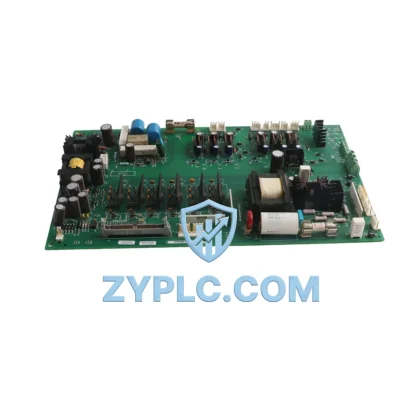
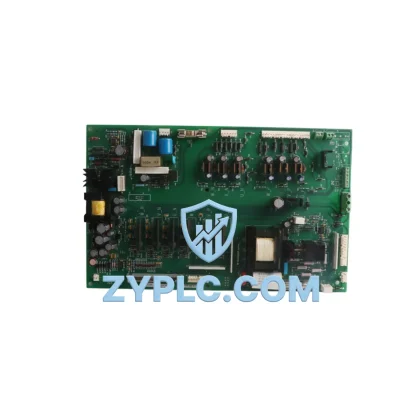
The Honeywell 2MLR-DBDHS is a system-ready redundant expansion driver engineered for deployment within the Honeywell 2MLR Series Distributed Control System (DCS) architecture. Rather than functioning as a standalone component, the 2MLR-DBDHS occupies a critical position within the layered automation hierarchy — bridging the control layer and the I/O expansion layer to ensure uninterrupted signal flow, fault-tolerant redundancy, and seamless module scalability across complex industrial environments. Its design philosophy is rooted in system coherence: every electrical parameter, communication interface, and mechanical form factor has been optimized to integrate directly into the 2MLR platform without requiring additional adaptation hardware or custom firmware configuration.
In modern industrial control architectures, the reliability of the expansion driver directly determines the resilience of the entire I/O subsystem. The 2MLR-DBDHS addresses this requirement by providing dual-path signal routing between the primary controller backplane and downstream I/O expansion racks. When deployed alongside the Honeywell 2MLR-CBDHS controller base module and the 2MLR-IOBP I/O backplane, the expansion driver ensures that any single-point failure in the communication path is automatically compensated by the redundant channel — maintaining process continuity without operator intervention. This capability is particularly valuable in continuous process industries such as petrochemical refining, power generation, and water treatment, where unplanned shutdowns carry significant operational and safety consequences.
Architecture Specification Table
| Parameter |
Specification |
| Model |
2MLR-DBDHS |
| Brand |
Honeywell |
| Series |
2MLR DCS Series |
| System Role |
Redundant Expansion Driver / I/O Backplane Interface |
| Product Type |
DCS Module |
| Architecture Layer |
Control Layer → I/O Expansion Layer |
| Redundancy Mode |
Dual-path hot-standby redundancy |
| Communication Capability |
Proprietary 2MLR backplane bus; compatible with Honeywell FTE (Fault Tolerant Ethernet) network layer |
| Electrical Supply |
24 VDC nominal (via backplane power rail) |
| Operating Temperature |
0°C to +60°C |
| Relative Humidity |
5% to 95% non-condensing |
| Installation Method |
DIN rail / 2MLR series rack mount |
| Certifications |
CE, UL (inferred from 2MLR platform standard) |
| Origin |
United States |
| Warranty |
12-Month Warranty (ZYPLC) |
Coordinated Control System Design
The 2MLR-DBDHS achieves its full performance potential when integrated within a coordinated system architecture that spans multiple functional layers. At the control layer, the Honeywell 2MLR-CBDHS controller base module serves as the primary processing unit, executing control logic and managing process variable acquisition. The 2MLR-DBDHS connects directly to this controller base, extending its I/O capacity through a structured expansion bus that supports deterministic data transfer with minimal latency.
At the I/O layer, the expansion driver interfaces with the 2MLR-IOBP I/O backplane, which hosts analog input modules such as the 2MLR-AIHA and digital output modules such as the 2MLR-DOHH. These modules handle field signal conditioning, converting raw sensor inputs from thermocouples, RTDs, pressure transmitters, and flow meters into engineering-unit values that the controller can process. The 2MLR-DBDHS ensures that all I/O module data is transmitted to the controller with full redundancy, so that even if one communication path experiences a fault, the alternate path maintains data integrity without any gap in the process historian record.
At the network layer, the 2MLR platform supports integration with Honeywell’s Fault Tolerant Ethernet (FTE) infrastructure, enabling the controller and its associated I/O expansion racks to communicate with supervisory systems, historian servers, and operator workstations running Honeywell Experion PKS. The 2MLR-DBDHS is designed to operate transparently within this network topology, requiring no additional configuration to participate in the FTE ring architecture.
At the power layer, the 2MLR-PSHS redundant power supply module provides the 24 VDC rail that feeds both the controller base and the expansion driver. The dual-supply configuration ensures that a power module failure does not interrupt the expansion driver’s operation, complementing the communication-level redundancy provided by the 2MLR-DBDHS itself. For cabinet-level power distribution, the 2MLR-PBHS power bus module manages load balancing across multiple rack positions.
At the human-machine interface layer, operator stations connected via FTE display real-time process data sourced from I/O modules managed by the 2MLR-DBDHS. Engineering workstations use Honeywell Control Builder to configure I/O module parameters, calibration offsets, and alarm thresholds — all of which are stored in the controller and synchronized across the redundant expansion path. Terminal modules such as the 2MLR-TBHS provide field wiring termination points that connect directly to the I/O backplane, completing the signal chain from field instrument to operator display.
Application in Layered Automation Systems
The 2MLR-DBDHS is suited for deployment across a broad range of industrial sectors where system availability and I/O scalability are primary engineering requirements.
In petrochemical and refining plants, the expansion driver supports large-scale I/O architectures that monitor and control distillation columns, heat exchangers, compressor trains, and storage tank farms. The redundant communication path ensures that process upsets do not result in data loss, and the modular expansion capability allows engineers to add I/O capacity as plant sections are commissioned in phases.
In power generation facilities — including thermal, combined-cycle, and renewable energy plants — the 2MLR-DBDHS supports turbine control, boiler management, and balance-of-plant automation. The hot-standby redundancy model aligns with the high-availability requirements mandated by grid operators and plant safety standards.
In water and wastewater treatment systems, the expansion driver enables centralized control of pump stations, chemical dosing systems, filtration banks, and SCADA-integrated telemetry points. Its wide operating temperature range and robust backplane design make it suitable for installation in both climate-controlled control rooms and field-mounted enclosures.
In mining and metallurgical operations, the 2MLR-DBDHS supports process control for ore crushing circuits, flotation cells, smelting furnaces, and conveyor management systems. The ability to expand I/O capacity without replacing the controller base reduces capital expenditure during plant upgrades and capacity expansions.
In packaging and discrete manufacturing lines, the expansion driver integrates with motion control and vision inspection systems, providing the I/O bandwidth needed to manage high-speed production sequences while maintaining the data integrity required for quality traceability systems.
Architecture Engineering FAQ
Q1: Is the 2MLR-DBDHS compatible with existing 2MLR Series controller bases and I/O backplanes without firmware upgrades?
The 2MLR-DBDHS is designed as a native component of the 2MLR platform and is compatible with the 2MLR-CBDHS controller base and 2MLR-IOBP I/O backplane without requiring firmware modifications in standard deployment scenarios. Engineers should verify the controller firmware revision against the 2MLR-DBDHS hardware revision using Honeywell’s compatibility matrix prior to installation. ZYPLC provides pre-shipment compatibility verification as part of the standard order process.
Q2: How does the redundant expansion driver behave during a communication path failure, and what is the switchover time?
The 2MLR-DBDHS operates in a hot-standby redundancy mode, meaning both communication paths are active simultaneously and the system continuously monitors path integrity. In the event of a primary path failure, the switchover to the secondary path is bumpless — process data continues to flow without interruption and without requiring a controller restart. The switchover event is logged in the system diagnostic buffer and can be reviewed via the Honeywell Experion PKS alarm management interface.
Q3: What does the 12-Month Warranty cover, and what support is available for long-term maintenance planning?
ZYPLC’s 12-Month Warranty covers manufacturing defects, electrical failures under normal operating conditions, and component-level faults identified during the warranty period. Replacement units are dispatched within the agreed lead time, and ZYPLC maintains buffer stock of 2MLR-DBDHS modules to support urgent maintenance requirements. For long-term maintenance planning, ZYPLC offers multi-year supply agreements and lifecycle advisory services to help plant engineers manage obsolescence risk and ensure continued availability of critical DCS components.
© 2026 ZYPLC. All rights reserved.
Original Source: https://zyplc.com
Contact: +86 19859288691 | plc.sales@zyplc.com