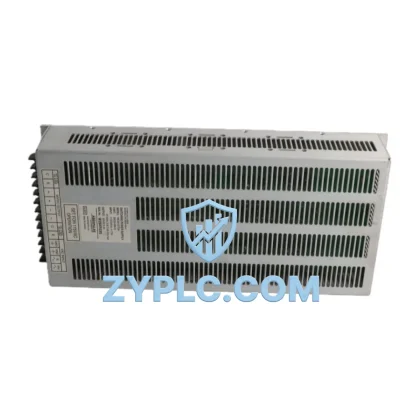
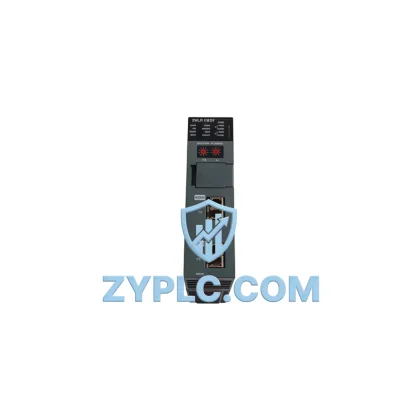
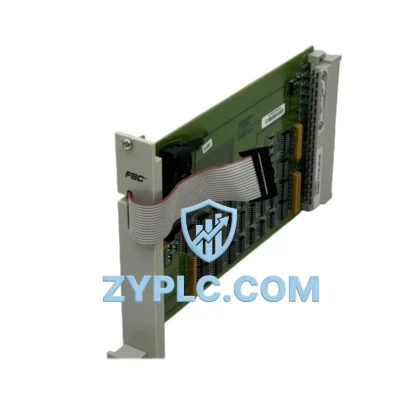
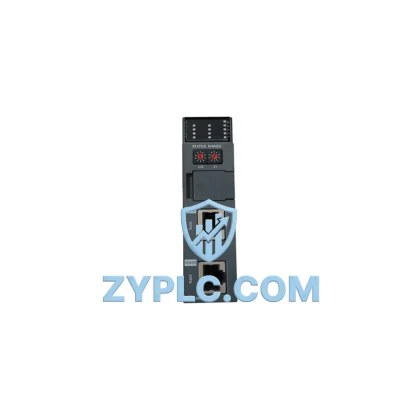
Honeywell 2MLR-DBDT-CC Energy-Saving Driver Module for Optimized TDC3000 Automation
The Honeywell 2MLR-DBDT-CC is a high-efficiency expansion driver module engineered for the TDC3000 Distributed Control System (DCS) platform. Designed to meet the demanding requirements of continuous process industries — including petrochemical, refining, power generation, and advanced manufacturing — this module plays a critical role in reducing unnecessary energy consumption, improving equipment utilization rates, and stabilizing production line throughput. By delivering precise, low-latency control signals to field devices, the 2MLR-DBDT-CC enables plant operators to eliminate idle-state power draw, tighten motor control loops, and reduce the frequency of unplanned shutdowns that drive up both energy costs and maintenance expenditure.
In modern industrial facilities, energy waste rarely originates from a single source. It accumulates across poorly tuned control loops, oversized drives running at partial load, and I/O modules that fail to relay accurate process feedback in real time. The 2MLR-DBDT-CC addresses these inefficiencies at the hardware level. Its driver architecture supports high-speed signal conditioning and deterministic output response, ensuring that downstream actuators — whether pneumatic control valves, variable frequency drives, or servo positioning systems — receive commands with minimal jitter. This translates directly into tighter process control, reduced overshoot, and lower energy consumption per unit of output.
Every unit supplied by ZYPLC undergoes full functional testing prior to shipment, covering signal integrity, channel isolation, output linearity, and thermal performance under load. A 12-month warranty is included as standard, reflecting our confidence in the quality of each module and our commitment to minimizing your total cost of ownership.
Efficiency Performance Table
| Parameter |
Specification / Value |
| SKU / Part Number |
2MLR-DBDT-CC |
| Brand |
Honeywell |
| Series / Platform |
TDC3000 DCS |
| Module Type |
Expansion Driver Module |
| Application Environment |
Continuous Process Industries (Petrochemical, Refining, Power, Manufacturing) |
| Operating Voltage |
24 VDC (nominal, per TDC3000 backplane specification) |
| Signal Output Type |
Deterministic digital/analog driver output |
| Compatible Systems |
Honeywell TDC3000, TPS (Total Plant Solution), HPM, LCN |
| Energy Optimization Value |
Reduces idle-state power draw; supports load-matched drive control |
| Thermal Management |
Tested under full-load thermal conditions prior to shipment |
| Inventory Status |
In stock; ready for immediate dispatch |
| Warranty |
12-Month Warranty (parts and functional performance) |
| Origin |
United States |
Energy-Aware Automation Architecture
The 2MLR-DBDT-CC does not operate in isolation — its energy optimization value is fully realized when integrated within a well-structured TDC3000 automation architecture. In a typical high-efficiency plant configuration, the module interfaces directly with the Honeywell HPM (High-Performance Process Manager), which coordinates control execution across multiple I/O subsystems. The HPM’s ability to handle thousands of control loops simultaneously means that the quality of each driver module’s output directly influences the energy profile of the entire plant.
On the drive side, the 2MLR-DBDT-CC is commonly deployed alongside variable frequency drives (VFDs) from Honeywell’s industrial drive portfolio, where precise command signals from the driver module allow the VFD to modulate motor speed in direct proportion to process demand — eliminating the energy waste associated with fixed-speed motor operation. In pump and compressor applications, this alone can reduce motor energy consumption by 20–50% compared to throttle-valve-based flow control.
For power monitoring and energy data acquisition, the module works in conjunction with Honeywell’s PM I/O (Power Monitoring I/O) subsystems and third-party power quality analyzers integrated via the TDC3000’s LCN (Local Control Network). Real-time energy consumption data fed back through the LCN allows the Honeywell Universal Station (US) or GUS (Global User Station) operator interface to display live kWh consumption per production unit, enabling operators to identify and respond to energy anomalies before they escalate into costly process deviations.
At the field level, the 2MLR-DBDT-CC coordinates with Honeywell Smart Transmitters and HART-compatible field instruments to close the energy feedback loop. When a Smart Transmitter detects a deviation in flow, pressure, or temperature, the signal is processed through the HPM and translated into a corrective driver output by the 2MLR-DBDT-CC — reducing the time between process disturbance and corrective action, and thereby minimizing the energy consumed during transient operating conditions.
In servo-driven applications such as precision positioning or high-speed packaging lines, the module’s low-latency output supports tight synchronization with Honeywell or third-party servo amplifiers, reducing the dwell time between motion segments and improving overall line throughput without increasing installed motor power. The result is a measurable improvement in production line beat rate (takt time) with no additional energy input.
Communication integrity is maintained through the TDC3000’s redundant LCN architecture, ensuring that driver commands are never lost due to network faults. This redundancy eliminates the energy waste associated with process restarts following communication-induced shutdowns — a frequently overlooked source of energy inefficiency in older DCS installations.
Power Optimization in Real Production Lines
In refinery applications, the 2MLR-DBDT-CC has been deployed in crude distillation unit (CDU) control systems where precise driver output is essential for managing the energy-intensive operation of fired heaters, reflux pumps, and overhead condensers. By ensuring that control valve actuators receive accurate, noise-free positioning commands, the module reduces the hunting behavior that causes valves to cycle unnecessarily — a common source of both energy waste and mechanical wear.
In chemical batch processing environments, the module supports recipe-driven control sequences where energy consumption per batch is a key performance indicator. Tight driver output control reduces the overshoot in temperature and pressure ramp profiles, shortening batch cycle times and reducing the energy consumed per unit of product. Over a full production year, these marginal improvements compound into significant reductions in total energy expenditure.
For power generation facilities operating steam turbine generators, the 2MLR-DBDT-CC provides the driver precision required for governor control and load-following applications. Accurate, low-latency driver output ensures that turbine speed and load are maintained within tight bands, reducing fuel consumption and improving heat rate — the primary energy efficiency metric for thermal power plants.
Predictive maintenance integration is another dimension of the module’s energy optimization contribution. By maintaining consistent, high-quality driver output, the 2MLR-DBDT-CC reduces the mechanical stress on downstream actuators and drives, extending their service life and reducing the frequency of maintenance interventions. Fewer maintenance shutdowns mean fewer cold-start energy penalties — the energy cost of bringing a process back to operating temperature and pressure after an unplanned outage.
ZYPLC maintains ready inventory of the 2MLR-DBDT-CC to support urgent replacement requirements. All units are dispatched following completion of our standard pre-shipment test protocol, which includes channel-by-channel output verification, insulation resistance testing, and burn-in under representative load conditions. This ensures that every module installed in your plant performs to specification from the first moment of operation, with no commissioning surprises that could delay production restart and inflate energy costs.
Energy Optimization FAQ
Q1: How does the Honeywell 2MLR-DBDT-CC contribute to measurable energy savings in a TDC3000-based plant?
The 2MLR-DBDT-CC improves energy efficiency by delivering precise, low-noise driver output that reduces control loop hunting, minimizes actuator overshoot, and enables load-matched operation of variable frequency drives and servo systems. In motor-intensive applications such as pumping and compression, tighter control translates directly into reduced energy consumption per unit of throughput. Plants that have replaced degraded driver modules with new or tested units typically report measurable reductions in process variability and associated energy waste within the first weeks of operation.
Q2: Is the 2MLR-DBDT-CC compatible with both legacy TDC3000 and upgraded TPS (Total Plant Solution) configurations?
Yes. The 2MLR-DBDT-CC is designed for the TDC3000 platform and is compatible with TPS-upgraded installations that retain the original HPM and LCN infrastructure. If your facility has undergone a partial migration to Experion PKS, we recommend confirming backplane compatibility with your system integrator before installation. ZYPLC’s technical team can assist with compatibility verification prior to order confirmation.
Q3: What is the recommended replacement interval, and how do I know if my existing module is contributing to energy inefficiency?
There is no fixed replacement interval for the 2MLR-DBDT-CC under normal operating conditions, but degraded modules typically manifest as increased process variability, unexplained increases in actuator cycling frequency, or intermittent control loop alarms. If your energy monitoring system shows a gradual increase in energy consumption per production unit without a corresponding change in throughput, a degraded driver module is a plausible contributing factor. ZYPLC recommends proactive replacement of modules showing any of these symptoms rather than waiting for complete failure.
Q4: What does the 12-month warranty cover, and what is the process for warranty claims?
The 12-month warranty covers functional performance defects identified under normal operating conditions consistent with the TDC3000 platform specification. It does not cover damage resulting from incorrect installation, overvoltage events, or operation outside the module’s rated environmental conditions. To initiate a warranty claim, contact ZYPLC at [email protected] with your order reference, a description of the observed fault, and the results of any diagnostic steps already taken. Our team will respond within one business day with a resolution path, which may include advance replacement to minimize your production downtime.
© 2026 ZYPLC. All rights reserved.
Original Source: https://zyplc.com
Contact: +86 19859288691 | [email protected]