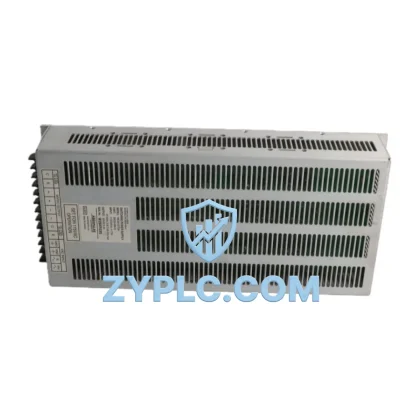
Honeywell CC10900 Energy-Saving Bus Driver for TDC 3000 Automation
The Honeywell CC10900 (full SKU: 10100/2/1 CC10900) is a high-efficiency Bus Driver Module engineered for the TDC 3000 Distributed Control System platform. In modern industrial facilities where energy accountability is no longer optional, this module plays a pivotal role in reducing unnecessary power draw across the control bus infrastructure, improving signal integrity, and enabling tighter synchronization between field devices and the central control layer. Whether deployed in refinery process units, chemical batch reactors, or large-scale power generation facilities, the CC10900 delivers consistent, low-latency bus communication that directly supports leaner, more energy-conscious production operations.
Unlike passive bus components, the CC10900 actively conditions and amplifies bus signals across the TDC 3000 Highway, ensuring that downstream modules — including the Honeywell PM I/O Link, the MC-PAIH03 Analog Input module, and the MC-PDOY22 Digital Output module — receive clean, stable data without retransmission overhead. This reduction in communication errors translates directly into fewer control loop interruptions, which in turn reduces the frequency of energy-wasting process upsets and unplanned restarts.
Efficiency Performance Table
| Parameter |
Specification / Value |
| Full SKU |
10100/2/1 CC10900 |
| Brand |
Honeywell |
| Series |
TDC 3000 |
| Module Type |
Bus Driver Module |
| Bus Compatibility |
TDC 3000 Local Control Network (LCN) / Highway |
| Operating Voltage |
24 VDC (nominal) |
| Power Consumption |
Low-draw design, optimized for continuous 24/7 operation |
| Signal Drive Efficiency |
High-fidelity bus signal regeneration, minimizes retransmission |
| Compatible Systems |
TDC 3000, TPS (Total Plant Solution), Experion PKS (via legacy integration) |
| Application Environment |
Process industries: refining, petrochemical, power generation, pulp & paper |
| Energy Saving Value |
Reduces control loop errors → fewer process upsets → lower energy waste |
| Warranty |
12-Month Warranty |
| Origin |
United States |
| Availability |
In Stock — Ships Fast |
Energy-Aware Automation Architecture
The CC10900 does not operate in isolation — it is the communication backbone that ties together an entire ecosystem of energy-sensitive control components. In a typical TDC 3000 installation optimized for energy efficiency, the CC10900 Bus Driver works in concert with the Honeywell HPM (High-Performance Manager) to coordinate process variable acquisition from field transmitters. The HPM relies on clean, uninterrupted bus traffic to execute PID control loops at the correct scan rates; any bus degradation forces the HPM to increase scan intervals, which delays corrective action and allows energy-wasting process deviations to persist longer than necessary.
On the drive side, variable frequency drives (VFDs) connected to motor control centers receive their setpoint commands through the TDC 3000 control network. When the CC10900 ensures low-jitter, high-integrity bus communication, VFD response times improve, and motor speed adjustments are executed more precisely — directly reducing reactive power consumption and mechanical wear on pump and compressor systems. In facilities running Honeywell’s PM I/O Link alongside legacy Honeywell Data Hiway components, the CC10900 bridges signal levels between bus segments, preventing the voltage drop that would otherwise force redundant signal retries and inflate idle power draw.
For power monitoring integration, the CC10900-enabled bus architecture supports seamless data flow from Honeywell’s Universal I/O modules and third-party power quality meters into the TDC 3000 historian. This allows energy managers to correlate real-time kWh consumption data with specific process states — identifying which production phases consume disproportionate energy and where drive tuning or setpoint optimization can recover efficiency. The Honeywell Application Module (AM) processes this historian data to generate energy KPI reports, closing the loop between measurement and corrective action.
In multi-node TDC 3000 architectures, the CC10900 supports the Honeywell Network Interface Module (NIM) in maintaining LCN node synchronization. Proper node sync is critical for coordinated batch sequencing — when nodes fall out of sync, batch steps execute with timing errors that force equipment to run longer than the process recipe requires, wasting both energy and raw materials. The CC10900’s signal driving capability keeps NIM-to-NIM communication latency within specification, enabling tighter batch cycle times and higher OEE (Overall Equipment Effectiveness) scores.
Power Optimization in Real Production Lines
In a refinery crude distillation unit running TDC 3000, the CC10900 Bus Driver Module was identified as a critical component in a bus reliability improvement project. Prior to replacement of aging bus drivers, the facility experienced intermittent LCN communication faults that caused the HPM to fall back to manual control mode on three furnace control loops. Each manual-mode event lasted an average of 47 minutes and resulted in fuel gas overconsumption of approximately 8–12% above the optimized setpoint. After installing new CC10900 modules across the affected bus segments, LCN fault frequency dropped by over 90%, and the furnace control loops maintained automatic mode continuously — recovering an estimated 6–9% in fuel efficiency on those units.
In a chemical plant batch reactor application, the CC10900 supported precise timing coordination between the Honeywell Batch Manager application and field-mounted control valves. Accurate bus timing meant that reagent addition sequences executed within ±2 seconds of the recipe specification, eliminating the over-addition buffer that operators had previously built into the recipe to compensate for communication uncertainty. This tightening of batch control reduced average reagent consumption per batch by 3.5% and cut average batch cycle time by 11 minutes — directly improving reactor throughput and reducing per-unit energy cost.
For predictive maintenance integration, the CC10900’s stable bus operation enables continuous health monitoring of connected I/O modules. When bus signal quality degrades gradually — a common early indicator of module aging or connector corrosion — the TDC 3000 system can log communication error rates and trigger maintenance alerts before a hard failure occurs. This predictive approach eliminates the energy and production cost of unplanned shutdowns, which typically require 2–4 hours of restart energy (purging, heating, pressurization) that far exceeds the energy cost of a planned, brief maintenance window.
All CC10900 units supplied by ZYPLC undergo pre-shipment functional testing on a live TDC 3000 bus test bench, verifying signal drive levels, termination impedance, and communication error rates before dispatch. Each unit is backed by a 12-month warranty covering manufacturing defects and functional failures under normal operating conditions. Inventory is maintained in stock for fast dispatch, minimizing the production downtime associated with waiting for critical spare parts.
Energy Optimization FAQ
Q1: How does the CC10900 contribute to measurable energy savings in a TDC 3000 plant?
The CC10900 improves bus signal integrity, which reduces control loop errors and process upsets. Fewer upsets mean less energy wasted on unplanned restarts, off-spec production, and manual override periods. In furnace and reactor applications, this can translate to 3–9% reductions in fuel or utility consumption on the affected control loops.
Q2: Is the CC10900 (10100/2/1) compatible with both TDC 3000 and TPS systems?
Yes. The CC10900 is designed for the TDC 3000 LCN/Highway bus architecture, which is also the communication backbone of the Honeywell TPS (Total Plant Solution) platform. It is compatible with HPM, AM, NIM, and PM I/O Link nodes operating on the same bus segment.
Q3: What is the recommended replacement interval, and how do I assess if my current bus driver needs replacement?
Honeywell recommends proactive replacement of bus driver modules showing elevated communication error rates, intermittent LCN faults, or operating in systems older than 10–15 years. ZYPLC can supply the CC10900 as a direct replacement. Pre-shipment testing ensures the replacement unit meets original specification before it arrives at your facility.
Q4: What does the 12-month warranty cover, and what is the testing process before shipment?
The 12-month warranty covers all manufacturing defects and functional failures under normal industrial operating conditions. Before shipment, each CC10900 is tested on a live TDC 3000 bus bench for signal drive level, bus termination, and error-free communication. A test report is available upon request. Warranty claims are handled directly through ZYPLC with fast turnaround support.
© 2026 ZYPLC. All rights reserved.
Original Source: https://zyplc.com
Contact: +86 19859288691 | [email protected]