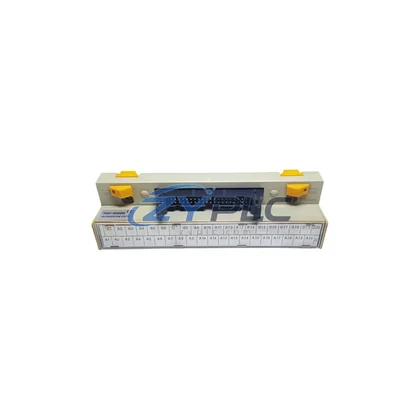
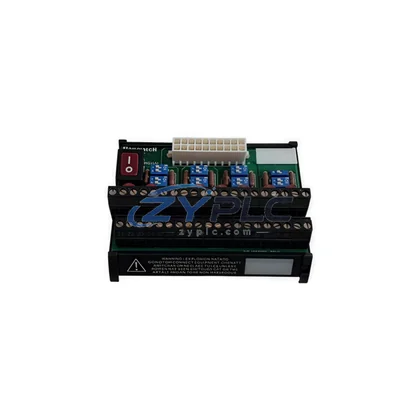
Honeywell 2MLR-DBSF Safety Bus Interface for 2MLR
The Honeywell 2MLR-DBSF is a dedicated Safety Bus Interface Module engineered for seamless integration within the Honeywell Safety Manager 2MLR control system architecture. Designed to operate as a critical communication bridge between the safety logic solver and field-level I/O subsystems, the 2MLR-DBSF ensures deterministic, high-integrity data exchange across all layers of a safety-instrumented system (SIS). Its role within the 2MLR platform is not merely functional — it is foundational to the system’s ability to maintain SIL 2 and SIL 3 compliance across diverse industrial environments including oil and gas, petrochemical processing, power generation, water treatment, and advanced manufacturing.
In a fully configured 2MLR safety architecture, the 2MLR-DBSF occupies the communication layer between the central processing unit and distributed I/O modules. It manages the safety bus protocol, ensuring that all signal transactions between the 2MLR-CPU safety controller and downstream modules such as the 2MLR-DIOM digital input/output module and 2MLR-AIOM analog input/output module are executed with the timing precision and fault tolerance required by IEC 61508 and IEC 61511 standards. This makes the 2MLR-DBSF indispensable in any system where process safety and operational continuity must coexist without compromise.
The module’s architecture supports hot-standby redundancy configurations, allowing the safety bus to remain operational even during single-point failures. When paired with a redundant 2MLR-CPU and a dual-channel 2MLR-PSU power supply unit, the 2MLR-DBSF enables a fully fault-tolerant safety loop that satisfies the most demanding process safety requirements. This redundancy capability is particularly valuable in continuous process industries where unplanned shutdowns carry significant financial and safety consequences.
From an engineering perspective, the 2MLR-DBSF simplifies system commissioning by providing a standardized bus interface that is fully compatible with the Honeywell Safety Manager configuration environment. Engineers can define module addressing, configure diagnostic thresholds, and validate communication integrity directly through the Safety Manager engineering workstation without requiring additional hardware adapters or protocol converters. This reduces commissioning time and minimizes the risk of configuration errors during system startup.
Long-term maintenance is equally well-supported. The 2MLR-DBSF features onboard diagnostic LEDs and supports remote fault reporting through the Safety Manager’s integrated diagnostics framework. Maintenance teams can identify bus communication faults, module health degradation, or wiring anomalies without interrupting the safety function, enabling condition-based maintenance strategies that extend system service life and reduce total cost of ownership. All units supplied by ZYPLC are covered by a warranty terms confirmed during quotation, ensuring that replacement and support commitments are clearly defined from the point of purchase.
Inventory availability is maintained to support both planned capital projects and urgent replacement scenarios. ZYPLC stocks the 2MLR-DBSF alongside a broad range of compatible 2MLR platform components, enabling rapid dispatch to project sites worldwide. Whether the requirement is for a single replacement module or a complete system build-out, ZYPLC’s supply chain infrastructure ensures consistent lead times and verified product authenticity.
Product Specification Table
| System Role |
Safety Bus Interface Module — Communication Layer |
| Compatible Platform |
Honeywell Safety Manager 2MLR Series |
| Safety Integrity Level |
SIL 2 / SIL 3 (IEC 61508, IEC 61511) |
| Bus Protocol |
Honeywell Proprietary Safety Bus (2MLR Architecture) |
| Redundancy Support |
Hot-Standby Redundant Bus Configuration |
| Power Supply Compatibility |
2MLR-PSU Series (24 VDC Nominal) |
| Operating Temperature |
0°C to +60°C |
| Relative Humidity |
5% to 95% Non-Condensing |
| Mounting |
2MLR Backplane / DIN Rail Compatible Chassis |
| Diagnostic Interface |
Onboard LED Indicators + Safety Manager Remote Diagnostics |
| Certifications |
CE, UL, TÜV (SIL-Certified) |
| Country of Origin |
United States |
| Warranty |
warranty terms confirmed during quotation (ZYPLC) |
System Compatibility Notes
The 2MLR-DBSF does not operate in isolation — its value is realized through its integration within a coordinated safety system architecture. At the control layer, the 2MLR-CPU safety logic solver executes the safety application program and relies on the 2MLR-DBSF to maintain uninterrupted communication with all connected I/O modules. Any degradation in bus integrity is immediately detected and reported, allowing the CPU to initiate a safe-state response before process conditions can escalate.
At the I/O layer, the 2MLR-DBSF interfaces directly with the 2MLR-DIOM digital I/O module and the 2MLR-AIOM analog I/O module, both of which handle field signal acquisition from sensors, transmitters, and final control elements. The bus interface module ensures that all I/O data is transmitted with the cycle time consistency required for safety-critical loop execution. In systems where high channel density is required, the 2MLR-DBSF supports multi-module bus segments, allowing engineers to expand I/O capacity without redesigning the communication architecture.
At the network layer, the Safety Manager platform supports integration with plant-wide DCS and SCADA systems through dedicated communication gateways. The 2MLR-DBSF’s role in maintaining internal bus stability directly supports the reliability of these external communication links, as data integrity at the field level is a prerequisite for accurate process visualization at the operator interface. Honeywell Experion PKS HMI stations and third-party SCADA platforms both benefit from the consistent data quality that the 2MLR-DBSF enables.
At the power layer, the 2MLR-PSU power supply module provides the regulated DC power required by the 2MLR-DBSF and all connected modules. In redundant configurations, dual 2MLR-PSU units operate in parallel, ensuring that power supply failures do not interrupt bus communication. The 2MLR-DBSF’s low power consumption profile makes it compatible with both standard and extended-capacity power supply configurations.
At the backplane and chassis layer, the 2MLR-DBSF mounts directly onto the 2MLR system backplane, which provides both mechanical support and the electrical bus connections required for module communication. The backplane’s modular design allows system integrators to configure rack assemblies that match specific project requirements, with the 2MLR-DBSF positioned to optimize bus segment performance across the installed module set.
Industrial Application Notes
In oil and gas processing facilities, the 2MLR-DBSF is deployed within emergency shutdown (ESD) systems and fire and gas (F&G) detection systems where SIL 2 and SIL 3 performance is mandated by regulatory authorities. The module’s deterministic bus communication ensures that safety functions are executed within the required response times, even under high process load conditions.
In petrochemical and refinery environments, the 2MLR-DBSF supports safety systems that protect reactors, distillation columns, and storage facilities from overpressure, overtemperature, and toxic release scenarios. Its compatibility with the full 2MLR module family allows system designers to build comprehensive safety architectures that address multiple hazard scenarios within a single integrated platform.
In power generation applications, including thermal, nuclear, and renewable energy facilities, the 2MLR-DBSF contributes to turbine protection systems, boiler management systems, and grid interconnection safety functions. The module’s hot-standby redundancy capability is particularly valued in power generation contexts where continuous availability is a contractual and regulatory requirement.
In water and wastewater treatment plants, the 2MLR-DBSF enables safety-instrumented functions that protect pumping stations, chemical dosing systems, and treatment process equipment. Its robust operating temperature range and humidity tolerance make it suitable for installation in both climate-controlled control rooms and field-mounted enclosures.
In mining and metallurgical operations, the 2MLR-DBSF is used in conveyor protection systems, crusher control architectures, and smelter process safety applications. The module’s diagnostic transparency supports maintenance programs in remote and harsh operating environments where rapid fault identification is essential to minimizing production downtime.
Product Compatibility FAQ
Q1: Is the 2MLR-DBSF compatible with all modules in the Honeywell Safety Manager 2MLR series?
Yes. The 2MLR-DBSF is designed as the native bus interface module for the 2MLR platform and is fully compatible with all standard 2MLR series modules, including the 2MLR-CPU, 2MLR-DIOM, 2MLR-AIOM, and 2MLR-PSU. Compatibility is maintained across firmware revisions supported by the Honeywell Safety Manager engineering environment. For specific firmware version compatibility, consult the Honeywell Safety Manager system documentation or contact ZYPLC’s technical support team.
Q2: Can the 2MLR-DBSF be replaced online without interrupting the safety function?
In redundant bus configurations where a secondary 2MLR-DBSF is installed and active, the primary module can be replaced without interrupting the safety function, provided the replacement procedure follows the Honeywell Safety Manager hot-swap protocol. In non-redundant configurations, module replacement requires a controlled system shutdown in accordance with the site’s safety management of change (MOC) procedure. ZYPLC recommends maintaining a spare 2MLR-DBSF on-site to minimize replacement lead time in either scenario.
Q3: What does the warranty terms confirmed during quotation cover for the 2MLR-DBSF supplied by ZYPLC?
The warranty terms confirmed during quotation provided by ZYPLC covers manufacturing defects, component failures under normal operating conditions, and functional non-conformance to the published Honeywell 2MLR-DBSF specification. The warranty period begins from the date of shipment. In the event of a warranty claim, ZYPLC will arrange for module inspection, repair, or replacement at no additional cost to the customer. Warranty claims resulting from improper installation, unauthorized modification, or operation outside the specified environmental limits are excluded. For warranty registration and claim procedures, contact ZYPLC at plc.sales@zyplc.com or +86 19859288691.