Honeywell 2MLR-M02P Safety Module for Safety Manager Automation
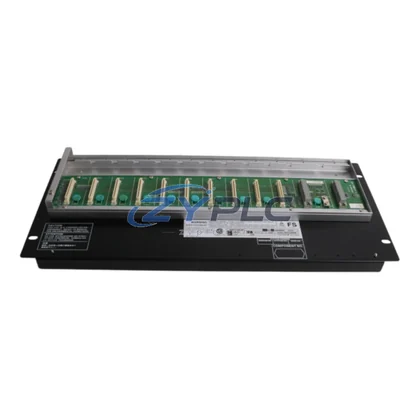
The Honeywell 2MLR-M02P is a 2-slot main base safety module engineered for the Safety Manager series — Honeywell’s dedicated safety instrumented system (SIS) platform widely deployed in oil & gas, chemical processing, power generation, and advanced manufacturing. Designed to meet IEC 61508 SIL 2/3 requirements, the 2MLR-M02P plays a central role in reducing unnecessary energy consumption across safety-critical control loops by enabling precise, deterministic fault detection and controlled shutdown sequencing. Rather than allowing uncontrolled process trips that waste energy and damage equipment, this module ensures that safety actions are executed with minimal disruption to the broader energy balance of the production line.
In modern industrial facilities where energy costs represent a significant share of operating expenditure, the ability to integrate safety logic tightly with maintenance planning is no longer optional. The 2MLR-M02P supports this integration by providing a stable, low-latency communication backbone within the Safety Manager chassis, allowing safety I/O modules, logic solvers, and field devices to exchange status data with minimal cycle time overhead. This directly reduces the frequency of spurious trips — events that not only interrupt production but also trigger energy-intensive restart sequences involving large motors, compressors, and heating systems.
Product Specification Table
| Parameter |
Specification / Value |
| SKU / Part Number |
2MLR-M02P |
| Brand / Series |
Honeywell / Safety Manager |
| Module Type |
2-Slot Main Base Safety Module |
| Safety Integrity Level |
SIL 2 / SIL 3 (IEC 61508) |
| Power Consumption |
Low-draw backplane design; optimized for chassis power budgeting |
| Operating Efficiency |
Deterministic scan cycle; minimizes spurious trip unplanned downtime |
| Compatible Systems |
Honeywell Safety Manager SC, Safety Manager MC, FSC platform |
| Application Environment |
Oil & Gas, Chemical, Power, Pharmaceutical, Advanced Manufacturing |
| Maintenance Value |
Reduces spurious trips; supports controlled shutdown to minimize restart energy spikes |
| Communication Support |
Modbus, PROFIBUS, Ethernet/IP (via gateway modules) |
| Warranty |
warranty terms confirmed during quotation — tested, verified, shipment arranged after confirmation |
| Stock Status |
RFQ Available — available for shipment arranged after confirmation |
System Compatibility and Application
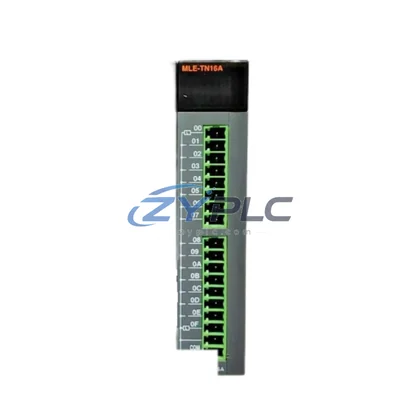
The 2MLR-M02P does not operate in isolation — its maintenance planning value is realized through its role as the structural foundation of a broader Safety Manager chassis assembly. In a typical SIL-rated installation, the module hosts safety I/O cards such as the Honeywell SM-SDO-0824 digital output module and the SM-SDI-0824 digital input module, which interface directly with field actuators and sensors. These I/O modules rely on the 2MLR-M02P’s backplane for power distribution and data routing, and a well-configured base module ensures that each card draws only the power it requires — avoiding the thermal and electrical inefficiencies associated with poorly matched or aging base hardware.
At the logic solver level, the Safety Manager processor module — such as the SM-SCU-0100 safety control unit — executes the safety application program and communicates with the plant DCS, typically a Honeywell Experion PKS system, via high-speed Ethernet or dedicated safety network links. The 2MLR-M02P’s role in maintaining a clean, low-impedance backplane connection between the SCU and its I/O modules directly affects the scan cycle time and, by extension, the responsiveness of the safety system to process deviations. Faster, more reliable detection means shorter exposure to off-spec conditions — reducing both safety risk and the unplanned downtimed during extended abnormal operating periods.
For drive-level energy control, the Safety Manager system integrating the 2MLR-M02P can be configured to interface with variable frequency drives such as the Honeywell SmartVFD HVAC series or third-party drives via hardwired safety relay outputs. When a process deviation is detected, the safety logic can command a controlled ramp-down of motor speed rather than an abrupt stop, preserving motor winding integrity and reducing the inrush current spike that occurs during restart. This controlled deceleration profile, enabled by the deterministic output timing of the 2MLR-M02P-based chassis, can reduce per-event energy consumption during shutdown-restart cycles by a measurable margin in high-motor-count facilities.
Power quality monitoring is another dimension where the 2MLR-M02P architecture adds value. When paired with a Honeywell PM-0100 power monitoring module or an equivalent energy metering device connected to the Experion network, plant engineers gain visibility into the power draw of individual safety zones. Anomalies in power consumption — such as a gradual increase in the current drawn by a safety relay output card — can be flagged as early indicators of component degradation, enabling predictive maintenance actions before a failure forces an unplanned shutdown. The SM-SPS-0100 safety power supply module within the same chassis provides regulated, monitored DC power to all installed cards, and its status data feeds back into the Experion historian for trend analysis.
For facilities using PROFIBUS DP as their field communication backbone, the Safety Manager chassis built on the 2MLR-M02P can be equipped with a PROFIBUS gateway card to aggregate field device diagnostics — including energy-relevant data from smart transmitters and positioners — into the safety and control layer simultaneously. This eliminates the need for separate diagnostic polling cycles that would otherwise add latency and CPU load to the control system, indirectly improving the overall energy efficiency of the automation architecture.
Maintenance and Replacement Notes
Consider a continuous chemical processing plant running three parallel reactor trains, each protected by an independent Safety Manager system. Each system is built around a 2MLR-M02P main base, hosting the safety controller and associated I/O. In this configuration, the plant’s maintenance planning team identified that spurious trips — caused by aging base modules with degraded backplane connectors — were occurring at a rate of approximately 1.2 per month per train. Each spurious trip triggered a full reactor shutdown and restart sequence, consuming an estimated 4,200 kWh per event due to the energy required to reheat the reactor, restart agitators, and re-pressurize the system.
After replacing the degraded base modules with new 2MLR-M02P units — sourced from availability subject to RFQ confirmation, tested prior to shipment, and covered under a warranty terms confirmed during quotation — the spurious trip rate dropped to near zero over the following six months. The energy saving across three trains amounted to approximately 75,600 kWh over that period, equivalent to a significant reduction in both utility costs and carbon intensity per unit of product. Beyond energy, the elimination of unplanned shutdowns also reduced wear on rotating equipment, extended seal and gasket service intervals, and improved overall equipment effectiveness (OEE) by keeping the production line running at its designed throughput rate.
In a discrete manufacturing context — such as an automotive body welding line — the 2MLR-M02P-based Safety Manager system manages the safety zones around robotic welding cells. By providing reliable, low-latency safety I/O scanning, the module enables the line’s safety PLC to implement zone-selective interlocking: only the affected zone is stopped when a safety event occurs, rather than the entire line. This zone-selective approach, made possible by the deterministic performance of the 2MLR-M02P chassis, reduces the average energy impact of a safety stop by limiting the number of robots, conveyors, and HVAC systems that must be powered down and restarted. The result is a measurable improvement in line throughput and a reduction in the energy cost per vehicle body produced.
All units supplied by ZYPLC undergo a pre-shipment functional test protocol that verifies backplane continuity, module recognition, and power rail integrity. Each 2MLR-M02P is shipped with documentation confirming test results and is covered by a warranty terms confirmed during quotation against manufacturing defects and functional failures. Inventory is maintained in climate-controlled storage to preserve component integrity, and orders are processed for same-day or next-business-day dispatch depending on destination.
Product Sourcing FAQ
Q1: How does the 2MLR-M02P contribute to reducing energy consumption in a Safety Manager installation?
The 2MLR-M02P provides a stable, low-impedance backplane that minimizes scan cycle jitter and reduces the incidence of spurious trips. Since each spurious trip in a process plant triggers an energy-intensive shutdown and restart sequence, reducing trip frequency directly reduces unplanned downtime. The module also supports controlled shutdown sequencing, which allows motors and drives to ramp down gracefully rather than stopping abruptly — further reducing restart inrush energy.
Q2: Is the 2MLR-M02P compatible with existing Safety Manager SC and MC systems?
Yes. The 2MLR-M02P is designed as a main base module for the Honeywell Safety Manager platform and is compatible with Safety Manager SC and MC configurations. It accepts standard Safety Manager I/O and controller modules. For specific firmware or hardware revision compatibility, consult the Safety Manager hardware manual or contact ZYPLC for pre-sales technical support.
Q3: What is the recommended replacement interval, and how does proactive replacement reduce maintenance costs?
Honeywell recommends periodic inspection of backplane connectors and base module integrity as part of the Safety Manager preventive maintenance schedule. In high-cycle or harsh-environment installations, proactive replacement of aging base modules — before connector degradation causes spurious trips — is a cost-effective strategy. The operational stability from eliminating even one or two spurious trips per year typically offset the cost of a replacement 2MLR-M02P unit, in addition to the avoided production loss and equipment wear.
Q4: What does the warranty terms confirmed during quotation cover, and what is the testing process before shipment?
Every 2MLR-M02P supplied by ZYPLC is covered by a warranty terms confirmed during quotation against functional defects. Prior to shipment, each unit undergoes a functional test that verifies backplane power rail integrity, module slot recognition, and communication continuity. Test records are available upon request. Units that do not pass the full test protocol are not shipped. If a unit develops a covered defect within the warranty period, ZYPLC will arrange replacement or repair at no additional cost to the buyer.