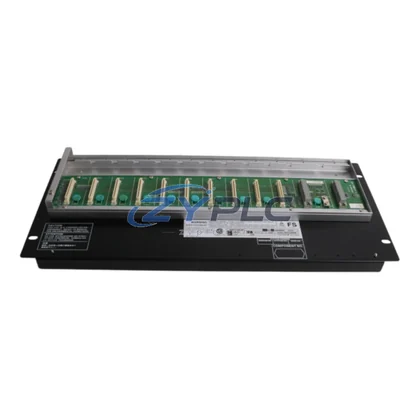
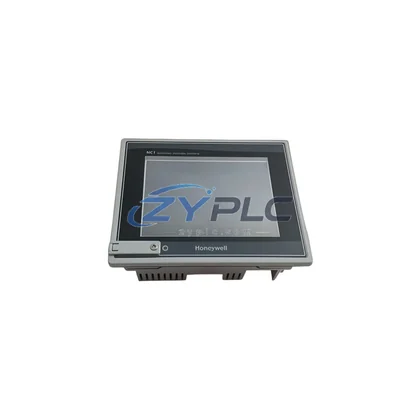
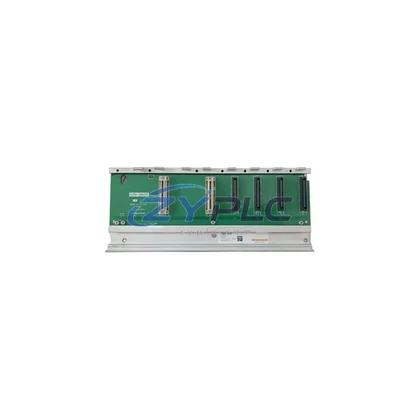
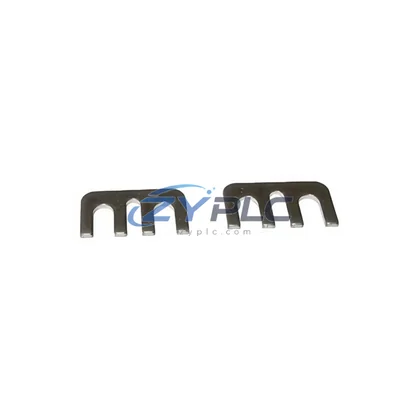
Honeywell MLE-TN16A Terminal Block for MLE Series
The Honeywell MLE-TN16A is a 16-channel terminal block module purpose-built for deployment within the Honeywell MLE Series distributed control system (DCS) architecture. Rather than functioning as a standalone wiring accessory, the MLE-TN16A occupies a critical position in the I/O layer of a multi-tier automation hierarchy — serving as the structured field-wiring interface between process instrumentation and the MLE Series I/O modules mounted in the system backplane. Its role is to ensure signal integrity, reduce installation error, and support long-term maintainability across the full control system lifecycle.
In a layered automation architecture, the MLE-TN16A connects directly to MLE Series analog or digital I/O modules such as the MLE-AI16A (16-channel analog input) or MLE-DO16A (16-channel digital output), providing a clearly labeled, screw-terminal field wiring point for each channel. This structured approach eliminates the need for field-side marshalling panels in many applications, reducing cabinet footprint and simplifying cable routing. The terminal block’s channel-to-channel isolation and clearly numbered terminal positions support rapid commissioning and reduce the risk of cross-wiring during initial installation or future modifications.
At the control layer, the MLE-TN16A supports the MLE Series controller — such as the MLE-C200 or MLE-C300 process controller — by ensuring that field signals arrive at the I/O bus with consistent electrical characteristics. The module’s design is compatible with the MLE Series backplane architecture, allowing it to be installed in standard MLE Series racks alongside power supply modules such as the MLE-PS24 and communication gateway modules including the MLE-GW-PBUS for PROFIBUS integration or the MLE-GW-MBUS for Modbus RTU field device connectivity.
From a network and communications perspective, the MLE-TN16A does not itself carry protocol traffic, but its role in maintaining clean, well-terminated field connections directly supports the data quality that higher-level communication layers depend upon. In systems where the MLE Series controller exchanges data with a supervisory SCADA platform or historian via Ethernet/IP or OPC-UA, signal noise or wiring faults at the terminal block level can propagate upward and corrupt process data. The MLE-TN16A’s robust terminal design mitigates this risk, contributing to overall system communication stability.
In redundant control architectures, the MLE-TN16A supports dual-path I/O configurations where field signals must be simultaneously available to primary and secondary controllers. When paired with MLE Series redundancy modules and a redundant MLE-C300R controller pair, the terminal block provides the common field-wiring anchor point that both control paths share, ensuring that a controller switchover does not interrupt field signal acquisition. This is particularly important in continuous process industries such as petrochemical refining, power generation, and water treatment, where unplanned process interruptions carry significant operational and safety consequences.
For human-machine interface integration, the MLE-TN16A’s structured channel layout simplifies the mapping of field I/O points to HMI tag databases. Engineers configuring Honeywell Experion PKS or third-party HMI platforms can rely on the terminal block’s consistent channel numbering to verify tag assignments during FAT (Factory Acceptance Testing) and SAT (Site Acceptance Testing), reducing commissioning time and documentation errors. The module’s compatibility with MLE Series I/O modules also means that channel-level diagnostics available at the controller level can be correlated directly to specific terminal positions, accelerating fault isolation during maintenance.
In manufacturing and packaging line applications, the MLE-TN16A is commonly deployed in control cabinets managing conveyor systems, filling stations, and robotic cell interfaces, where the density of discrete I/O signals demands a reliable, high-channel-count terminal solution. In power distribution and substation automation, the module supports protection relay signal monitoring and breaker status feedback within MLE Series-based SCADA architectures. In mining and metallurgical processing, the MLE-TN16A’s robust construction supports operation in environments with elevated vibration and temperature variation, maintaining connection integrity over extended maintenance intervals.
From a long-term maintenance perspective, the MLE-TN16A’s hot-swap compatibility with MLE Series I/O modules means that field wiring can remain connected to the terminal block while the associated I/O module is removed for replacement or bench testing. This capability significantly reduces planned maintenance downtime and eliminates the need to re-terminate field cables during module exchange — a critical advantage in facilities operating on tight maintenance windows. Spare MLE-TN16A modules can be held in local inventory alongside MLE Series I/O modules, power supplies, and communication gateways to support a comprehensive spare parts strategy.
All MLE-TN16A units supplied by ZYPLC are covered by a warranty terms confirmed during quotation and have undergone functional verification prior to dispatch. Stock availability is maintained to support both planned project procurement and urgent replacement requirements, with fast international shipping to support global industrial automation projects.
Product Specification Table
| Parameter |
Specification |
| System Role |
Field Wiring Terminal Block — I/O Layer |
| Compatible Series |
Honeywell MLE Series DCS |
| Channel Count |
16 Channels |
| Terminal Type |
Screw Terminal, Field-Side Wiring |
| Compatible I/O Modules |
MLE Series Analog & Digital I/O Modules |
| Backplane Compatibility |
MLE Series Rack / Backplane Architecture |
| Installation Environment |
Industrial Control Cabinet, DIN Rail or Panel Mount |
| Communication Role |
Passive Field Wiring Interface (Signal Conditioning Support) |
| Redundancy Support |
Compatible with MLE Series Dual-Path I/O Configurations |
| Operating Temperature |
0°C to 60°C (Typical Industrial Range) |
| Warranty |
warranty terms confirmed during quotation (ZYPLC) |
| Supply Condition |
New / Tested, Availability confirmed by RFQ |
System Compatibility Notes
The MLE-TN16A achieves its full value when integrated within a coordinated MLE Series control system. A typical architecture built around this terminal block module includes the MLE-C300 process controller as the primary control engine, supported by MLE-PS24 power supply modules providing stable 24VDC rail power to the I/O chassis. Field analog signals — such as 4–20mA transmitter outputs from pressure, flow, and temperature instruments — are terminated at the MLE-TN16A and routed to the MLE-AI16A analog input module, while discrete control outputs to solenoid valves and motor starters are managed through the MLE-DO16A digital output module connected via a parallel terminal block assembly.
Network connectivity within the architecture is handled by the MLE-GW-PBUS PROFIBUS gateway for integration with variable frequency drives and intelligent field devices, and the MLE-GW-MBUS Modbus RTU gateway for legacy instrument connectivity. At the human-machine interface layer, operator workstations running Honeywell Experion PKS provide real-time process visualization, with tag assignments mapped directly from the MLE-TN16A channel layout. For redundant architectures, the MLE-C300R redundant controller pair and associated MLE-RIO redundancy I/O modules share the MLE-TN16A as the common field wiring anchor, ensuring seamless controller failover without signal interruption. Relay output expansion is supported through MLE Series relay output modules mounted in adjacent rack slots, completing a fully integrated, scalable control system architecture.
Industrial Application Notes
In manufacturing and assembly line automation, the MLE-TN16A supports high-density discrete and analog I/O termination for conveyor control, robotic cell interfacing, and quality inspection systems, where reliable signal termination directly impacts production throughput and OEE metrics. In power generation and substation automation, the module provides structured termination for protection relay status signals, breaker position feedback, and transformer monitoring inputs within MLE Series-based SCADA architectures, supporting IEC 61850-compatible system designs. In petrochemical and refinery process control, the MLE-TN16A’s compatibility with MLE Series redundant I/O configurations supports SIL-rated loop termination in safety instrumented systems, where wiring integrity is a regulatory requirement. In water and wastewater treatment, the module’s robust terminal design supports long-term operation in humid, chemically active environments, maintaining connection integrity across multi-year maintenance cycles. In mining and metallurgical processing, the MLE-TN16A is deployed in vibration-exposed control cabinets managing crusher control, conveyor drive feedback, and process temperature monitoring, where screw-terminal reliability is essential for continuous operation.
Product Compatibility FAQ
Q1: Is the MLE-TN16A compatible with all MLE Series I/O modules, and does it support both analog and digital signal termination?
The MLE-TN16A is designed as a universal field-wiring terminal block within the MLE Series architecture and is compatible with both analog input/output and digital input/output modules in the MLE Series range. Each of the 16 channels provides a dedicated screw-terminal connection point that maps directly to the corresponding channel on the connected I/O module. Engineers should verify the specific I/O module’s wiring diagram to confirm channel-to-terminal mapping before installation, as analog and digital modules may have different signal polarity and shielding requirements at the terminal level.
Q2: Can the MLE-TN16A be replaced without disconnecting field wiring, and how does this affect system availability during maintenance?
The MLE-TN16A is designed to support field wiring retention during I/O module replacement in MLE Series architectures. In most configurations, the terminal block remains connected to field cables while the associated I/O module is unplugged from the backplane, allowing module exchange without re-termination. This capability is particularly valuable in continuous process environments where maintenance windows are limited. For systems with redundant I/O configurations using the MLE-C300R controller pair, module replacement can be performed without process interruption, as the redundant I/O path maintains signal acquisition during the exchange. ZYPLC recommends maintaining at least one spare MLE-TN16A per control cabinet as part of a standard spare parts inventory strategy.
Q3: What warranty coverage applies to the MLE-TN16A supplied by ZYPLC, and what does the warranty terms confirmed during quotation include?
All MLE-TN16A terminal block modules supplied by ZYPLC are covered by a comprehensive warranty terms confirmed during quotation from the date of shipment. This warranty covers functional defects identified under normal operating conditions consistent with the module’s rated specifications. Each unit undergoes functional verification prior to dispatch to confirm terminal integrity and mechanical condition. In the event of a warranty claim, ZYPLC provides replacement or repair support with priority handling to minimize impact on production operations. Customers are encouraged to contact ZYPLC’s technical support team at plc.sales@zyplc.com for warranty registration and claim processing.