Honeywell 2MLT-TERA Relay for TPS: Compatibility and Replacement Notes
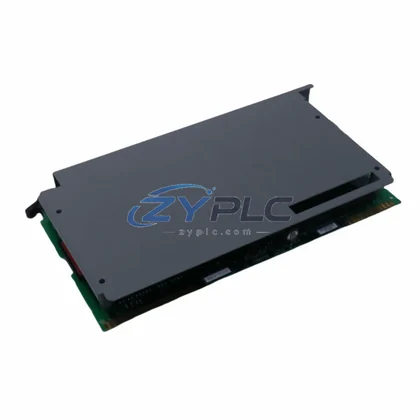
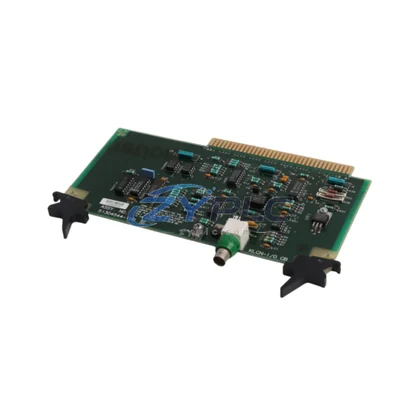
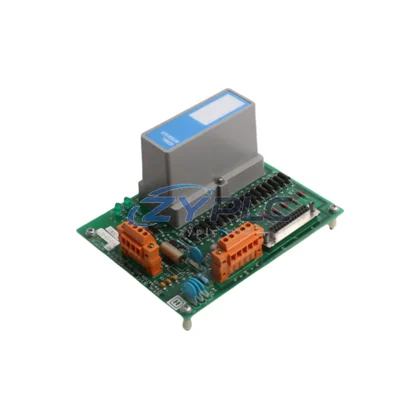
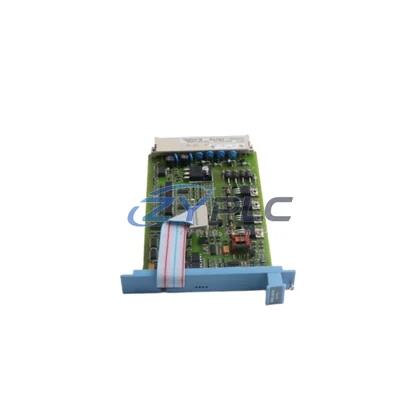
The Honeywell 2MLT-TERA is a relay output module engineered for deployment within the TPS (Total Plant Solution) and TDC 3000 distributed control system architecture. Rather than functioning as a standalone component, the 2MLT-TERA occupies a defined role within a layered automation hierarchy — bridging the control layer and the field execution layer to deliver reliable, deterministic signal switching across process-critical applications. Its design reflects Honeywell’s commitment to system-level consistency, long-term maintainability, and architectural scalability in demanding industrial environments including refining, petrochemical processing, power generation, and continuous manufacturing.
In a fully integrated TPS control architecture, the 2MLT-TERA interfaces directly with the High-Performance Process Manager (HPM) or the Advanced Process Manager (APM) at the control layer, receiving discrete output commands and translating them into hardwired relay closures at the field level. This signal path — from the controller through the I/O subsystem to the relay module and ultimately to the actuator or field device — must maintain absolute integrity under continuous operation. The 2MLT-TERA is designed to sustain this integrity across extended duty cycles, making it a dependable component in both greenfield installations and brownfield system expansions.
Within the I/O layer, the 2MLT-TERA is housed in standard TPS I/O link-compatible card files, sharing backplane infrastructure with complementary modules such as the 2MLI-TERA analog input module, the 2MLTX-TERA extended relay output module, and the 2MDO-TERA digital output module. This co-location within a common card file reduces wiring complexity, simplifies cabinet layout, and allows maintenance personnel to swap modules without disrupting adjacent I/O channels — a critical advantage in live process environments where unplanned downtime carries significant operational cost.
At the network layer, the TPS architecture relies on the Honeywell FTE (Fault Tolerant Ethernet) backbone to carry control data between the Universal Control Network (UCN) nodes and the operator stations. The 2MLT-TERA, as a field-side module, does not participate directly in network communication, but its correct operation is essential to the integrity of the closed-loop control strategies executed by the HPM or APM. Any degradation in relay output performance would propagate upstream as a control deviation, underscoring the importance of sourcing verified, tested modules with documented performance history.
The power layer in a TDC 3000 system is served by dedicated power supply modules such as the MC-PDPY22 or equivalent TPS-compatible power conditioners, which provide regulated DC power to the card file backplane. The 2MLT-TERA draws its operating power from this backplane, and its low power consumption profile ensures that adding relay output capacity does not impose excessive load on the power budget — an important consideration when planning system expansions or redundancy upgrades.
From a redundancy design perspective, the 2MLT-TERA supports architectures where relay output channels are paired with redundant controller paths. In high-availability process applications, the HPM can be configured in a redundant pair, with each controller capable of driving the relay module independently. This arrangement ensures that a single controller failure does not interrupt field-level switching, maintaining process continuity in critical loops such as emergency shutdown sequences, motor control interlocks, and valve actuation commands.
At the human-machine interface layer, operator stations running Honeywell’s Experion PKS or legacy GUS (Global User Station) platforms provide real-time visibility into the status of relay output channels driven by the 2MLT-TERA. Alarm management, trend displays, and control faceplate interactions at the HMI layer are all downstream of the relay module’s physical switching state, reinforcing the importance of module reliability in sustaining accurate process representation at the operator level.
For engineering teams managing system lifecycle and spare parts inventory, the 2MLT-TERA represents a well-understood, widely deployed component within the TPS ecosystem. Its compatibility with existing card file infrastructure — including the MC-TAIH72 terminal assembly and standard TPS I/O link cabling — means that replacement and commissioning can be completed without structural modifications to the control cabinet. This plug-and-play compatibility, combined with a warranty terms confirmed during quotation covering verified functionality and electrical performance, significantly reduces the risk associated with sourcing replacement modules from the secondary market.
Product Specification Table
| Parameter |
Specification |
| System Role |
Relay Output Module — TPS I/O Subsystem |
| Compatible Platform |
Honeywell TPS / TDC 3000 / HPM / APM |
| Output Type |
Discrete Relay Output (Form C Contact) |
| Channels per Module |
16 relay output channels (typical for TERA series) |
| Contact Rating |
2A @ 30VDC / 0.5A @ 125VAC (per channel) |
| Operating Voltage |
Backplane-powered via TPS card file (24VDC nominal) |
| Communication Interface |
TPS I/O Link (UCN-compatible backplane) |
| Installation Environment |
Control cabinet, DIN rail or card file mounting |
| Operating Temperature |
0°C to 60°C |
| Humidity |
5% to 95% RH, non-condensing |
| Warranty |
warranty terms confirmed during quotation — tested, verified, shipment arranged after confirmation |
| system integration |
Compatible with TPS HPM, APM, UCN, FTE architecture |
System Compatibility Notes
Deploying the 2MLT-TERA within a TPS architecture requires careful coordination across multiple system layers. At the controller level, the HPM (High-Performance Process Manager) executes the control strategies that generate discrete output commands routed to the relay module. In redundant configurations, a secondary HPM maintains a hot-standby state, ready to assume control without relay state disruption. The APM (Advanced Process Manager) serves similar functions in less demanding loop configurations, and both controller types communicate with the I/O subsystem via the UCN (Universal Control Network).
Within the card file, the 2MLT-TERA shares backplane resources with the 2MLI-TERA analog input module, which feeds process variable data back to the controller, and the 2MDO-TERA digital output module, which handles non-relay discrete outputs. Terminal assemblies such as the MC-TAIH72 provide the field wiring interface, connecting relay contacts to motor starters, solenoid valves, and interlock circuits in the field. Power to the card file is supplied by the MC-PDPY22 power conditioner, which filters and regulates the plant power supply to protect sensitive module electronics.
At the network layer, the FTE (Fault Tolerant Ethernet) switch infrastructure — typically implemented with managed industrial Ethernet switches — carries supervisory data between the UCN nodes and the Experion PKS server. The C300 Controller, used in newer Experion-integrated TPS expansions, can coexist with legacy HPM hardware on the same FTE backbone, enabling phased migration strategies that preserve existing I/O investments including the 2MLT-TERA relay modules. Communication gateways such as the Honeywell ControlEdge RTU extend TPS supervisory reach to remote field sites, further expanding the architectural footprint within which the 2MLT-TERA operates.
Industrial Application Notes
The 2MLT-TERA finds application across a broad range of process industries where the TPS and TDC 3000 platforms have established long operational histories. In petroleum refining, relay output modules drive motor control center (MCC) contactors, pump start/stop interlocks, and emergency isolation valve actuators — all functions where relay contact reliability directly impacts process safety and regulatory compliance. The 2MLT-TERA’s proven contact rating and TPS compatibility make it a preferred choice for refinery control system maintenance teams managing aging DCS infrastructure.
In power generation facilities, including coal-fired, gas turbine, and combined-cycle plants, the TPS architecture manages boiler controls, turbine sequencing, and auxiliary system interlocks. Relay output modules such as the 2MLT-TERA interface with protection relay panels, breaker control circuits, and annunciator systems, providing the hardwired switching capability that complements the software-based control logic in the HPM. The warranty terms confirmed during quotation ensures that replacement modules sourced for planned outage maintenance meet the performance standards required for these safety-critical applications.
In chemical and petrochemical processing, continuous process plants rely on TPS-based DCS systems to manage reactor temperature control, feed flow regulation, and product separation sequences. The 2MLT-TERA supports these applications by providing reliable discrete output switching for agitator drives, heat exchanger bypass valves, and product routing selectors. Its compatibility with the existing TPS card file infrastructure allows maintenance teams to replace failed relay modules during scheduled turnarounds without requiring engineering rework or system reconfiguration.
Water and wastewater treatment facilities operating TPS-based SCADA and DCS systems use relay output modules to control pump stations, chemical dosing systems, and UV disinfection equipment. The 2MLT-TERA’s low power consumption and wide operating temperature range make it suitable for installation in outdoor control enclosures and remote pump station panels, where environmental conditions may be less controlled than in a central control room.
Product Compatibility FAQ
Q1: Is the 2MLT-TERA compatible with both HPM and APM controllers in a TPS architecture?
Yes. The 2MLT-TERA is designed for the TPS I/O link subsystem and is compatible with both the High-Performance Process Manager (HPM) and the Advanced Process Manager (APM). Both controller types communicate with the I/O subsystem via the UCN backplane, and the relay module operates transparently under either controller configuration. No firmware changes or hardware modifications are required when the module is used with either controller type.
Q2: Can the 2MLT-TERA be installed in an existing TDC 3000 card file without system reconfiguration?
In most cases, yes. The 2MLT-TERA is designed for direct installation into standard TPS-compatible card files. Provided the card file slot is configured for relay output module type in the system database, the module can be installed and recognized by the controller without requiring a full system reconfiguration. It is recommended to verify the slot configuration in the HPM or APM engineering database prior to installation and to perform a channel checkout procedure after module insertion to confirm relay contact continuity and correct I/O link communication.
Q3: What does the warranty terms confirmed during quotation cover, and how does it support long-term maintenance planning?
The warranty terms confirmed during quotation covers verified electrical functionality, relay contact performance, and I/O link communication integrity for the 2MLT-TERA module as supplied. Each module undergoes functional testing prior to shipment to confirm that all relay channels operate within specification and that the module communicates correctly with the TPS I/O link. For maintenance planners managing TDC 3000 or TPS system lifecycles, this warranty provides assurance that sourced replacement modules will perform reliably in service, reducing the risk of repeat failures and unplanned downtime associated with untested secondary-market components.