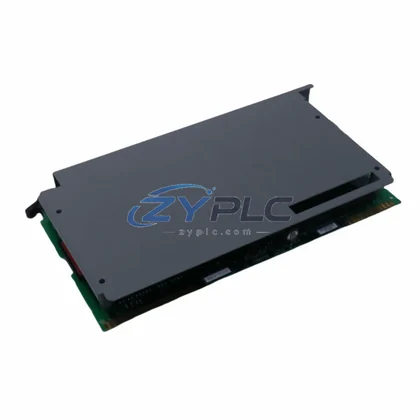
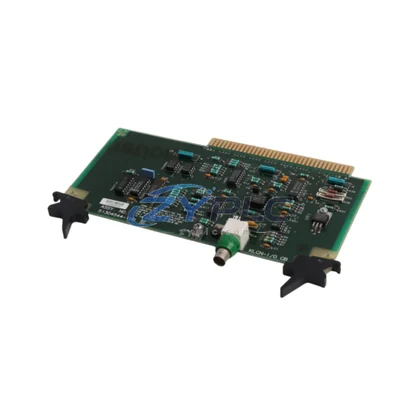
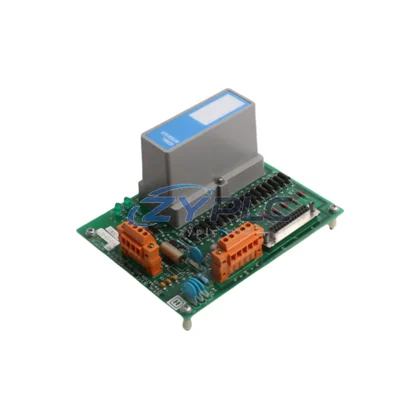
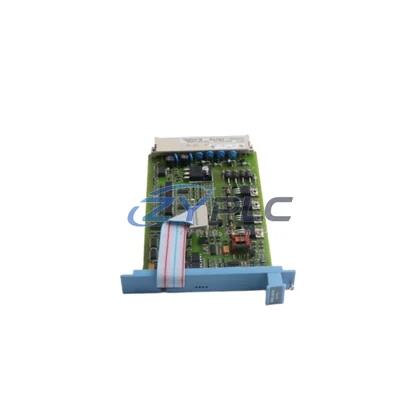
In modern smart factory environments, the integrity of the industrial data link between field devices and control systems is the foundation of operational efficiency. The Honeywell 51304439-100 / MU-TDIA12 Digital Input Board is a precision-engineered I/O module designed for seamless integration within the Honeywell TDC 3000 Distributed Control System (DCS) architecture. It serves as a critical node in the signal acquisition and data transmission chain — converting discrete field-level signals into structured digital data that flows reliably through the plant-wide control network.
From the moment a field sensor detects a process event — whether a valve position, motor run status, or safety interlock — the MU-TDIA12 captures that signal at the I/O level and passes it upstream through the TDC 3000 backplane to the process controller. This real-time signal path supports deterministic communication, ensuring that SCADA systems and HMI workstations receive accurate, time-stamped process data without latency or data loss. In high-availability process plants, this level of communication reliability is non-negotiable.
Compatibility & Integration Notes
| Parameter |
Specification |
| SKU / Part Number |
51304439-100 / MU-TDIA12 |
| Brand |
Honeywell |
| Series |
TDC 3000 DCS |
| Module Type |
Digital Input Board |
| Communication Protocol |
TDC 3000 Proprietary Backplane Bus |
| Interface Type |
Parallel Digital I/O, Backplane-mounted |
| Signal Type |
Discrete Digital Input (DI) |
| Network Compatibility |
Honeywell TDC 3000 / TPS DCS Architecture |
| System Application |
DCS, SCADA, HMI Integration, Process Control |
| Origin |
United States |
| Warranty |
warranty terms confirmed during quotation |
| Stock Status |
Verified Availability confirmed by RFQ | Global DHL / FedEx Shipping |
Connected Automation Data Flow
The MU-TDIA12 does not operate in isolation — it is a functional component within a broader, interconnected automation ecosystem. In a typical TDC 3000 installation, the digital input board is housed within a Honeywell MU-CBKT01 I/O Link Cabinet, where it interfaces directly with field wiring terminations. Alongside modules such as the Honeywell 51304453-100 MU-TDOA12 Digital Output Board, the MU-TDIA12 forms a complementary I/O pair that handles both the reading of field states and the execution of control commands.
Data collected by the MU-TDIA12 is transmitted through the TDC 3000 backplane to the Honeywell 51401288-100 Advanced Process Manager (APM), which executes control logic and routes processed data to the plant-wide Local Control Network (LCN). From the LCN, information flows to Honeywell Universal Stations (US) — the HMI layer — where operators monitor real-time process states, acknowledge alarms, and issue control commands. This closed-loop data path ensures that every digital input captured by the MU-TDIA12 contributes directly to informed, real-time decision-making at the operator level.
For facilities integrating legacy TDC 3000 systems with modern SCADA platforms, the data chain extends further. Gateway modules such as the Honeywell 51190493-100 Data Hiway Gateway bridge the TDC 3000 Data Hiway with Ethernet-based supervisory networks, enabling the MU-TDIA12’s field data to reach enterprise-level historians, MES platforms, and cloud-based analytics engines. In parallel, Honeywell 51304516-100 Analog Input Modules and 51304754-150 Analog Output Modules complement the digital I/O layer, providing a complete signal acquisition and actuation framework across the process unit.
In drive and motor control applications, the MU-TDIA12 captures run/fault/ready status signals from variable frequency drives (VFDs) and motor control centers (MCCs), feeding this data into the APM for interlock logic and alarm management. When integrated with Honeywell Safety Manager systems, the digital input board also supports safety-critical signal monitoring, ensuring that process shutdowns and emergency responses are triggered with the precision and speed required by functional safety standards.
Solving Data Isolation in Industrial Sites
One of the most persistent challenges in aging process plants is data isolation — the condition where field devices, legacy controllers, and modern supervisory systems cannot communicate effectively, creating blind spots in process visibility and slowing response to abnormal conditions. The Honeywell 51304439-100 MU-TDIA12 directly addresses this challenge within the TDC 3000 framework by providing a reliable, standardized digital input interface that bridges field-level signals with the plant’s central control and monitoring infrastructure.
In facilities where multiple generations of control technology coexist, the MU-TDIA12 ensures that discrete field signals — from limit switches, proximity sensors, pressure switches, and safety interlocks — are consistently captured and made available to the DCS without protocol mismatch or signal degradation. This eliminates the data gaps that arise when field devices cannot communicate with the control layer, enabling full production line transparency from sensor to SCADA.
Remote diagnostics capability is another key advantage. Through the TDC 3000 network, maintenance engineers can monitor the health and status of digital input channels from the control room or remote engineering workstations, identifying open circuits, signal anomalies, or module faults without requiring physical access to the field cabinet. This capability reduces mean time to repair (MTTR) and supports predictive maintenance strategies that minimize unplanned downtime.
System scalability is also a core strength of the TDC 3000 I/O architecture. As production requirements evolve, additional MU-TDIA12 boards can be added to existing I/O cabinets to expand digital input capacity, supporting new field devices and process loops without requiring a full system redesign. This modular expandability protects the capital investment in the existing DCS infrastructure while accommodating future automation requirements.
Every Honeywell 51304439-100 MU-TDIA12 supplied by ZYPLC undergoes pre-shipment functional testing to verify channel integrity, backplane communication, and signal response. Units are shipped with full documentation and are backed by a warranty terms confirmed during quotation, with availability confirmed by RFQ availability for shipment arranged after confirmation via DHL or FedEx to global destinations.
Industrial Connectivity FAQ
Q1: Is the Honeywell 51304439-100 MU-TDIA12 compatible with all TDC 3000 system configurations?
The MU-TDIA12 is designed specifically for the Honeywell TDC 3000 / TPS DCS platform and is compatible with standard I/O Link cabinets and backplane configurations used in this architecture. Compatibility with specific system revisions should be verified against your site’s engineering documentation. ZYPLC technical support can assist with cross-referencing.
Q2: What communication protocols does the MU-TDIA12 support for SCADA integration?
The MU-TDIA12 communicates via the TDC 3000 proprietary backplane bus. Integration with external SCADA or MES systems is achieved through Honeywell gateway modules (such as the Data Hiway Gateway) that translate TDC 3000 network data into standard industrial protocols including Modbus, OPC-DA, or OPC-UA, enabling connectivity with modern supervisory platforms.
Q3: How does ZYPLC ensure network stability and module reliability before shipment?
All modules undergo pre-shipment functional testing covering digital input channel verification, backplane communication integrity, and signal response validation. Each unit is inspected for physical condition and supplied with available documentation. A warranty terms confirmed during quotation covers manufacturing defects and functional failures under normal operating conditions.
Q4: Can additional MU-TDIA12 boards be added to an existing TDC 3000 system to expand capacity?
Yes. The TDC 3000 I/O architecture supports modular expansion. Additional MU-TDIA12 boards can be installed in existing I/O Link cabinets to increase digital input channel count, supporting new field devices and process loops as production requirements grow. ZYPLC maintains availability subject to RFQ confirmation for rapid deployment to minimize system expansion lead times.