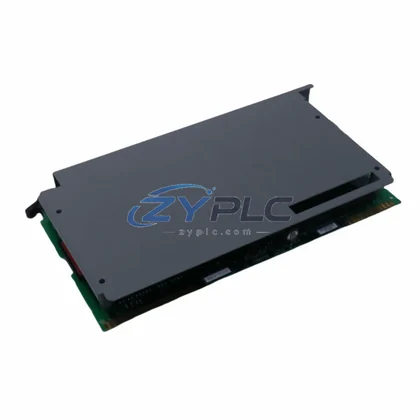
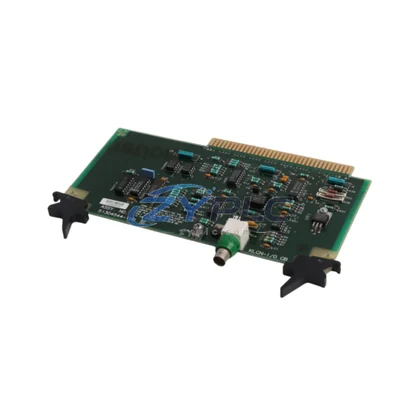
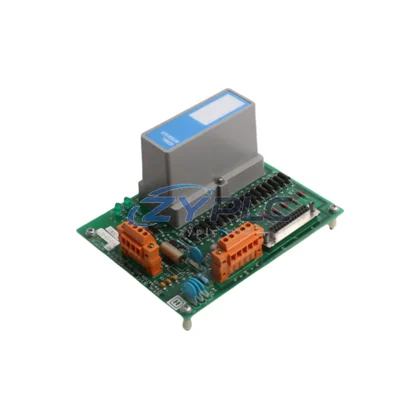
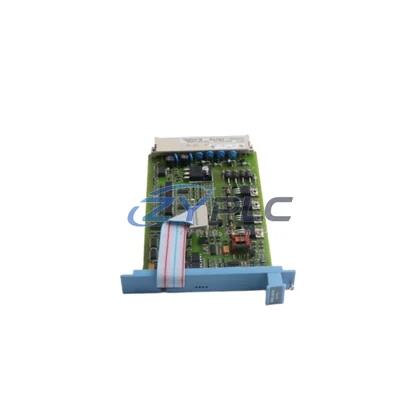
Honeywell 621-1160R Redundant I/O Module for S9000
The Honeywell 621-1160R is a system-compatible redundant I/O module engineered for deployment within the Honeywell S9000 programmable controller architecture. Rather than functioning as a standalone component, the 621-1160R is designed to operate as an integral node within a layered automation hierarchy — coordinating signal acquisition, data transmission, and fault-tolerant I/O management across the full control stack. In distributed manufacturing, power generation, petrochemical processing, and water treatment environments, this module delivers the structural reliability that modern industrial control systems demand.
Understanding the 621-1160R requires viewing it through the lens of the complete S9000 system architecture. The S9000 platform organizes control functions across a defined hierarchy: the CPU layer handles logic execution and program management; the I/O layer — where the 621-1160R operates — manages field signal conditioning and data routing; the network layer governs inter-controller and supervisory communications; the power layer ensures stable, conditioned supply to all active modules; the HMI layer provides operator visibility and intervention capability; and the execution layer drives final control elements such as actuators, drives, and relay outputs. The 621-1160R sits at the critical junction between field instrumentation and the controller’s decision-making core, making its reliability and compatibility non-negotiable in any serious system design.
Product Specification Table
| Parameter |
Specification |
| System Role |
Redundant I/O Module — S9000 Control Architecture |
| Compatible Platform |
Honeywell S9000 Series PLC |
| Module Type |
Redundant Digital/Analog I/O Interface |
| Backplane Interface |
S9000 Series Rack Bus |
| Operating Voltage |
24 VDC (Backplane Supplied) |
| Operating Temperature |
0°C to +60°C |
| Storage Temperature |
-40°C to +85°C |
| Relative Humidity |
5% to 95% Non-Condensing |
| Communication Capability |
S9000 Internal Bus; Compatible with Honeywell Data Highway Protocol |
| Redundancy Support |
Hot-standby redundant I/O configuration |
| Isolation |
Optical isolation between field and logic circuits |
| Mounting |
S9000 Series Rack — DIN or Panel Mount Chassis |
| Certifications |
UL Listed; CE Marked; RoHS Compliant |
| Country of Origin |
United States |
| Warranty |
warranty terms confirmed during quotation — Covers manufacturing defects and functional failure under normal operating conditions |
System Compatibility Notes
The 621-1160R achieves its full value when integrated within a coordinated S9000 system architecture. At the CPU layer, the Honeywell 621-6550 CPU module or the 621-6550RC redundant CPU variant serves as the primary logic engine, executing ladder logic and function block programs while managing I/O scan cycles that directly interface with the 621-1160R’s data channels. The CPU’s redundancy controller ensures that in the event of a primary processor fault, the standby unit assumes control without interrupting I/O data flow through the 621-1160R.
Power integrity is maintained by the Honeywell 621-9940 power supply module, which provides regulated 24 VDC to the rack backplane. In redundant power configurations, a secondary 621-9940 unit operates in parallel, ensuring that a single power supply failure does not interrupt module operation. The 621-1160R’s backplane interface draws conditioned power directly from this supply chain, making power module selection a critical upstream decision in any system design that includes this I/O module.
At the network and communications layer, the Honeywell 621-6552 data highway interface module bridges the S9000 rack to plant-wide SCADA and DCS networks. The 621-1160R’s I/O data is aggregated by the CPU and transmitted upstream via this gateway, enabling real-time process visibility at the supervisory level. In facilities using Modbus TCP or Ethernet/IP overlays, the 621-6552 or equivalent communication gateway ensures that the 621-1160R’s field data reaches historian servers and operator workstations without latency-induced control gaps.
Terminal modules such as the Honeywell 621-3580 or compatible field wiring termination assemblies provide the physical interface between field instrument cables and the 621-1160R’s I/O channels. Proper terminal module selection — matched to signal type, wire gauge, and environmental rating — directly affects the accuracy and noise immunity of signals processed by the 621-1160R. In high-vibration or high-EMI environments such as mining or heavy manufacturing, shielded terminal assemblies are recommended to preserve signal integrity.
For HMI integration, operator stations running Honeywell’s Station software or compatible third-party SCADA platforms receive real-time I/O status from the 621-1160R via the CPU’s data highway. Alarm management, trend logging, and manual override capabilities are all dependent on the reliable, continuous data stream that the 621-1160R provides. In redundant HMI architectures, dual operator stations monitor the same I/O data set, ensuring that a single HMI failure does not create an operator blind spot.
At the execution layer, the 621-1160R’s output channels drive relay modules, variable frequency drives (VFDs), solenoid valve banks, and motor control center (MCC) interfaces. In process control applications, the module’s analog output channels may command control valves or positioners, while digital outputs manage discrete actuators and safety interlocks. The module’s optical isolation ensures that field-side faults — including ground loops, voltage spikes, or short circuits — do not propagate into the S9000 rack’s logic circuitry.
Industrial Application Notes
In continuous process manufacturing — including chemical blending, pharmaceutical batch processing, and food and beverage production — the 621-1160R provides the redundant I/O backbone that process safety systems require. Its hot-standby redundancy ensures that a single module failure does not trigger an unplanned process shutdown, protecting both product quality and production throughput. Integration with safety instrumented systems (SIS) is supported through appropriate safety relay and interlock configurations at the terminal layer.
In electric power generation and substation automation, the 621-1160R interfaces with protection relays, circuit breaker status contacts, and transformer monitoring systems. Its optical isolation and noise immunity characteristics make it suitable for high-voltage switchyard environments where electromagnetic interference is a persistent challenge. Redundant I/O configurations ensure that protection system data remains available to the control room even during partial rack maintenance activities.
In petrochemical and upstream oil and gas applications, the 621-1160R supports wellhead control panels, pipeline SCADA outstations, and compressor station automation. Its wide operating temperature range and robust backplane interface allow deployment in both climate-controlled control rooms and field-mounted enclosures. Redundant power and I/O configurations are standard practice in these applications, where unplanned downtime carries significant financial and safety consequences.
In water and wastewater treatment facilities, the 621-1160R manages pump station I/O, chemical dosing control, and effluent monitoring. Its compatibility with the S9000 platform’s remote I/O expansion capabilities allows a single CPU to manage distributed pump stations across a treatment plant, reducing infrastructure costs while maintaining centralized control visibility.
In mining and metals processing, the 621-1160R supports conveyor control systems, crusher automation, and flotation cell management. Its ability to operate in high-vibration, high-dust environments — when properly housed in NEMA-rated enclosures — makes it a practical choice for concentrator plant automation where reliability and maintainability are primary engineering concerns.
Product Compatibility FAQ
Q1: Is the Honeywell 621-1160R compatible with both new S9000 rack builds and existing legacy S9000 installations?
A: Yes. The 621-1160R is designed for direct insertion into standard S9000 series racks, including both current-production chassis and legacy rack assemblies that remain in service. Compatibility with the S9000 backplane bus is maintained across the module family, allowing the 621-1160R to replace aging I/O modules without requiring CPU firmware upgrades or rack reconfiguration. Engineers integrating this module into existing systems should verify slot addressing and I/O configuration tables within the S9000 programming environment to ensure correct channel mapping. Our team provides pre-shipment functional verification and can supply configuration documentation to support commissioning activities.
Q2: How does the 621-1160R support redundant architecture configurations, and what companion modules are required?
A: The 621-1160R supports hot-standby redundant I/O configurations when paired with a compatible redundant CPU module — such as the 621-6550RC — and a redundant power supply assembly. In a redundant configuration, two 621-1160R modules occupy mirrored rack slots, with the primary module actively scanning field I/O and the standby module maintaining synchronized data. Upon detection of a primary module fault, the S9000 redundancy controller executes a bumpless transfer to the standby module, maintaining continuous I/O data availability. Proper redundant architecture also requires matched terminal module wiring and verified backplane slot assignments. Our engineering support team can assist with redundancy architecture review prior to procurement.
Q3: What does the warranty terms confirmed during quotation cover, and what support is available for long-term maintenance planning?
A: The warranty terms confirmed during quotation covers manufacturing defects and functional failures arising under normal operating conditions from the date of shipment. Warranty service includes module replacement or repair at no additional cost, with expedited processing for critical production environments. For long-term maintenance planning, we recommend maintaining a minimum of one spare 621-1160R module per installed rack to support rapid fault recovery without extended lead times. Our inventory management team can assist with establishing consignment stock arrangements or scheduled replenishment programs for facilities with multiple S9000 installations. Extended support agreements beyond the standard warranty terms confirmed during quotation period are available upon request.