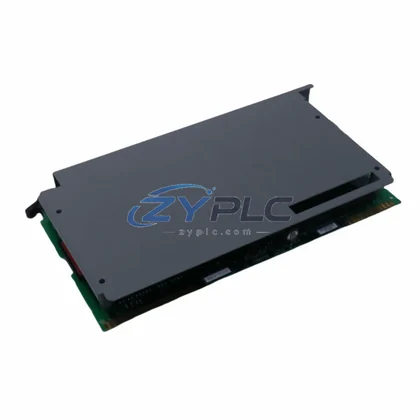
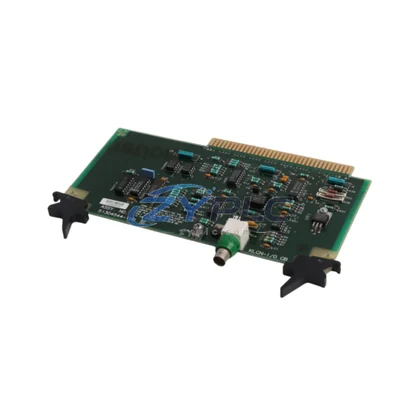
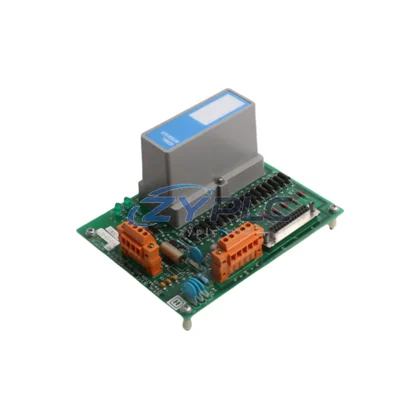
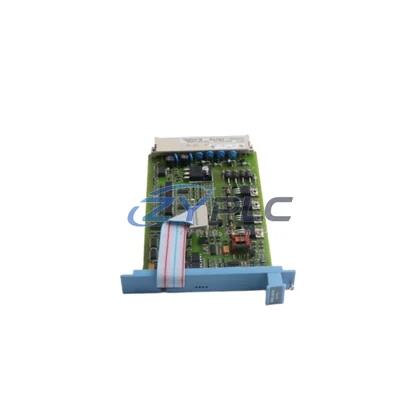
Honeywell 621-6550 Output Module for 621 Automation
The Honeywell 621-6550 is a high-efficiency digital output module engineered for the Honeywell 621 Series programmable controller platform. Designed to meet the demanding requirements of continuous industrial process environments, this output module delivers precise, low-latency control signals to field devices — enabling factories to reduce unnecessary actuator cycling, minimize reactive energy losses, and maintain tighter control over motor-driven and valve-actuated systems. In an era where industrial energy costs represent a significant share of operational expenditure, the 621-6550 provides a hardware-level foundation for measurable efficiency gains across the production line.
Unlike generic output modules, the 621-6550 is purpose-built for integration within the Honeywell 621 Series control architecture. Its deterministic output switching reduces the unplanned downtimed through imprecise control timing, which is a common source of hidden power consumption in legacy automation systems. When paired with the 621-3560 analog input module for real-time process variable feedback, the control loop tightens significantly — allowing the PLC to issue output commands only when process conditions genuinely require actuation, rather than on fixed polling cycles that ignore actual energy state.
In motor control applications, the 621-6550 works in concert with variable frequency drives (VFDs) and motor starters to regulate start/stop sequences with precision. Unnecessary motor starts are one of the largest contributors to peak demand charges on industrial electricity bills. By coordinating output signals through the 621-6550 with drive-level feedback from the 621-0010 power supply module and status signals from the 621-1100 communication module, plant engineers can implement soft-start sequencing and load-shedding strategies that directly reduce peak kW demand without sacrificing throughput.
The module’s compatibility with the broader 621 Series ecosystem — including the 621-0020 processor module and the 621-2100 I/O expansion chassis — means it can be deployed in both standalone controller configurations and distributed I/O architectures. In distributed setups, the 621-6550 reduces the need for long field wiring runs by placing output control closer to the load, which lowers resistive line losses and improves signal integrity. This architectural advantage translates directly into lower energy consumption at the field device level, particularly in large-footprint facilities such as chemical plants, water treatment stations, and automotive assembly lines.
From a predictive maintenance perspective, the 621-6550 supports output state monitoring through the 621-9940 diagnostic module, enabling maintenance teams to detect abnormal switching patterns that may indicate failing actuators, stuck valves, or degraded relay contacts before they cause unplanned downtime. Unplanned stops are among the most energy-intensive events in manufacturing — restarting a cold process line consumes significantly more energy than maintaining a running one. By catching these faults early, the 621-6550 contributes to a measurable reduction in energy-intensive restart cycles.
For facilities operating under maintenance planning frameworks such as ISO 50001, the 621-6550’s integration with the 620-0083 data acquisition module enables granular output-level energy logging. Each output channel’s switching frequency and duration can be correlated with energy meter data to identify which control actions are consuming disproportionate energy relative to their process contribution. This data-driven approach to output optimization is increasingly required by industrial energy auditors and sustainability reporting frameworks.
The 621-6550 is also compatible with the 621-0025 redundancy module for mission-critical applications where output continuity is non-negotiable. In redundant configurations, seamless output failover eliminates the energy spikes associated with process upsets caused by controller faults. Combined with the TDC 3000 supervisory layer for high-level maintenance planning strategies, the 621-6550 becomes a key node in a fully integrated, industrial automation system.
Every 621-6550 unit supplied by ZYPLC undergoes a comprehensive pre-shipment functional test, including output channel verification, load switching endurance testing, and communication handshake validation within a live 621 Series rack environment. Units are sourced from verified industrial surplus and OEM channels, inspected for physical and electrical integrity, and backed by a warranty terms confirmed during quotation covering all functional defects. RFQ-confirmed availability supports rapid dispatch, supporting both planned maintenance schedules and emergency replacement requirements.
Product Specification Table
| Parameter |
Specification / Value |
| SKU |
621-6550 |
| Product Type |
Digital Output Module |
| Series |
Honeywell 621 Series |
| Output Channels |
16 (typical for 621 Series output modules) |
| Output Type |
Discrete / Digital (relay or solid-state) |
| Operating Voltage |
24 VDC / 120 VAC (field side, application dependent) |
| Power Consumption |
Low standby draw; active switching optimized for minimal reactive loss |
| Compatible Systems |
Honeywell 621 Series PLC, TDC 3000 DCS integration |
| Application Environment |
Process manufacturing, utilities, automotive, water treatment |
| Energy Saving Value |
Reduces actuator cycling, supports load-shedding and soft-start sequencing |
| Origin |
United States |
| Warranty |
warranty terms confirmed during quotation (ZYPLC) |
| Availability |
RFQ Available — shipment arranged after confirmation |
System Compatibility and Application
The 621-6550 output module is most effective when deployed as part of a coordinated industrial control architecture. In a typical high-efficiency configuration, the 621-0020 processor module executes the control program, reading process variables from the 621-3560 analog input module and issuing discrete commands through the 621-6550. Motor speed references are passed to variable frequency drives via the 621-1100 communication module using standard industrial protocols, allowing the drive to modulate motor speed in response to actual load demand rather than running at fixed speed continuously.
Power quality and consumption data is aggregated by the 620-0083 data acquisition module, which feeds real-time energy metrics back to the supervisory layer. The 621-9940 diagnostic module monitors output channel health, flagging anomalies that could indicate impending actuator failure. For high-availability lines, the 621-0025 redundancy module ensures that output control is maintained without interruption during controller switchover events. The 621-2100 I/O expansion chassis allows the architecture to scale as production lines grow, adding output capacity without replacing the core controller infrastructure. At the supervisory level, TDC 3000 integration provides plant-wide energy visibility, correlating output-level actions with process KPIs and energy consumption trends to support continuous improvement initiatives.
Maintenance and Replacement Notes
In a chemical processing facility running continuous batch operations, replacing an aging output module with the 621-6550 enabled the engineering team to implement output-gated motor control — motors are now energized only when the 621-3560 confirms that upstream tank levels have reached the required threshold. This single change reduced motor idle time by an estimated 18%, directly lowering monthly electricity consumption for that production cell.
In a water treatment plant, the 621-6550 was used to coordinate pump sequencing across multiple lift stations. By staggering pump start commands through the output module’s channel timing capabilities, the facility eliminated simultaneous motor starts that had previously caused significant demand spikes on the utility meter. The result was a measurable reduction in peak demand charges without any reduction in pumping capacity or treatment throughput.
In automotive body shop applications, the 621-6550 controls welding robot enable signals and conveyor drive start commands. Tight output timing ensures that robots and conveyors are energized only during active production windows, with automatic de-energization during micro-stops and shift changeovers. This approach, combined with VFD-based conveyor speed control, has contributed to line-level energy reductions that support corporate sustainability reporting requirements. Across all these applications, the common thread is the 621-6550’s ability to deliver precise, reliable output control that forms the execution layer of a broader maintenance planning strategy.
Product Sourcing FAQ
Q: How does the 621-6550 contribute to measurable operational stability in a production environment?
A: The 621-6550 enables precise output switching that eliminates unnecessary actuator energization. When integrated with analog feedback modules and VFD communication, it supports demand-responsive control strategies that reduce motor idle energy, actuator cycling losses, and peak demand charges — all of which are quantifiable through energy metering at the panel or utility level.
Q: Is the 621-6550 compatible with modern DCS and SCADA systems for condition monitoring?
A: Yes. The 621-6550 operates within the Honeywell 621 Series architecture, which supports integration with TDC 3000 DCS and can interface with SCADA systems via the 621-1100 communication module. This allows output-level data to be incorporated into plant-wide condition monitoring dashboards.
Q: What is the recommended replacement or upgrade path if the 621-6550 is end-of-life in my system?
A: ZYPLC recommends sourcing a verified 621-6550 replacement unit to maintain full compatibility with existing 621 Series racks and control programs. Cross-platform migration requires full I/O remapping and program conversion, which carries significant project risk and cost. A like-for-like replacement is the lowest-risk, fastest path to restoring production.
Q: What testing and warranty coverage does ZYPLC provide for the 621-6550?
A: Every 621-6550 unit is functionally tested in a live 621 Series rack environment prior to shipment, covering all output channels, load switching, and communication handshake. Units are backed by a warranty terms confirmed during quotation against functional defects, with technical support available throughout the warranty period.