Honeywell 621-9939C Serial Link Module 620: Precision Communication for Optimized Automation
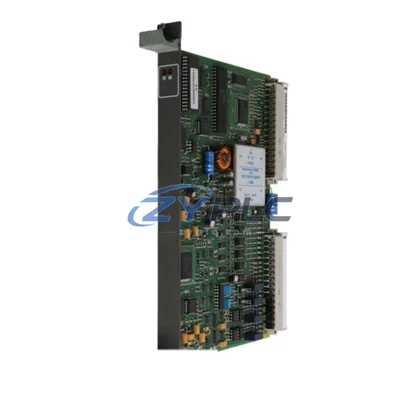
The Honeywell 621-9939C is a high-performance Serial Link Module engineered for the Honeywell 620 Series programmable logic controller platform. In modern industrial environments where every watt of energy and every second of uptime counts, the 621-9939C delivers reliable, low-latency serial communication that forms the backbone of an industrial automation system. By ensuring seamless data exchange between the PLC CPU and peripheral devices, this module eliminates communication bottlenecks that silently inflate operating load and reduce equipment utilization rates.
Sourced from verified inventory, pre-shipment tested, and backed by a warranty terms confirmed during quotation, the Honeywell 621-9939C is ready to integrate into your production line with minimal commissioning time.
Product Specification Table
| Parameter |
Specification |
| SKU / Part Number |
621-9939C |
| Brand / Series |
Honeywell / 620 Series |
| Module Type |
Serial Link Communication Module |
| Communication Protocol |
RS-232 / RS-422 / RS-485 Serial |
| Operating Voltage |
5 VDC (backplane powered) |
| Power Consumption |
Low-draw design, backplane-integrated |
| Operating Temperature |
0°C to 60°C (industrial grade) |
| Compatible Systems |
Honeywell 620 Series PLC Rack |
| Application Environment |
Discrete manufacturing, process control, condition monitoring |
| Maintenance Value |
Reduces polling overhead; enables real-time drive and sensor feedback |
| Inventory Status |
RFQ Available — verified and tested |
| Warranty |
warranty terms confirmed during quotation |
System Compatibility and Application
The 621-9939C Serial Link Module acts as the communication spine connecting the Honeywell 620 Series CPU to a wide range of energy-critical field devices. In a typical energy-optimized plant layout, the module interfaces with Honeywell 620-0086 power supply modules to maintain stable backplane voltage, ensuring that communication integrity is never compromised by power fluctuations — a common hidden cause of retransmission loops that waste processing cycles and inflate idle energy draw.
On the drive side, the 621-9939C enables the PLC to issue real-time speed reference commands to variable frequency drives (VFDs) such as those in the Honeywell SmartVFD HVAC family, allowing the control system to modulate motor speed in direct response to load demand rather than running motors at fixed full speed. This single integration point can help restore stable operation when a compatible replacement is required. The serial link also supports feedback loops from Honeywell 621-0020 analog input modules, which capture current transformer signals and feed live amperage data back to the CPU for closed-loop power management.
For energy metering and power quality monitoring, the 621-9939C can communicate with Honeywell PM-Series power meters via RS-485 Modbus, delivering per-circuit operating load data directly into the PLC scan cycle. This eliminates the need for a separate SCADA gateway in smaller installations, reducing both hardware cost and communication latency. When paired with a Honeywell 621-9937 or 621-9938 communication module in a multi-drop configuration, the architecture supports simultaneous monitoring of multiple drive zones across a production line.
At the HMI layer, operators using a Honeywell HC900 Hybrid Controller or a third-party panel PC connected via the serial port gain live visibility into energy KPIs — kWh per production unit, peak demand windows, and motor run-hour accumulation — enabling shift supervisors to make real-time decisions that reduce peak tariff exposure. The Honeywell 621-9939C also supports connection to Honeywell 620 Series I/O expansion racks, allowing distributed energy sensors and digital output modules to participate in the same control loop without additional network infrastructure.
Maintenance and Replacement Notes
In discrete manufacturing environments — automotive stamping, food packaging, textile weaving — the 621-9939C enables the 620 Series PLC to implement demand-based motor control. Rather than running conveyor drives, cooling fans, and hydraulic pump motors continuously, the PLC uses serial link feedback from torque sensors and flow meters to start and stop drives precisely when production demand requires it. The result is a measurable reduction in no-load motor running time, which in high-volume plants can account for 15–25% of total electrical consumption.
The module’s reliable serial communication also underpins predictive maintenance workflows. By continuously polling vibration transmitters, temperature sensors, and drive fault registers over the RS-485 bus, the 620 Series CPU can detect early signs of bearing wear, insulation degradation, or cooling fan failure before they cause unplanned downtime. Unplanned stops are among the most energy-wasteful events in a production line — restarting cold equipment, purging process lines, and running quality checks all consume disproportionate energy compared to steady-state operation. The 621-9939C keeps the data flowing so maintenance teams can act on trends, not failures.
Line throughput optimization is another direct benefit. When the PLC receives accurate, low-latency feedback from downstream stations via the serial link, it can fine-tune conveyor pacing, press cycle timing, and robot handoff windows to eliminate micro-stoppages. Each micro-stoppage that is eliminated not only improves OEE (Overall Equipment Effectiveness) but also reduces the energy cost of acceleration and deceleration cycles in servo and VFD-driven axes.
Every unit of the Honeywell 621-9939C shipped from our facility undergoes a full functional test including communication loop verification, signal integrity check, and backplane compatibility confirmation. Units are dispatched with original or equivalent protective packaging and include documentation of test results. Stock is available for shipment arranged after confirmation, supporting urgent MRO (Maintenance, Repair, and Operations) requirements without extended lead times.
Product Sourcing FAQ
Q1: How does the 621-9939C contribute to operational stability in a 620 Series PLC system?
The 621-9939C enables real-time serial communication between the PLC CPU and field devices such as VFDs, power meters, and analog I/O modules. This closed-loop data exchange allows the controller to implement demand-responsive motor control, reducing unnecessary motor run time and cutting idle operating load. Without reliable communication, drives default to fixed-speed operation, which is the primary source of avoidable unplanned downtime in motor-driven systems.
Q2: Is the 621-9939C compatible with modern Modbus RTU condition monitoring systems?
Yes. The 621-9939C supports RS-485 serial communication, which is the physical layer used by Modbus RTU — the dominant protocol for industrial energy meters, power analyzers, and smart sensors. It can be configured within the 620 Series programming environment to poll energy meters at defined intervals, making it straightforward to integrate into existing power monitoring infrastructure without additional protocol converters.
Q3: Can the 621-9939C replace a faulty communication module without reprogramming the entire PLC?
In most cases, yes. The 621-9939C is a slot-compatible replacement within the 620 Series rack. Provided the replacement unit is the same revision or a compatible revision, the existing PLC program and communication configuration can be retained. We recommend verifying firmware compatibility with your system integrator and testing communication links after installation. Our technical team can advise on revision compatibility prior to shipment.
Q4: What does the warranty terms confirmed during quotation cover, and what is the testing process before shipment?
Every 621-9939C unit is tested for serial communication functionality, backplane signal integrity, and physical connector condition before dispatch. The warranty terms confirmed during quotation covers manufacturing defects and functional failures under normal operating conditions. Units that fail during the warranty period are replaced or refunded. Warranty claims are processed directly — no third-party RMA routing — ensuring fast resolution and minimal production disruption.