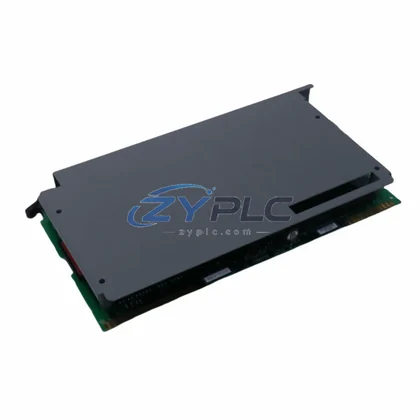
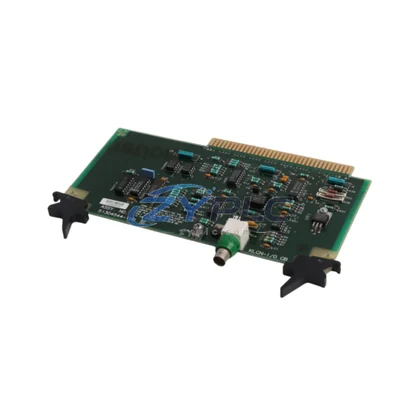
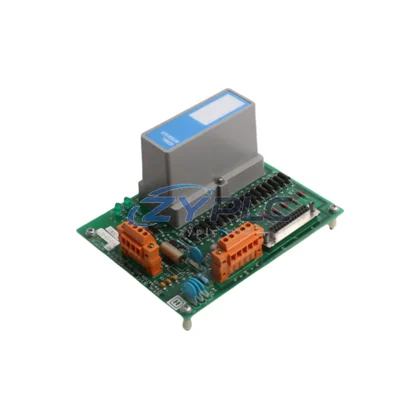
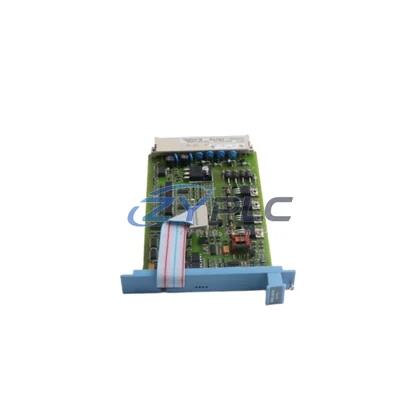
The Honeywell 8C-PDILA1 51454471-175 is a 24 VDC digital input module purpose-built for the HC900 Process Controller platform. Within a layered industrial automation architecture, this module occupies a critical position at the field I/O layer, serving as the primary interface between field-level discrete signals and the HC900 controller’s process execution engine. Its role extends far beyond simple signal acquisition — it is a foundational element that determines the accuracy, speed, and reliability of the entire control loop from sensor to actuator.
In a fully integrated HC900 system, the 8C-PDILA1 51454471-175 works in close coordination with the HC900 controller rack, the C50, C70, or C75 CPU modules, and the HC900 power supply modules to ensure deterministic scan-cycle performance. The module slots directly into the HC900 I/O rack backplane, communicating with the CPU over the internal rack bus without requiring additional wiring or protocol conversion. This tight system integration eliminates latency introduced by external communication layers and ensures that digital field signals — from limit switches, proximity sensors, pushbuttons, and relay contacts — are processed within the controller’s native scan cycle.
System architects designing redundant or high-availability control systems will find the 8C-PDILA1 51454471-175 fully compatible with HC900 redundant CPU configurations. When paired with a redundant C75 CPU module set and the appropriate redundancy communication cable, the digital input data acquired by this module is mirrored in real time to the standby CPU, ensuring bumpless transfer in the event of a primary CPU fault. This architecture is particularly valuable in continuous process industries such as petrochemical refining, power generation, and water treatment, where unplanned shutdowns carry significant operational and safety consequences.
At the network layer, the HC900 system communicates upstream to supervisory SCADA platforms via Ethernet Modbus TCP or OPC DA/UA, and the digital input states captured by the 8C-PDILA1 51454471-175 are made available to these higher-level systems in real time. Integration with Honeywell Experion PKS or third-party SCADA platforms is supported through the HC900 OPC server, enabling operators to monitor discrete field states from centralized control rooms. The module’s signal data can also be consumed by HC900 function block programs to drive interlock logic, sequence control, and alarm management routines.
From a power architecture perspective, the 8C-PDILA1 51454471-175 draws its operating power from the HC900 rack power supply, typically the HC900 PS1 or PS2 power supply module. The 24 VDC field-side input voltage is sourced from a dedicated field power supply, which should be isolated from the rack supply to prevent ground loops and ensure signal integrity. Proper power zoning within the control cabinet — separating rack power, field power, and communication power — is a best practice that maximizes the module’s noise immunity and long-term reliability.
At the human-machine interface layer, operators interact with the digital input states through HC900 Quick Builder configuration software, where each input channel can be assigned a tag name, engineering description, alarm priority, and historian logging attribute. The HC900 Designer or compatible HMI panels display real-time channel states, enabling operators to quickly identify field device faults, interlock conditions, or process anomalies. This seamless data flow from the 8C-PDILA1 51454471-175 through the controller to the HMI layer exemplifies the system integration philosophy that defines the HC900 platform.
For system commissioning and long-term maintenance, the 8C-PDILA1 51454471-175 supports channel-level LED status indication, allowing field technicians to verify signal states without connecting a laptop or handheld device. Each channel’s LED reflects the real-time input state, dramatically reducing troubleshooting time during initial loop checkout and subsequent maintenance activities. The module’s plug-in terminal block design allows field wiring to remain connected while the module is replaced, minimizing downtime during corrective maintenance.
Inventory availability of the 8C-PDILA1 51454471-175 is maintained to support both planned capital projects and emergency replacement scenarios. Facilities operating HC900-based control systems in remote or critical applications benefit from maintaining a spare module inventory, as the HC900 platform’s modular architecture allows hot-swap replacement without requiring a full system shutdown in supported configurations. All units supplied carry a warranty terms confirmed during quotation covering manufacturing defects and functional performance, providing procurement teams and plant engineers with confidence in long-term system reliability.
Product Specification Table
| Parameter |
Specification |
| System Role |
Field I/O Layer — Discrete Digital Input Acquisition |
| Compatible Platform |
Honeywell HC900 Process Controller |
| Compatible CPUs |
HC900 C50, C70, C75 CPU Modules |
| Input Channels |
8 Channels (per module designation) |
| Input Voltage |
24 VDC Field-Side Input |
| Signal Type |
Discrete Digital Input (Dry Contact / Wet Contact) |
| Communication Interface |
HC900 Internal Rack Backplane Bus |
| Network Protocols (System) |
Modbus TCP, OPC DA/UA (via HC900 Controller) |
| Redundancy Support |
Compatible with HC900 Redundant CPU Architecture |
| Installation Environment |
Control Cabinet / DIN Rail Rack Mount |
| Operating Temperature |
0°C to 60°C (typical industrial control environment) |
| system integration |
Native HC900 rack bus integration, no external gateway required |
| Warranty |
warranty terms confirmed during quotation — Manufacturing Defects & Functional Performance |
| Part Number |
8C-PDILA1 / 51454471-175 |
| Manufacturer |
Honeywell Process Solutions |
System Compatibility Notes
The 8C-PDILA1 51454471-175 achieves its full performance potential when deployed as part of a coordinated HC900 system architecture. At the controller layer, the HC900 C75 CPU module serves as the central processing unit, executing function block programs that consume the digital input data provided by this module. In redundant configurations, a paired C75 standby CPU ensures continuous operation without data loss. The HC900 rack backplane physically and electrically connects the 8C-PDILA1 51454471-175 to the CPU, eliminating the need for external I/O buses or communication modules for local rack I/O.
Power integrity is maintained by the HC900 PS1 power supply module, which provides regulated DC power to all rack-mounted modules. For field-side power, a dedicated 24 VDC field power supply — isolated from the rack supply — feeds the input circuits of the 8C-PDILA1 51454471-175, ensuring clean signal acquisition even in electrically noisy industrial environments. Surge protection devices installed at the field terminal block further protect the module’s input circuits from transient overvoltages caused by switching inductive loads or lightning-induced surges on long cable runs.
At the analog I/O layer, the HC900 analog input modules — such as the HC900 8-channel analog input module — work alongside the 8C-PDILA1 51454471-175 to provide a complete picture of process conditions. While the digital input module captures discrete states (valve open/closed, motor running/stopped, level switch high/low), the analog input modules capture continuous process variables (temperature, pressure, flow, level). Together, these I/O modules feed the HC900 CPU’s function block program, which executes PID control, interlock logic, and sequence programs in a unified scan cycle.
For remote I/O expansion beyond the local rack, the HC900 Remote I/O Scanner module extends the system’s I/O capacity to remote racks located up to 300 meters from the main controller rack. This capability is essential in large process plants where field devices are distributed across multiple equipment skids or process areas. The 8C-PDILA1 51454471-175 can be installed in both local and remote HC900 racks, providing consistent digital input functionality regardless of physical location within the plant.
Communication gateways such as the HC900 Ethernet communication module enable the HC900 system to exchange data with plant-level SCADA systems, historian servers, and MES platforms. The digital input states captured by the 8C-PDILA1 51454471-175 are published to these upstream systems via Modbus TCP or OPC, enabling enterprise-level visibility into discrete field device states. This multi-layer communication architecture — from field device to I/O module to controller to SCADA to MES — exemplifies the system integration that makes the HC900 platform a preferred choice for complex process control applications.
Industrial Application Notes
In petrochemical and refining applications, the 8C-PDILA1 51454471-175 is commonly deployed to monitor safety interlock inputs, including emergency shutdown valve position feedback, high-level switch states, and motor run/fault status signals. The module’s 24 VDC input compatibility aligns with the standard field device voltage levels used in hazardous area installations, where NAMUR-compatible sensors and intrinsically safe barriers are frequently employed. The HC900 system’s ability to execute safety-related interlock logic — while simultaneously performing regulatory control — makes the 8C-PDILA1 51454471-175 a critical component in integrated safety and control architectures.
In power generation and utilities, the module monitors discrete states from circuit breakers, transformer tap changers, cooling fan contactors, and generator protection relays. The HC900 system’s Modbus TCP communication capability allows digital input states to be shared with maintenance planning systems and substation automation platforms, enabling coordinated control across the generation and distribution infrastructure. The warranty terms confirmed during quotation provides plant engineers with assurance that replacement modules will perform to specification throughout the warranty period, supporting long-term asset management strategies.
In water and wastewater treatment facilities, the 8C-PDILA1 51454471-175 captures discrete inputs from pump run/fault contacts, valve position switches, flow switch states, and level switch outputs. These inputs drive the HC900’s sequence control programs, which automate the fill, treat, and discharge cycles of water treatment processes. The module’s reliable signal acquisition ensures that the HC900 controller has accurate, real-time knowledge of process equipment states, enabling safe and efficient automated operation with minimal operator intervention.
In mining and metallurgical applications, the module monitors conveyor belt run/stop states, crusher overload contacts, and dust suppression system status signals. The HC900 system’s robust architecture — with redundant CPU options and remote I/O capability — makes it well-suited for the harsh electrical environments typical of mining operations, where long cable runs, high-power motor switching, and variable power quality are common challenges. The 8C-PDILA1 51454471-175’s noise immunity and reliable operation in these conditions contribute directly to production uptime and safety compliance.
Product Compatibility FAQ
Q1: Is the 8C-PDILA1 51454471-175 compatible with both redundant and non-redundant HC900 CPU configurations?
Yes. The 8C-PDILA1 51454471-175 is fully compatible with all HC900 CPU variants, including the C50, C70, and C75 modules, in both simplex and redundant configurations. In redundant CPU systems, the digital input data is automatically mirrored to the standby CPU via the HC900 redundancy link, ensuring that the standby CPU has current process data available for bumpless transfer. No additional configuration is required for the I/O module itself — redundancy behavior is managed at the CPU and system configuration level within HC900 Quick Builder software.
Q2: Can the 8C-PDILA1 51454471-175 be replaced without shutting down the entire HC900 system?
In HC900 systems configured with redundant CPUs and appropriate I/O architecture, module replacement can be performed with minimal process disruption. The plug-in terminal block design of the 8C-PDILA1 51454471-175 allows field wiring to remain connected to the terminal block while the module body is removed and replaced. After reinsertion, the HC900 CPU automatically recognizes the module and resumes normal I/O scanning. It is recommended to consult the HC900 Process Controller Installation and User Guide for site-specific hot-swap procedures and to verify that the replacement module carries the correct firmware revision for the installed system. All replacement units supplied under the warranty terms confirmed during quotation are tested and verified prior to shipment.
Q3: What commissioning steps are required when integrating the 8C-PDILA1 51454471-175 into an existing HC900 system?
Commissioning the 8C-PDILA1 51454471-175 involves verifying physical installation in the correct rack slot, confirming field wiring polarity and voltage levels at the terminal block, and validating channel tag assignments in HC900 Quick Builder. Each input channel should be loop-checked by actuating the associated field device and confirming the correct state change in the HC900 controller’s I/O status display and the connected HMI. Alarm setpoints, historian logging attributes, and interlock logic references should be verified against the control narrative and cause-and-effect matrix. For systems with system integration to SCADA or DCS platforms, OPC or Modbus TCP data mapping should be validated end-to-end from the field device through the HC900 controller to the supervisory system. Detailed commissioning checklists are available from Honeywell Process Solutions and from our technical support team.