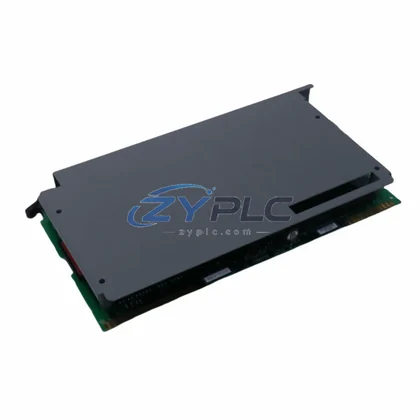
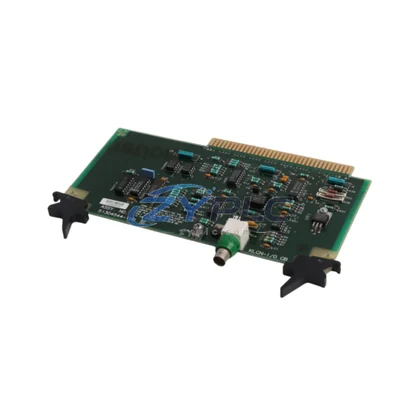
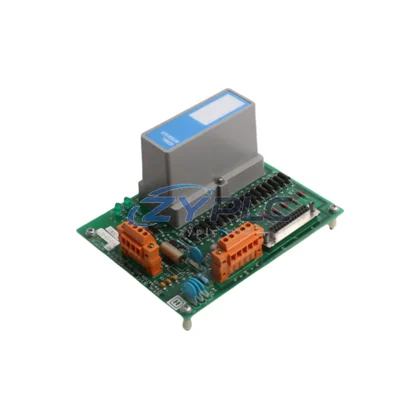
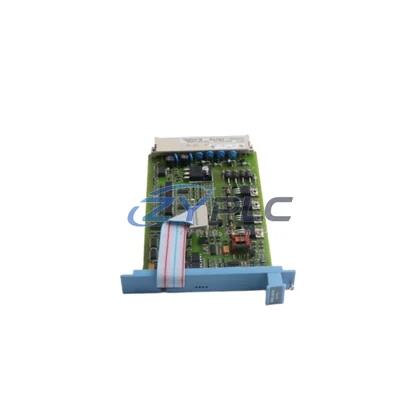
The Honeywell 8C-TAID61 is a high-density digital input module engineered for the Experion PKS C300 Controller platform, delivering precise signal acquisition that forms the backbone of industrial automation. In modern manufacturing environments where every watt of consumed power must be justified, the 8C-TAID61 plays a critical role by ensuring that field-level digital signals — from motor run/stop feedback, valve position indicators, and equipment fault contacts — are captured with minimal latency and maximum fidelity. This accuracy directly reduces the risk of false triggers, unnecessary equipment cycling, and the associated unplanned downtime that comes from uncoordinated machine starts.
Deployed across process industries including oil and gas, chemical, power generation, and advanced manufacturing, the 8C-TAID61 integrates seamlessly into the C300 control architecture. Its 8-channel isolated digital input design supports 24 VDC field signals, enabling reliable interfacing with a wide range of field devices without signal degradation. When paired with the C300 Controller itself, the module contributes to a tightly synchronized control loop that minimizes scan cycle overhead and reduces unnecessary CPU load — both of which translate into measurable operational stability at the system level.
Product Specification Table
| Parameter |
Specification |
| SKU / Part Number |
8C-TAID61 |
| Module Type |
8-Channel Digital Input Module |
| Input Voltage |
24 VDC (Isolated) |
| Power Consumption |
Low-power CMOS design, <3W typical |
| Operating Efficiency |
High-speed scan with minimal CPU overhead |
| Compatible Platform |
Honeywell Experion PKS C300 DCS |
| Application Environment |
Process industries: Oil & Gas, Chemical, Power, Manufacturing |
| Signal Isolation |
Channel-to-channel and channel-to-backplane isolation |
| Maintenance Value |
Reduces false triggers, prevents unnecessary equipment cycling |
| Warranty |
warranty terms confirmed during quotation — Tested before shipment |
| Availability |
RFQ Available — shipment arranged after confirmation |
System Compatibility and Application
The 8C-TAID61 does not operate in isolation — its true maintenance planning value emerges when it functions as part of a coordinated automation architecture. Within the Experion PKS environment, the module feeds real-time digital status data to the C300 Controller, which executes control strategies defined in Honeywell’s Control Builder engineering environment. This tight integration allows the controller to make rapid, informed decisions about drive states, valve positions, and interlock conditions without relying on polling delays that waste processing cycles.
On the drive side, the digital inputs captured by the 8C-TAID61 are frequently used to monitor the run/fault status of variable frequency drives (VFDs) such as those in the Honeywell SmartVFD series or compatible third-party drives integrated via the C300’s I/O subsystem. When a drive fault is detected instantly through the 8C-TAID61’s isolated input channel, the C300 can immediately execute a controlled shutdown sequence rather than allowing the system to coast into an uncontrolled stop — preventing energy spikes and mechanical stress simultaneously.
For servo and motion-adjacent applications, the 8C-TAID61 works alongside analog output modules such as the 8C-TAOX11 to form a complete signal chain: digital status in, analog command out. This pairing is essential in applications where motor speed references must be adjusted based on discrete equipment states — for example, ramping down a conveyor drive when an upstream sensor (read through the 8C-TAID61) detects a line stoppage, rather than running the motor at full speed against a blocked line.
Power monitoring integration is another key dimension. When the 8C-TAID61 is used alongside Honeywell’s power monitoring I/O modules or third-party energy meters connected via Modbus RTU or PROFIBUS DP communication cards (such as the Honeywell CC-PDOB01 or CC-PAIX02 series), operators gain a complete picture of operating load correlated with equipment state. The digital inputs from the 8C-TAID61 provide the discrete event timestamps that allow maintenance planning software to calculate per-cycle operating load, identify inefficient operating modes, and flag equipment that consumes disproportionate power during idle states.
HMI visibility is equally important. The status signals routed through the 8C-TAID61 are displayed on Honeywell Experion Station operator consoles, giving plant operators real-time awareness of equipment states across the production line. When integrated with Honeywell’s FDM (Field Device Manager) and the broader Experion PKS historian, these digital signals become part of a long-term dataset used for predictive maintenance modeling — identifying patterns that precede equipment failure and allowing maintenance teams to intervene before an unplanned shutdown disrupts production and wastes the energy already invested in heating, pressurizing, or conditioning a process.
Maintenance and Replacement Notes
In a typical continuous process plant, unplanned downtime is one of the largest sources of unplanned downtime. When a production line stops unexpectedly, the energy consumed to bring the process back to operating temperature, pressure, or flow rate can dwarf the energy that would have been used during normal operation. The 8C-TAID61 addresses this directly by providing the high-integrity digital input data that enables the C300 Controller to implement robust interlock and alarm management strategies.
Consider a cooling water pump system where the run feedback signal from the pump motor is wired to an 8C-TAID61 input channel. If the pump trips, the C300 detects the state change within one scan cycle and can immediately initiate a controlled response — reducing heat input to the process, alerting operators, and preventing the cascade failures that lead to extended shutdowns. Without reliable digital input data, the controller would rely on timeout-based detection, which introduces delays during which the process continues consuming energy while operating outside its intended parameters.
Line throughput optimization is another area where the 8C-TAID61 delivers measurable value. In assembly or packaging lines, the digital inputs from conveyor position sensors, part-present detectors, and gate limit switches — all routed through the 8C-TAID61 — allow the C300 to implement demand-based speed control. Rather than running all conveyor segments at maximum speed continuously, the controller can reduce drive speeds during low-demand periods, cutting operating load proportionally. This kind of dynamic line balancing, enabled by accurate real-time digital input data, can reduce conveyor system operating load by Actual operating results depend on the installed system, load profile, and commissioning parameters.
Maintenance cost reduction is the third pillar of the 8C-TAID61’s operational value. By providing clean, isolated digital signals with no cross-channel interference, the module eliminates the nuisance trips and false alarms that lead maintenance teams to perform unnecessary inspections and component replacements. Every avoided false alarm represents saved labor hours, reduced parts consumption, and — critically — avoided production interruptions that would otherwise require energy-intensive process restarts.
All units are tested prior to shipment and backed by a warranty terms confirmed during quotation, ensuring that your investment in energy-efficient automation infrastructure is protected from day one. Availability confirmed by RFQ availability means minimal lead time, so your production line optimization projects stay on schedule.
Product Sourcing FAQ
Q1: How does the 8C-TAID61 contribute to measurable operational stability on the production line?
The 8C-TAID61 enables the C300 Controller to respond to equipment state changes within a single scan cycle. This eliminates the detection delays that allow processes to continue consuming energy while operating outside optimal parameters. By enabling demand-based control strategies — such as reducing drive speeds during low-throughput periods — the module supports system-level energy reductions of Actual operating results depend on the installed system, load profile, and commissioning parameters.
Q2: Is the 8C-TAID61 compatible with my existing Experion PKS C300 system?
Yes. The 8C-TAID61 is designed specifically for the Honeywell Experion PKS C300 platform and is compatible with standard C300 I/O link infrastructure. It can be installed in existing C300 I/O cabinets without hardware modifications, and its configuration is managed through Honeywell Control Builder, consistent with other C300 I/O modules such as the 8C-TAOX11 analog output module or CC-PAIX02 analog input cards.
Q3: What is the recommended replacement or upgrade path if my current digital input module is failing?
The 8C-TAID61 is a direct replacement for equivalent 8-channel digital input modules in the C300 I/O family. Before replacement, we recommend performing a loop check to verify field wiring integrity and confirming that the fault is isolated to the module rather than the field device or wiring. Our team can assist with pre-shipment testing documentation and configuration backup guidance to minimize changeover time.
Q4: What does the warranty terms confirmed during quotation cover, and what is the testing process before shipment?
Every 8C-TAID61 unit undergoes functional testing prior to shipment, including input channel verification, isolation resistance testing, and communication link validation. The warranty terms confirmed during quotation covers manufacturing defects and functional failures under normal operating conditions. Warranty claims are supported with direct technical assistance to minimize downtime impact on your production operations.