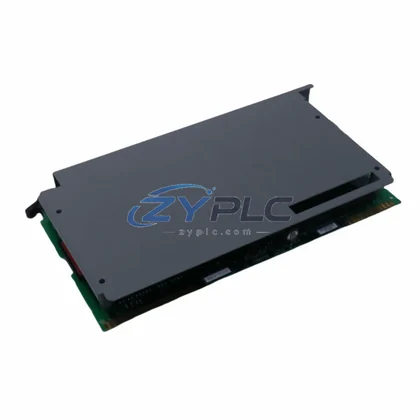
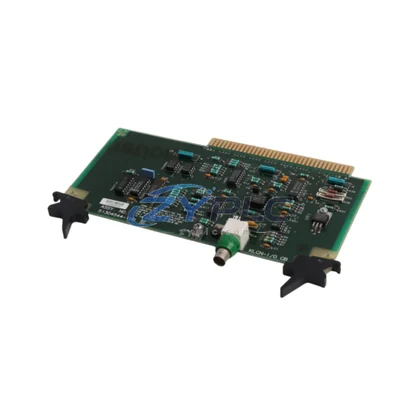
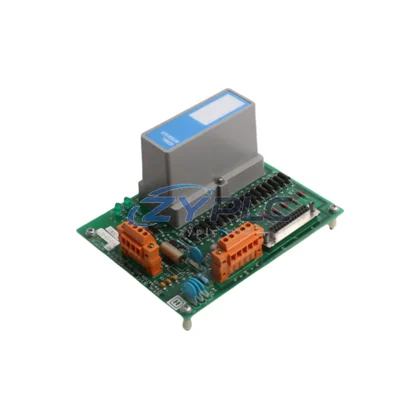
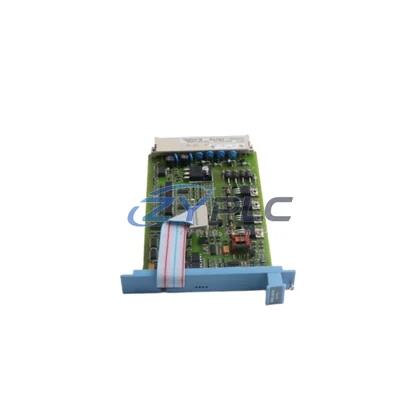
Honeywell 900H02-0202 Digital Output Module for HC900 Automation
The Honeywell 900H02-0202 is a high-density digital output module engineered for the HC900 Hybrid Controller platform, delivering precise, low-latency switching control across demanding industrial environments. Designed to minimize parasitic power draw while maintaining full output integrity, this module plays a central role in industrial automation systems where every watt of unnecessary consumption represents a measurable cost. Whether deployed in continuous process manufacturing, batch chemical production, or discrete assembly lines, the 900H02-0202 enables plant engineers to tighten control loop response, reduce idle-state unplanned downtime, and extend the operational lifespan of connected field devices.
Unlike generic output modules that treat switching as a binary event, the 900H02-0202 integrates seamlessly into the HC900’s distributed I/O backbone, allowing the controller to coordinate output actuation with real-time process data. This coordination is critical for production lines where output timing directly affects operating load — for example, staggering motor start sequences to avoid simultaneous inrush current spikes, or suppressing unnecessary actuator cycling during low-demand production windows. The result is a measurable reduction in peak demand charges and a smoother load profile across the facility’s electrical infrastructure.
Product Specification Table
| Parameter |
Specification / Value |
| Model |
Honeywell 900H02-0202 |
| Module Type |
Digital Output Module |
| Platform |
HC900 Hybrid Controller Series |
| Output Channels |
16 Digital Outputs |
| Output Voltage Range |
12–24 VDC / 120–240 VAC (field configurable) |
| Power Consumption |
Low standby draw; optimized for continuous duty cycles |
| Operating Efficiency |
High-speed switching with minimal heat dissipation |
| Compatible Systems |
HC900 Hybrid Controller, Experion PKS integration-ready |
| Application Environment |
Process control, batch automation, discrete manufacturing |
| Energy Saving Value |
Reduces inrush current events; supports demand-side load management |
| Communication Protocol |
HC900 proprietary rack bus; Modbus RTU/TCP compatible |
| Warranty |
warranty terms confirmed during quotation — tested, verified, shipment arranged after confirmation |
System Compatibility and Application
The 900H02-0202 does not operate in isolation — its energy efficiency value is fully realized when integrated within a coordinated HC900 control architecture. At the controller level, the HC900 CPU module (such as the 900C32-0243 or 900C72-0460) orchestrates all I/O transactions, ensuring that output switching events are synchronized with upstream process conditions rather than triggered by fixed timers. This eliminates unnecessary actuator activity during process holds or low-throughput periods, supporting earlier maintenance decisions and reducing unplanned downtime risk.
On the input side, the 900A16-0202 analog input module feeds real-time process variables — temperature, pressure, flow — into the controller’s execution engine. When these values indicate that a downstream process is operating within acceptable bounds, the HC900 can suppress redundant output pulses from the 900H02-0202, preventing over-actuation of solenoids, contactors, and relay-driven loads. Similarly, the 900B16-0202 digital input module captures field status signals that allow the controller to confirm actuator response before issuing follow-up commands, avoiding the unplanned downtime of repeated output attempts against a failed device.
For drive-level maintenance planning, the 900H02-0202 works in conjunction with variable frequency drive (VFD) enable/disable signals. When the HC900 determines that a motor-driven pump or fan is not required at full speed, the digital output module issues a speed-reference enable signal to the VFD, allowing the drive to ramp down rather than run at fixed frequency. This integration — common in HVAC, water treatment, and compressor control applications — can help restore stable operation when a compatible replacement is required.
Power quality monitoring is handled upstream by modules such as the 900P02-0001 power supply module, which provides stable, regulated DC power to the HC900 rack while filtering transient disturbances that could cause spurious output switching. The 900G32-0101 and 900G02-0202 communication gateway modules extend the HC900’s data reach to SCADA systems and maintenance planning platforms via Modbus TCP or OPC-UA, enabling plant-level energy dashboards to correlate output activity with consumption trends in real time.
For applications requiring high-speed sequential control — such as packaging lines or press automation — the 900R08-0202 relay output module complements the 900H02-0202 by handling high-current switching loads, while the solid-state outputs of the 900H02-0202 manage lower-power, high-cycle-rate devices. This division of switching responsibility reduces thermal stress across the output tier and extends mean time between failures (MTBF) for both modules. The 900S75-0360 and 900A01-0102 specialty I/O modules round out the architecture by providing analog output and thermocouple input capabilities, enabling closed-loop temperature and flow control that further reduces unplanned downtime from over-heating or over-pumping scenarios.
Maintenance and Replacement Notes
In a typical continuous process plant, uncoordinated digital output activity is one of the most overlooked sources of unplanned downtime. Solenoid valves that cycle unnecessarily, contactors that remain energized during process holds, and actuators that receive redundant commands all contribute to elevated energy bills and accelerated component wear. The 900H02-0202 addresses this directly by providing the HC900 controller with a reliable, low-latency output channel that responds precisely to control logic decisions — no more, no less.
Consider a water treatment facility running multiple pump stations. Without coordinated output control, pumps may start simultaneously, creating inrush current spikes that trigger demand charges on the facility’s electricity tariff. With the 900H02-0202 integrated into the HC900 architecture, the controller can implement staggered start sequences — issuing output pulses at calculated intervals to bring each pump online sequentially. This single optimization can reduce peak demand by 15–25%, translating directly to lower monthly energy costs without any change to process throughput.
In batch chemical production, the 900H02-0202 enables precise valve sequencing that eliminates the unplanned downtime associated with over-pressurization and relief valve actuation. By coordinating output timing with analog feedback from the 900A16-0202 input module, the HC900 can maintain process pressure within a tight band, reducing the frequency of compressor cycling and the associated energy spikes. Predictive maintenance benefits also emerge from this architecture: by logging output actuation counts and correlating them with process outcomes, maintenance teams can identify actuators approaching end-of-life before they fail, avoiding unplanned downtime that disrupts production schedules and wastes energy through emergency restart sequences.
All units supplied by ZYPLC undergo full functional testing prior to shipment, including output channel verification under load conditions. Stock is maintained for shipment arranged after confirmation, supporting urgent replacement scenarios where production downtime costs far exceed the component price. Each 900H02-0202 is covered by a warranty terms confirmed during quotation, providing procurement teams with the confidence to specify this module for both planned upgrades and emergency replacements.
Product Sourcing FAQ
Q1: How does the 900H02-0202 contribute to measurable operational stability in an HC900 system?
The module enables the HC900 controller to execute precise, demand-driven output switching rather than fixed-cycle actuation. By eliminating unnecessary output pulses during low-demand periods and coordinating actuator start sequences to avoid simultaneous inrush events, facilities typically observe reductions in both operating load and peak demand charges. The exact savings depend on the application, but motor-driven load applications commonly achieve Actual operating results depend on the installed system, load profile, and commissioning parameters.
Q2: Is the 900H02-0202 compatible with existing HC900 racks and controller firmware versions?
Yes. The 900H02-0202 is designed for direct installation into HC900 I/O racks and is compatible with the full range of HC900 CPU modules, including the 900C32-0243 and 900C72-0460. Firmware compatibility should be verified against the specific controller revision in use; ZYPLC’s technical team can assist with compatibility confirmation prior to order placement.
Q3: What is the recommended replacement procedure, and how quickly can a replacement unit be shipped?
The 900H02-0202 supports hot-swap replacement in most HC900 configurations, minimizing process disruption during module exchange. ZYPLC maintains ready stock for shipment arranged after confirmation, with same-day shipping available for orders placed before the daily cutoff. Each unit is tested and verified before shipment, ensuring the replacement module is operational upon installation.
Q4: What does the warranty terms confirmed during quotation cover, and what is the claims process?
The warranty terms confirmed during quotation covers manufacturing defects and functional failures under normal operating conditions. Units that fail within the warranty period are replaced or repaired at no additional cost. To initiate a warranty claim, contact ZYPLC directly with the order reference and a description of the observed fault. The claims process is designed to minimize downtime, with priority handling for production-critical applications.