Honeywell 900S75-0460 Industrial Network Interface for HC900: Bridging the Industrial Data Link in Smart Factory Environments
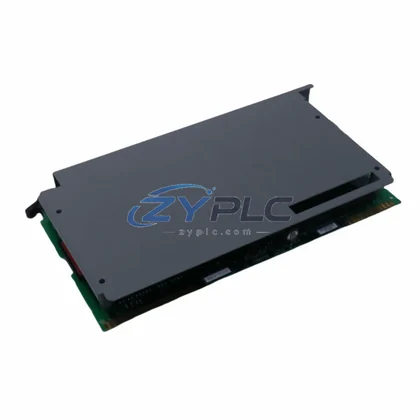
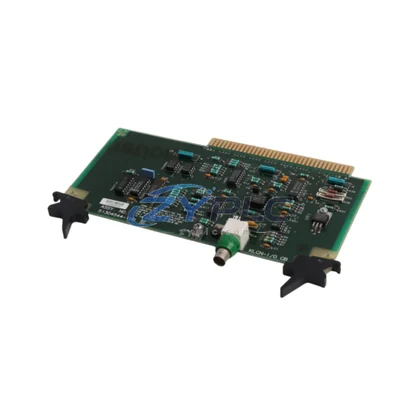
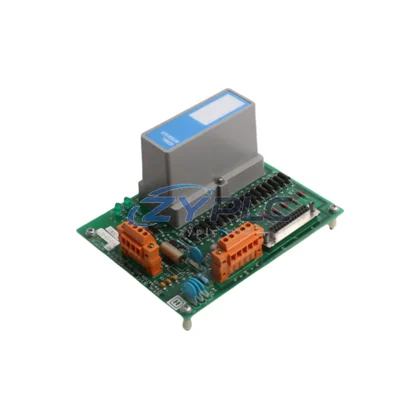
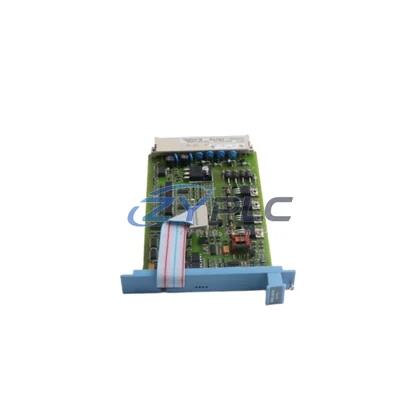
The Honeywell 900S75-0460 is a high-density Analog I/O Expansion Module engineered for the HC900 Hybrid Controller platform — a cornerstone of modern industrial network architecture. In today’s smart factory, seamless data flow between field instruments, PLC controllers, remote I/O racks, HMI panels, SCADA systems, variable frequency drives, and edge computing gateways is not optional — it is the foundation of operational transparency and production efficiency. The 900S75-0460 sits at the heart of this data chain, converting real-world analog signals into structured digital data that travels reliably across industrial Ethernet and serial communication backbones.
Designed to expand the analog capacity of the HC900 controller rack, this module supports up to 16 analog input or output channels, enabling high-resolution signal acquisition from thermocouples, RTDs, pressure transmitters, flow meters, and 4–20 mA process sensors. Its tight integration with the HC900 controller bus ensures deterministic scan cycles, low-latency data updates, and synchronized communication with the controller’s process database — all critical requirements for closed-loop control, alarm management, and real-time SCADA visibility.
Compatibility & Integration Notes
| Parameter |
Specification |
| SKU / Part Number |
900S75-0460 |
| Brand / Manufacturer |
Honeywell |
| Series |
HC900 Hybrid Controller |
| Module Type |
Analog I/O Expansion Module |
| Communication Protocol |
HC900 Controller Backplane Bus; Modbus RTU / Modbus TCP (via HC900 controller); OPC DA / OPC UA (via SCADA gateway) |
| Interface Type |
Rack-mount expansion slot; analog terminal block I/O |
| Signal Range |
4–20 mA, 0–10 VDC, Thermocouple, RTD (controller-dependent) |
| Network Compatibility |
Industrial Ethernet (via HC900 CPU); Peer-to-Peer HC900 network; SCADA / DCS integration |
| System Application |
Process control, SCADA integration, remote I/O expansion, HMI data acquisition, smart factory automation |
| Origin |
United States |
| Warranty |
warranty terms confirmed during quotation |
| Availability |
RFQ Available — export shipping options available |
Connected Automation Data Flow
Understanding the 900S75-0460 requires viewing it within the full industrial data chain. In a typical HC900-based control architecture, the Honeywell 900C72R-0100 CPU module serves as the central processing and communication hub, coordinating data exchange between all expansion modules in the rack — including the 900S75-0460 — and upstream SCADA or DCS platforms. Analog signals captured by the 900S75-0460 are processed by the CPU and made available over Modbus TCP or OPC UA to supervisory systems running on industrial PCs or dedicated SCADA servers.
At the field level, the 900S75-0460 interfaces directly with process instruments: 4–20 mA transmitters from pressure and level sensors, thermocouple inputs from furnace or reactor temperature loops, and RTD signals from motor winding monitors. These signals are digitized at high resolution and fed into the HC900 controller’s process database, where the Honeywell 900G32-0101 digital I/O module handles discrete alarm outputs and interlock signals in parallel — ensuring that analog measurement and digital control logic operate in a tightly synchronized loop.
For remote I/O expansion across large plant floors or geographically distributed process units, the HC900 platform supports peer-to-peer networking between multiple controller racks. The Honeywell 900G01-0102 communication module enables this rack-to-rack data exchange, allowing the 900S75-0460’s analog data to be shared across controller nodes without routing through a central SCADA server — reducing latency and improving fault tolerance in distributed control architectures.
HMI integration is equally seamless. Operators monitoring process variables on Honeywell’s HC Designer-configured HMI panels or third-party SCADA platforms such as Wonderware, iFIX, or Ignition receive live analog data sourced from the 900S75-0460 via the HC900 CPU’s Modbus TCP or OPC server. The Honeywell 900H32-0101 high-density digital input module complements the analog expansion by capturing discrete status signals from field devices — motor run/stop feedback, valve position switches, and safety relay outputs — providing operators with a complete process picture on a single HMI screen.
In drive and motor control applications, the 900S75-0460 collects analog feedback signals — speed references, torque outputs, and thermal readings — from variable frequency drives (VFDs) installed on pumps, compressors, and conveyor systems. This analog data is processed by the HC900 controller and used to implement closed-loop PID control strategies, with the Honeywell 900P01-0301 power supply module ensuring stable, noise-free DC power delivery to the entire controller rack under demanding industrial electrical environments.
For edge computing and IIoT gateway applications, the HC900 controller’s Modbus TCP interface allows the 900S75-0460’s analog data to be polled by edge gateways — such as Moxa, Advantech, or Siemens SCALANCE devices — and forwarded to cloud-based analytics platforms or MES systems. The Honeywell 900S75-0360, a related analog I/O module in the same HC900 expansion family, can be deployed alongside the 900S75-0460 to further increase channel density in high-point-count process applications, with both modules sharing the same backplane bus and controller configuration environment.
Solving Data Isolation in Industrial Sites
One of the most persistent challenges in legacy and hybrid industrial facilities is data isolation — the condition where field instruments, PLCs, and supervisory systems operate in disconnected silos, making real-time production visibility and remote diagnostics impossible. The Honeywell 900S75-0460, as part of the HC900 platform, directly addresses this challenge through its native integration with standard industrial communication protocols and its compatibility with open SCADA architectures.
Protocol fragmentation — where older field devices speak proprietary serial protocols while modern systems require Ethernet-based communication — is resolved through the HC900 controller’s multi-protocol support. The 900S75-0460’s analog data is accessible via Modbus RTU over RS-485 for legacy SCADA systems, and simultaneously via Modbus TCP or OPC DA/UA for modern Ethernet-based supervisory platforms. This dual-protocol accessibility eliminates the need for standalone protocol converters on most analog I/O points, reducing hardware complexity and potential failure points in the communication chain.
Remote monitoring and diagnostics are enabled through the HC900 CPU’s built-in Ethernet port, which allows maintenance engineers to access live analog values, module health status, and alarm histories from any networked workstation — without requiring physical presence at the control panel. The Honeywell 900C53-0243 controller rack chassis provides the physical infrastructure for this distributed diagnostic capability, housing the 900S75-0460 and companion modules in a robust, DIN-rail or panel-mount enclosure rated for industrial environments.
Production line transparency — the ability to see real-time process data across all production stages — is achieved by mapping the 900S75-0460’s analog channels to SCADA tag databases, enabling trend logging, SPC analysis, and OEE calculation at the supervisory level. The Honeywell 900A16-0101 analog output module works in tandem with the 900S75-0460 to close the control loop, sending 4–20 mA setpoint signals back to control valves, positioners, and VFD speed references based on SCADA or PID controller outputs.
System scalability is a core design principle of the HC900 platform. As production capacity grows or process complexity increases, additional 900S75-0460 modules can be added to existing controller racks without modifying the controller program structure — simply configure the new module in HC Designer and the additional analog channels become immediately available to the control strategy and SCADA system. This plug-and-expand architecture protects capital investment and minimizes engineering time during plant expansions or process upgrades.
Industrial Connectivity FAQ
Q1: What communication protocols does the Honeywell 900S75-0460 support for SCADA integration?
The 900S75-0460 communicates via the HC900 controller backplane bus and exposes its analog data through the HC900 CPU’s Modbus RTU (RS-485), Modbus TCP (Ethernet), and OPC DA/UA server interfaces. This makes it compatible with virtually all major SCADA platforms including Wonderware, iFIX, Ignition, and Honeywell’s own Experion PKS, without requiring additional protocol gateways for standard integration scenarios.
Q2: How does the 900S75-0460 ensure network stability and low-latency data updates in real-time control applications?
The module communicates over the HC900 controller’s dedicated backplane bus — a deterministic, high-speed internal network that is isolated from external Ethernet traffic. This architecture ensures that analog I/O scan cycles are not affected by network congestion on the plant Ethernet, delivering consistent sub-100ms update rates for closed-loop PID control and alarm processing even under heavy SCADA polling loads.
Q3: Can the 900S75-0460 be added to an existing HC900 system without reprogramming the controller?
Yes. The HC900 platform supports hot-configuration expansion in most rack configurations. New 900S75-0460 modules can be added to available expansion slots and configured in HC Designer software, with the new analog channels becoming available to the control strategy without requiring a full controller restart or program reload. This minimizes production downtime during system expansions and is a key advantage of the HC900’s modular architecture.
Q4: What warranty and pre-shipment testing does ZYPLC provide for the Honeywell 900S75-0460?
All Honeywell 900S75-0460 modules supplied by ZYPLC are covered by a warranty terms confirmed during quotation from the date of shipment. Each unit undergoes pre-shipment functional verification to confirm module identification, backplane communication integrity, and channel configuration response before dispatch. ZYPLC maintains RFQ-confirmed sourcing of HC900 series modules to support urgent project timelines, with export shipping options available and full export documentation available upon request.