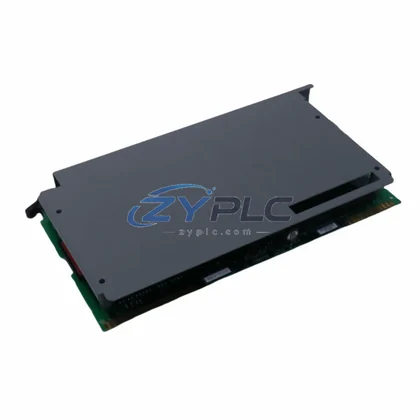
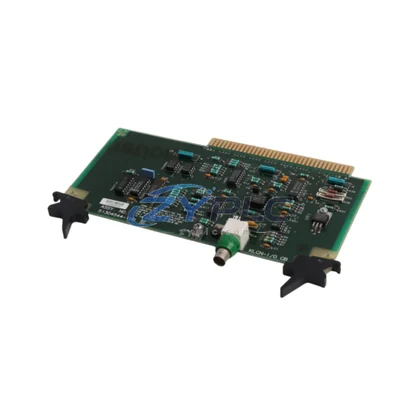
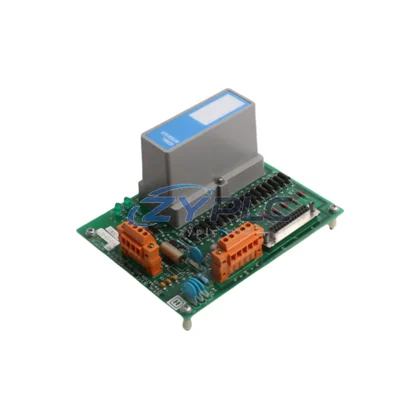
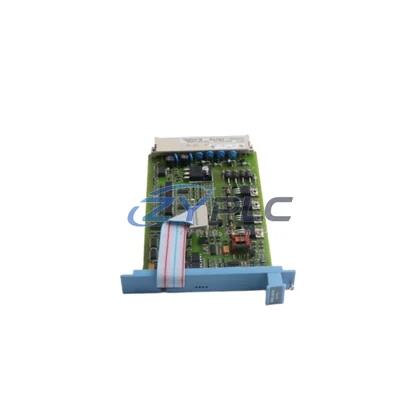
Honeywell BC-THAI11 42622268-002 I/O Module for LCN
The Honeywell BC-THAI11 42622268-002 is a high-integrity DCS I/O module engineered for deployment within Honeywell’s Local Control Network (LCN) architecture — one of the most widely adopted distributed control platforms in continuous process industries. Rather than functioning as a standalone component, this module is designed to operate as a precision node within a layered automation hierarchy, where signal acquisition, data transmission, controller coordination, and operator interface must all function in seamless synchrony. Understanding its role within the full system stack is essential for engineers responsible for system design, expansion, or long-term maintenance.
Product Specification Table
| Attribute |
Specification |
| System Role |
DCS I/O Module — LCN Node |
| Full Part Number |
BC-THAI11 / 42622268-002 |
| Brand |
Honeywell |
| Series |
LCN (Local Control Network) |
| Product Type |
DCS I/O Module |
| Communication Protocol |
LCN Proprietary High-Speed Data Highway |
| Installation Environment |
Industrial Control Cabinet, DIN Rail or Card Cage Mount |
| Operating Temperature |
0°C to 60°C (typical industrial range) |
| Power Supply Compatibility |
Compatible with Honeywell LCN Power Distribution Units |
| Signal Interface |
Analog/Digital I/O (per LCN module standard) |
| system integration |
Yes — native LCN bus integration |
| Warranty |
warranty terms confirmed during quotation |
| Condition |
Tested, Inspected, shipment arranged after confirmation |
| Origin |
United States |
System Compatibility Notes
In a fully realized Honeywell LCN-based control system, the BC-THAI11 42622268-002 I/O module occupies a critical position at the field interface layer — the point where physical process signals are converted into digital data that the control layer can act upon. This module does not operate in isolation; its value is realized through tight integration with upstream and downstream components across every layer of the automation architecture.
At the control layer, the BC-THAI11 interfaces directly with Honeywell LCN controllers such as the HPM (High-Performance Process Manager) and the PM (Process Manager), which execute the control logic and issue commands based on the I/O data this module provides. The LCN data highway — a high-speed, deterministic communication backbone — carries these signals with the low-latency consistency that process control demands. Alongside the HPM, modules such as the Honeywell LM (Logic Manager) may handle discrete safety interlocks that depend on accurate I/O state reporting from field modules like the BC-THAI11.
At the I/O layer, the BC-THAI11 works in coordination with companion modules including Honeywell IOP (I/O Processor) cards and FTA (Field Termination Assemblies) such as the MC-TAIH11 and MC-TAIH12, which provide the physical wiring interface between field instruments and the I/O module. These FTAs ensure that signal conditioning, isolation, and marshalling are handled correctly before data reaches the control bus. In redundant configurations, a secondary I/O module or redundant FTA pair can be installed to ensure continuous operation during module replacement or failure events.
At the network layer, the LCN data highway connects all nodes — including I/O modules, controllers, and gateways — through a fault-tolerant ring or redundant bus topology. Communication gateways such as the Honeywell GUS (Global User Station) interface or UCN (Universal Control Network) bridge modules allow the LCN to exchange data with higher-level SCADA systems, historian platforms, and enterprise MES layers. This multi-layer communication architecture ensures that the data collected by the BC-THAI11 is available not only to local controllers but also to plant-wide monitoring and reporting systems.
At the power layer, the BC-THAI11 relies on stable, conditioned DC power supplied by Honeywell LCN Power Distribution Units (PDUs) and associated power supply modules. Redundant power feeds are standard practice in high-availability installations, ensuring that a single power supply failure does not interrupt I/O module operation. Proper grounding and shielding of field wiring connected to the FTA is equally important for signal integrity.
At the human-machine interface layer, operator workstations running Honeywell Experion PKS or legacy TDC 3000 consoles display real-time process data sourced from I/O modules like the BC-THAI11. Alarm management, trend displays, and control faceplate interactions all depend on the accurate, timely delivery of field data through the I/O layer. Maintaining a healthy I/O module population is therefore directly linked to operator situational awareness and control effectiveness.
At the execution layer, final control elements — including control valves, variable frequency drives, and motor starters — receive their command signals through the output channels of I/O modules. The BC-THAI11’s output integrity directly affects the precision of process control, making it a foundational component in any closed-loop control strategy.
Industrial Application Notes
The Honeywell BC-THAI11 42622268-002 is deployed across a wide range of industries where process continuity, signal accuracy, and system scalability are non-negotiable requirements.
In petroleum refining and petrochemical processing, LCN-based DCS systems manage complex, continuous processes including distillation, cracking, and blending. The BC-THAI11 provides the I/O interface for temperature, pressure, flow, and level transmitters distributed across large process units, enabling the HPM controllers to maintain tight process control under varying load conditions.
In power generation — including thermal, combined-cycle, and cogeneration plants — the LCN architecture supports boiler management, turbine control, and balance-of-plant automation. I/O modules like the BC-THAI11 handle the high channel counts required for comprehensive plant monitoring, while the LCN data highway ensures that control responses meet the timing requirements of power generation processes.
In water and wastewater treatment, the BC-THAI11 supports distributed I/O across geographically spread pump stations, filtration systems, and chemical dosing units. Its compatibility with the broader LCN ecosystem allows plant operators to expand I/O capacity as treatment capacity grows, without replacing the core control infrastructure.
In mining and minerals processing, where harsh environments and high-vibration conditions are common, the robust construction of Honeywell LCN modules ensures reliable operation in crushing, grinding, flotation, and tailings management applications. The BC-THAI11’s role in these systems is to maintain accurate signal acquisition from field instruments despite the challenging installation environment.
In pharmaceutical and fine chemical manufacturing, where batch process control and regulatory compliance are paramount, the LCN architecture’s deterministic communication and audit-trail capabilities make it a preferred platform. The BC-THAI11 contributes to recipe-driven batch control by providing reliable I/O for reactors, dryers, and blending vessels.
Product Compatibility FAQ
Q1: Is the BC-THAI11 42622268-002 compatible with both TDC 3000 and Experion PKS environments?
The BC-THAI11 is a native LCN module and is compatible with Honeywell’s LCN-based control platforms, including TDC 3000 and systems that have been migrated to or integrated with Experion PKS. In migration projects, the LCN I/O infrastructure — including modules like the BC-THAI11 — is typically retained while the controller and operator station layers are upgraded, preserving the field wiring investment and minimizing process disruption. Confirm compatibility with your specific system revision and LCN node configuration before installation.
Q2: Can the BC-THAI11 be installed in a redundant I/O configuration, and what companion hardware is required?
Yes, Honeywell’s LCN architecture supports redundant I/O configurations for critical process loops. Redundancy at the I/O level typically requires a matched pair of I/O modules, compatible redundant FTAs (such as the MC-TAIH11 or equivalent), and the appropriate LCN node configuration settings. The redundant module pair operates in a primary/backup relationship, with automatic switchover in the event of a module fault. Consult the Honeywell LCN system engineering guide for your specific platform revision to confirm the exact redundancy configuration requirements.
Q3: What does the warranty terms confirmed during quotation cover, and what support is available for long-term maintenance?
Every BC-THAI11 42622268-002 supplied by ZYPLC is covered by a warranty terms confirmed during quotation against manufacturing defects and functional failures under normal operating conditions. Prior to shipment, each module undergoes functional testing and inspection to verify operational integrity. For long-term maintenance planning, ZYPLC maintains inventory of LCN-compatible I/O modules and companion components, enabling rapid replacement to minimize unplanned downtime. Our technical team is available to assist with system compatibility verification, installation guidance, and spare parts planning for your LCN-based control system.