Honeywell CPO-RL4 Remote I/O for HC900: Control System Coordination and Upstream-Downstream Synergy
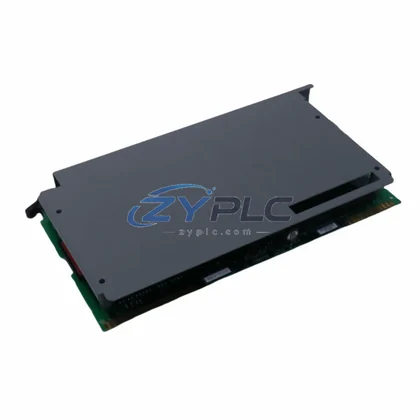
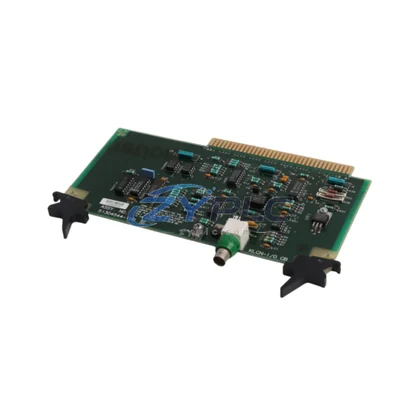
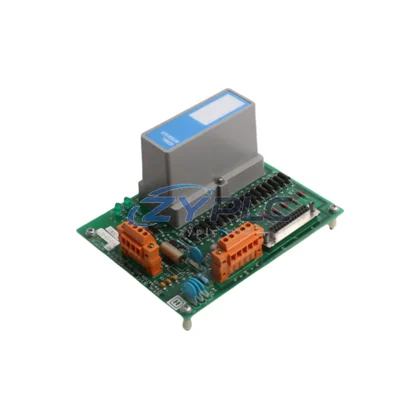
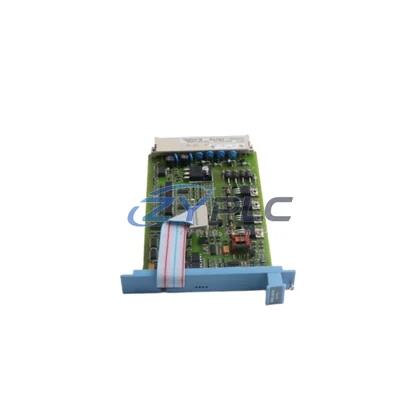
The Honeywell CPO-RL4 is a Remote I/O Module engineered for seamless integration within the HC900 Hybrid Controller architecture. Rather than functioning as a standalone component, the CPO-RL4 is designed to operate as a distributed field node within a layered automation system, extending the I/O reach of the HC900 controller platform across geographically dispersed process areas. Its role within the control hierarchy spans the I/O layer and the field signal aggregation layer, bridging physical process signals with the controller’s logic execution engine and enabling consistent, low-latency data exchange across the entire control loop.
In a complete HC900-based control system, the CPO-RL4 works in close coordination with the HC900 Controller CPU module (C30, C50, or C70 variants), which serves as the central logic processor. The controller communicates with the CPO-RL4 over a dedicated Remote I/O link, ensuring deterministic scan cycle performance even when the remote node is installed at distances from the main controller rack. This architecture allows engineers to distribute I/O points closer to field instruments and actuators, reducing wiring costs, minimizing signal degradation, and improving overall system maintainability.
Within the power layer, the CPO-RL4 relies on the HC900 Power Supply module installed in the remote rack to deliver stable DC power to all I/O modules housed in that chassis. Proper power budget planning—accounting for the aggregate current draw of analog input modules, digital output modules, and thermocouple input modules installed alongside the CPO-RL4—is essential for reliable long-term operation. Engineers should verify rack power capacity during system design to prevent undervoltage conditions that could cause intermittent module faults.
Product Specification Table
| Parameter |
Specification |
| System Role |
Remote I/O Expansion Module — HC900 Distributed I/O Node |
| Compatible Controller Platform |
Honeywell HC900 Hybrid Controller (C30, C50, C70) |
| Communication Interface |
HC900 Remote I/O Link (proprietary high-speed serial bus) |
| Rack Compatibility |
HC900 Remote I/O Rack (4-slot and 12-slot chassis) |
| Power Supply Requirement |
24 VDC via HC900 rack power supply module |
| Operating Temperature |
0°C to 60°C (32°F to 140°F) |
| Relative Humidity |
5% to 95% non-condensing |
| Mounting |
DIN rail or panel mount via HC900 rack assembly |
| Certifications |
CE, UL listed (refer to product datasheet for full listing) |
| Country of Origin |
United States |
| Warranty |
warranty terms confirmed during quotation — Covered by ZYPLC quality assurance program |
System Compatibility Notes
The CPO-RL4 achieves its full value when considered within the broader HC900 system architecture. At the controller layer, the HC900 C50 or C70 CPU module manages all logic execution, PID loop control, and sequence programming. The CPO-RL4 extends the physical I/O capacity of this CPU by providing a remote rack node that can house additional analog input modules (such as the HC900 AI module for 4–20 mA signals), thermocouple input modules, digital input modules, and digital output modules—all communicating back to the CPU over the Remote I/O link without requiring additional programming infrastructure.
At the network layer, the HC900 system supports Ethernet-based supervisory communication via Modbus TCP or OPC DA/UA, allowing SCADA systems and historian platforms to retrieve real-time process data from the controller. The CPO-RL4’s field data is transparently available through this network interface, meaning that process variables measured at the remote rack are fully accessible to the supervisory layer without additional configuration. This integration simplifies system commissioning and reduces the risk of data mapping errors during startup.
For redundancy-critical applications, the HC900 platform supports controller redundancy configurations using paired CPU modules and redundant communication paths. While the CPO-RL4 itself operates as a single remote node, its integration into a redundant HC900 architecture ensures that a controller failover event does not interrupt I/O scanning at the remote rack. Engineers designing high-availability systems should pair the CPO-RL4 with redundant power supply modules in the remote rack and implement watchdog monitoring at the controller level to detect remote I/O link faults promptly.
At the human-machine interface layer, Honeywell’s Station or third-party HMI panels connected via Modbus TCP can display process values sourced from the CPO-RL4’s I/O modules in real time. Alarm management, trend logging, and operator control functions all benefit from the low-latency data path established between the remote rack and the HC900 CPU. For facilities using Honeywell’s Experion PKS or SpecView supervisory platforms, the HC900 controller with CPO-RL4 remote I/O nodes integrates natively, preserving tag naming conventions and alarm configurations across the control hierarchy.
At the execution layer, field devices such as control valves, variable frequency drives, motor starters, and solenoid valves receive command signals from digital and analog output modules installed in the CPO-RL4 rack. The deterministic scan cycle of the HC900 Remote I/O link ensures that output updates reach field actuators within the controller’s configured scan period, maintaining precise process control timing even in distributed architectures spanning large plant areas.
Industrial Application Notes
The CPO-RL4 is well-suited for a broad range of industrial automation applications where distributed I/O architecture is preferred over centralized wiring. In continuous process manufacturing—including chemical processing, petrochemical refining, and pharmaceutical production—the CPO-RL4 enables engineers to place I/O nodes adjacent to process equipment skids, reducing the length of analog signal cables and minimizing susceptibility to electrical noise from variable frequency drives and high-voltage switchgear.
In power generation and utilities, the HC900 system with CPO-RL4 remote nodes is commonly deployed for boiler control, turbine auxiliary systems, and cooling water management. The module’s compatibility with thermocouple and RTD input modules makes it particularly effective for temperature-intensive applications where multiple measurement points are distributed across a large physical footprint.
Water and wastewater treatment facilities benefit from the CPO-RL4’s ability to extend HC900 control to remote pump stations, chemical dosing skids, and filtration units without requiring separate PLCs at each location. A single HC900 CPU can manage multiple CPO-RL4 remote nodes, consolidating control into a unified architecture that simplifies operator training, reduces spare parts inventory, and streamlines preventive maintenance scheduling.
In mining and metals processing, where harsh environmental conditions and long cable runs are common, the CPO-RL4’s robust industrial design and compatibility with shielded remote I/O cabling supports reliable operation in electrically noisy environments. Conveyor control systems, crusher automation, and flotation cell management are typical applications where the distributed I/O capability of the CPO-RL4 delivers measurable engineering and operational benefits.
Packaging and material handling lines also benefit from the CPO-RL4’s modular expansion capability. As production lines are reconfigured or expanded, additional I/O modules can be added to the remote rack without modifying the controller program structure, reducing changeover time and minimizing production downtime during system upgrades.
Product Compatibility FAQ
Q1: How many CPO-RL4 remote I/O nodes can be connected to a single HC900 controller?
The HC900 controller supports multiple remote I/O nodes on its Remote I/O link, with the exact number depending on the CPU variant (C30, C50, or C70) and the total I/O point count configured in the system. Refer to the HC900 System Hardware Planning Guide for node count limits and cable length specifications applicable to your specific controller model and installation environment.
Q2: Is the CPO-RL4 compatible with both 4-slot and 12-slot HC900 remote racks, and can I mix module types within the same rack?
Yes, the CPO-RL4 is designed to operate as the communication interface module in both 4-slot and 12-slot HC900 remote rack assemblies. Within the same rack, you can install a mix of analog input, analog output, digital input, digital output, and thermocouple input modules, provided the total power consumption does not exceed the rack power supply’s rated output. Mixed-module configurations are fully supported by the HC900 controller’s I/O configuration utility.
Q3: What does the warranty terms confirmed during quotation cover, and how does ZYPLC support long-term maintenance for HC900 remote I/O components?
The warranty terms confirmed during quotation provided by ZYPLC covers verified hardware defects identified under normal operating conditions. All units are tested prior to shipment to confirm functional integrity. For long-term maintenance support, ZYPLC maintains inventory of HC900-compatible modules including remote I/O components, power supplies, and CPU modules, enabling rapid replacement to minimize unplanned downtime. Contact our technical team at plc.sales@zyplc.com or +86 19859288691 for system compatibility verification, spare parts planning, and warranty claim processing.