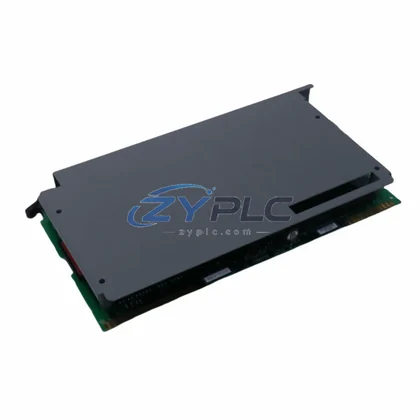
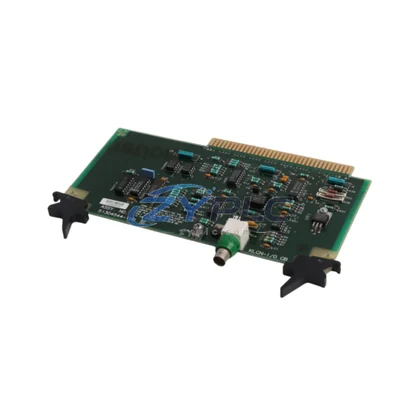
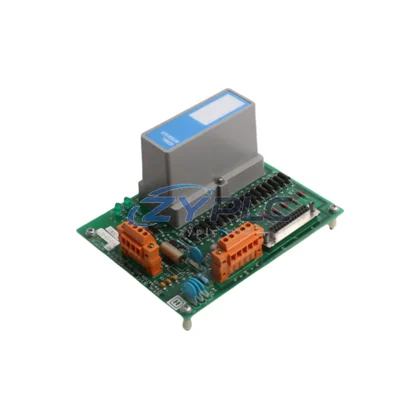
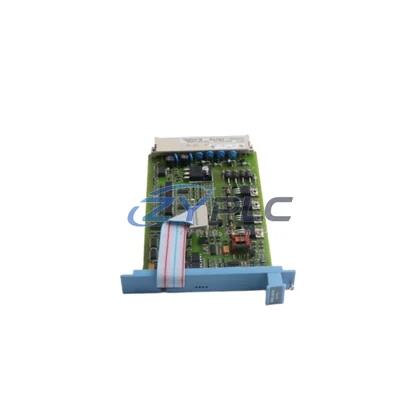
Honeywell CSNS300M-500 Current Sensor for CSNS Series
The Honeywell CSNS300M-500 is a precision closed-loop current sensor engineered for seamless integration within layered industrial control architectures. Rated at 500A nominal input with a highly linear analog output, this sensor occupies a critical position in the measurement and feedback layer of any well-designed automation system. Whether deployed in a power distribution panel, a motor drive cabinet, or a process control loop, the CSNS300M-500 delivers the real-time current data that upstream controllers and downstream actuators depend on for accurate, maintenance-focused decision-making.
In a complete control system hierarchy, the CSNS300M-500 sits between the power execution layer and the signal processing layer. Its analog output — typically ±4V or a ratiometric voltage — feeds directly into analog input modules such as the Honeywell HC900 Analog Input Module or compatible third-party I/O cards, where the signal is digitized and passed to the process controller. This clean signal chain ensures that the PLC or DCS receives accurate load data without noise-induced errors that could trigger false alarms or unnecessary shutdowns.
Product Specification Table
| Parameter |
Specification |
| System Role |
Closed-Loop Current Measurement / Feedback Sensor |
| Nominal Current (IP) |
500 A |
| Output Signal |
Analog Voltage (±4V typical / ratiometric) |
| Supply Voltage |
±15 VDC (±5%) |
| Accuracy |
<0.5% of full scale (typical) |
| Bandwidth |
DC to 100 kHz |
| Communication Compatibility |
Analog signal — compatible with standard AI modules (4–20mA converters available) |
| Installation Environment |
Panel-mount, DIN-rail compatible enclosures, IP20 environment |
| Operating Temperature |
-25°C to +70°C |
| system integration |
Compatible with HC900, Experion PKS, and third-party DCS/PLC analog input layers |
| Warranty |
warranty terms confirmed during quotation — tested before shipment |
System Compatibility Notes
The CSNS300M-500 is rarely deployed in isolation. In a typical manufacturing or process plant, it functions as one node in a tightly coordinated measurement network. At the controller level, a Honeywell HC900 Process Controller or an Experion PKS C300 Controller receives the digitized current signal and uses it to execute PID loops, load-balancing algorithms, or energy threshold alarms. The controller’s logic depends entirely on the accuracy and latency of the sensor signal — making the CSNS300M-500’s wide bandwidth and low phase shift essential for fast-response applications.
On the I/O side, the sensor output connects to an HC900 Analog Input Module or a compatible universal I/O card. In redundant architectures, dual-channel AI modules allow the sensor signal to be read simultaneously by primary and backup controllers, ensuring that a single module failure does not interrupt the measurement chain. This is particularly important in power generation and petrochemical applications where current monitoring is a safety-critical function.
At the network layer, the digitized current data is transmitted via Ethernet/IP or Modbus TCP to a supervisory SCADA system or a Honeywell Experion Station HMI, where operators can visualize real-time load trends, configure alarm thresholds, and review historical operating load data. The CSNS300M-500’s stable analog output minimizes signal drift over time, reducing the frequency of field recalibration and lowering long-term maintenance costs.
In drive-intensive applications — such as variable frequency drive (VFD) panels controlling large induction motors — the CSNS300M-500 is often paired with a Honeywell SmartLine Transmitter or an external signal conditioner to convert the voltage output to a 4–20mA loop signal compatible with legacy DCS analog input cards. This flexibility makes it straightforward to retrofit the sensor into existing control cabinets without rewiring the entire I/O layer.
Power supply integrity is equally important. The sensor requires a stable ±15 VDC dual-rail supply, typically sourced from a dedicated DIN-rail power supply module within the control cabinet. In high-availability systems, redundant power supplies with automatic switchover protect the sensor’s operating continuity. Terminal blocks and shielded signal cables complete the installation, ensuring that the low-level analog output is not corrupted by electromagnetic interference from adjacent drive or relay circuits.
Industrial Application Notes
Across industries, the CSNS300M-500 addresses a consistent challenge: how to measure large AC or DC currents accurately without inserting a shunt into the primary conductor. Its Hall-effect closed-loop technology allows non-intrusive measurement, which is invaluable in live electrical panels where isolation is a safety requirement.
In power generation and distribution, the sensor monitors feeder currents in switchgear panels, providing real-time load data to the maintenance planning system. Operators can detect overloads, phase imbalances, and harmonic distortion trends before they escalate into equipment failures. In petrochemical and refinery environments, the CSNS300M-500 tracks motor currents on pump and compressor drives, feeding data to the DCS for predictive maintenance scheduling. A rising current trend on a centrifugal pump, for example, can indicate impeller wear or cavitation — allowing maintenance teams to plan interventions during scheduled shutdowns rather than responding to unplanned failures.
In metal processing and rolling mills, where large DC drives power rolling stands, the sensor provides the current feedback signal that the drive controller uses to regulate torque and speed. Accurate current measurement at this layer directly affects product quality and energy efficiency. In water treatment and municipal utilities, the sensor monitors submersible pump motors and blower drives, supporting maintenance planning programs that reduce electricity costs during peak tariff periods.
For packaging and discrete manufacturing lines, the CSNS300M-500 integrates into the machine safety and condition monitoring layer, providing current signatures that can be analyzed for motor health trending. Combined with a Honeywell Notifier or a third-party condition monitoring system, these signatures enable early detection of bearing wear, winding insulation degradation, and mechanical coupling failures.
Product Compatibility FAQ
Q1: Is the CSNS300M-500 compatible with both Honeywell and third-party DCS/PLC analog input modules?
Yes. The sensor produces a standard analog voltage output that is compatible with any analog input module accepting voltage signals in the ±5V or ±10V range. For systems requiring 4–20mA input, an external voltage-to-current converter or signal conditioner can be used. This makes the CSNS300M-500 suitable for integration with Honeywell HC900, Experion PKS, Siemens S7, Rockwell ControlLogix, and other major control platforms without hardware modification.
Q2: What are the installation and commissioning requirements for this sensor in a live control cabinet?
The CSNS300M-500 requires a stable ±15 VDC dual-rail power supply and must be mounted so that the primary conductor passes through the sensor aperture. Shielded signal cable should be used for the analog output run, with the shield grounded at one end only to prevent ground loops. During commissioning, the zero-offset should be verified with no primary current flowing, and the gain should be confirmed against a calibrated reference clamp meter. No special tools are required, and the sensor can typically be commissioned within 30 minutes by a qualified instrumentation technician.
Q3: What does the warranty terms confirmed during quotation cover, and how is the unit tested before shipment?
Every CSNS300M-500 unit supplied by ZYPLC undergoes functional testing prior to shipment, including verification of output linearity, zero offset, and supply current draw. The warranty terms confirmed during quotation covers manufacturing defects and functional failures under normal operating conditions. Units are shipped with test records available on request. In the event of a warranty claim, ZYPLC provides rapid replacement to minimize system downtime, with technical support available to assist with root cause analysis and reinstallation.