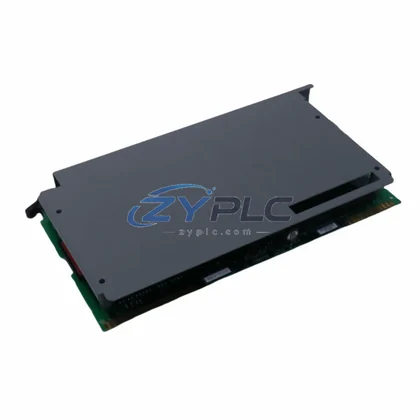
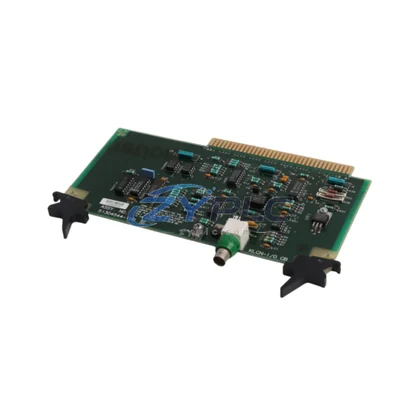
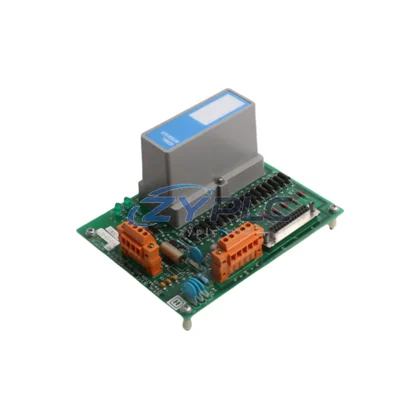
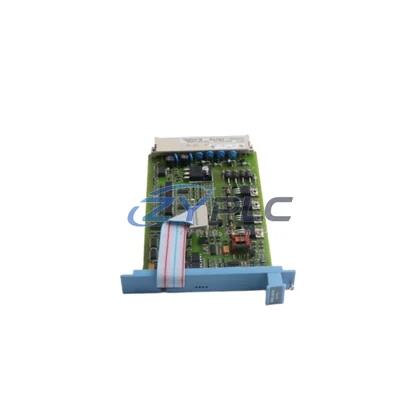
Honeywell DC-PDOD51 51454820-175: Industrial Data Link for TDC 3000 Smart Factory Systems
The Honeywell DC-PDOD51 (Part No. 51454820-175) is a high-reliability Digital Output Module engineered for the Honeywell TDC 3000 Distributed Control System (DCS). Designed to serve as a critical node in the industrial data chain, this module bridges field-level actuators and control-layer logic, enabling deterministic signal delivery across process automation environments. Whether deployed in oil and gas, chemical processing, power generation, or advanced manufacturing, the DC-PDOD51 delivers the output integrity and network stability that modern smart factories demand.
In today’s connected plant architecture, every output module is more than a signal driver — it is a data gateway between the control layer and the physical world. The DC-PDOD51 occupies this role with precision, receiving commands from the TDC 3000 High-Performance Process Manager (HPM) and translating them into discrete output signals that drive solenoid valves, motor starters, relay coils, and other field actuators. Its integration into the TDC 3000 backplane ensures low-latency command execution, a non-negotiable requirement in safety-critical and time-sensitive process loops.
Compatibility & Integration Notes
| Parameter |
Specification |
| SKU |
DC-PDOD51 / 51454820-175 |
| Brand |
Honeywell |
| Series |
TDC 3000 DCS |
| Module Type |
Digital Output Module |
| Output Channels |
16-point discrete output |
| Communication Protocol |
Honeywell UCN (Universal Control Network) / TDC 3000 Proprietary Bus |
| Interface Type |
Backplane I/O Bus, UCN Network Node |
| Transmission Capability |
Deterministic real-time command delivery to field devices |
| Network Compatibility |
TDC 3000 HPM, LCN (Local Control Network), UCN |
| System Application |
DCS Output Control, SCADA Integration, Process Automation, Smart Factory |
| Product Category |
Industrial Automation > DCS Modules > Digital Output |
| Origin |
USA |
| Warranty |
warranty terms confirmed during quotation |
Connected Automation Data Flow
Understanding the DC-PDOD51’s role requires tracing the full data flow of a TDC 3000-based control architecture. At the field level, sensors and transmitters — including Honeywell SmartLine pressure and temperature transmitters — feed real-time process values into the system via analog input modules such as the DC-PAID51. These signals travel up through the UCN to the High-Performance Process Manager (HPM), where control algorithms execute PID loops, sequence logic, and interlock conditions.
Once the HPM generates an output command, the DC-PDOD51 receives it via the TDC 3000 backplane and drives the corresponding field device — a control valve actuator, a pump motor starter, or a process shutdown relay. This closed-loop data path, from sensor to controller to actuator, is the backbone of process automation. The DC-PDOD51 ensures that the final control element responds with the speed and reliability the process demands.
At the supervisory level, the Honeywell Universal Station (US) and Global User Station (GUS) provide operator HMI interfaces that display real-time output states, alarm conditions, and loop status. These HMI nodes communicate over the Local Control Network (LCN), pulling live data from the HPM and reflecting the actual output states driven by modules like the DC-PDOD51. When an output trips or a field device fails to respond, the alarm is immediately surfaced to the operator console, enabling rapid diagnosis and corrective action.
For plants integrating TDC 3000 with modern SCADA platforms, the Honeywell Application Module (AM) and the Hiway Gateway (HG) serve as protocol bridges, translating TDC 3000 proprietary data into OPC-DA or OPC-UA formats consumable by third-party SCADA systems, MES platforms, and cloud-based analytics engines. In this architecture, the DC-PDOD51’s output states become data points in a plant-wide digital twin, enabling remote monitoring, predictive maintenance, and production KPI tracking without disrupting the real-time control layer.
Remote I/O expansion is also supported through Honeywell’s Series C I/O infrastructure, where additional DC-PDOD51 modules can be deployed in remote cabinets and connected back to the HPM via the UCN. This distributed I/O topology reduces field wiring costs, improves signal integrity over long cable runs, and allows the control system to scale as the plant expands. Paired with the DC-PDID51 digital input module and the DC-PAOX51 analog output module, the DC-PDOD51 forms a complete I/O suite capable of handling the full range of discrete and analog field signals in a complex process unit.
For drive integration, Honeywell-compatible variable frequency drives (VFDs) and motor control centers (MCCs) can receive start/stop and speed reference commands through the DC-PDOD51’s discrete outputs, enabling coordinated motor management from the DCS without the need for separate hardwired interlock panels. This integration reduces panel complexity, improves response time, and provides a unified control and monitoring interface for rotating equipment across the plant.
Solving Data Isolation in Industrial Sites
One of the most persistent challenges in legacy DCS environments is data isolation — the inability to share real-time process data across systems that use incompatible protocols or proprietary communication architectures. The TDC 3000 platform, while highly reliable, operates on Honeywell’s proprietary UCN and LCN protocols, which do not natively interoperate with Modbus, PROFIBUS, EtherNet/IP, or HART without gateway hardware.
The DC-PDOD51 addresses this challenge at the output layer by ensuring that all discrete output states are accurately reflected in the TDC 3000 data highway, making them accessible to gateway modules that bridge to open protocols. When paired with the Honeywell Hiway Gateway or a third-party OPC server, the output states of every DC-PDOD51 channel become available to SCADA systems, historian databases, and MES platforms in real time. This eliminates the data silos that traditionally separated DCS control data from enterprise-level production reporting.
For plants undergoing digital transformation, the DC-PDOD51 supports a phased modernization strategy. Rather than replacing the entire TDC 3000 infrastructure — a costly and high-risk undertaking — engineers can retain the proven control hardware while adding modern data integration layers above it. The DC-PDOD51 continues to perform its core output function reliably while the surrounding architecture evolves to support IIoT connectivity, edge computing, and cloud-based analytics.
Production line transparency is another key benefit. With all output states logged in the TDC 3000 historian and accessible via SCADA dashboards, plant managers gain full visibility into actuator activity, output cycle counts, and fault histories. This data supports root cause analysis, predictive maintenance scheduling, and regulatory compliance reporting — all without requiring additional field instrumentation or wiring changes.
System expansion is straightforward with the DC-PDOD51. Additional modules can be added to existing TDC 3000 cabinets or remote I/O enclosures as production capacity grows, with no changes required to the control network architecture. Each new module is recognized by the HPM automatically upon configuration, reducing commissioning time and minimizing the risk of integration errors.
Every DC-PDOD51 unit supplied by ZYPLC undergoes pre-shipment functional testing to verify output channel integrity, backplane communication, and power consumption within specification. Units are shipped with full documentation and are backed by a warranty terms confirmed during quotation, ensuring confidence in both product quality and supply chain reliability.
Industrial Connectivity FAQ
Q: What communication protocol does the DC-PDOD51 use, and is it compatible with modern open-protocol networks?
A: The DC-PDOD51 communicates via Honeywell’s proprietary UCN (Universal Control Network) and TDC 3000 backplane bus. It is not natively compatible with Modbus, PROFIBUS, or EtherNet/IP, but can be integrated with open-protocol networks through Honeywell gateway modules such as the Hiway Gateway or third-party OPC servers that bridge TDC 3000 data to standard industrial protocols.
Q: What is the typical command latency for the DC-PDOD51 in a TDC 3000 control loop?
A: The DC-PDOD51 is designed for deterministic, real-time output delivery within the TDC 3000 architecture. Command latency from the HPM to the output channel is typically within the scan cycle of the process module, which is configurable from 100ms to 1 second depending on the control strategy. This ensures that time-critical interlock and shutdown commands are executed without delay.
Q: Can the DC-PDOD51 be used in a remote I/O configuration, and how does this affect network stability?
A: Yes, the DC-PDOD51 supports remote I/O deployment via the TDC 3000 UCN. Remote cabinets can be located up to the maximum UCN cable distance from the HPM, with no degradation in communication reliability when the network is properly configured and terminated. Honeywell’s UCN is a deterministic token-passing network, which ensures consistent scan rates and eliminates the collision-related latency issues found in non-deterministic Ethernet-based systems.
Q: Does ZYPLC provide testing and warranty coverage for the DC-PDOD51?
A: Yes. Every DC-PDOD51 unit supplied by ZYPLC is functionally tested prior to shipment to verify output channel operation, backplane communication integrity, and power consumption within Honeywell’s published specifications. All units are covered by a warranty terms confirmed during quotation from the date of shipment. ZYPLC maintains ready stock of TDC 3000 I/O modules to support urgent plant requirements, with global shipping available to minimize downtime.