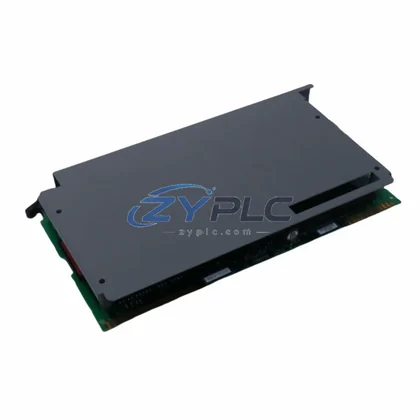
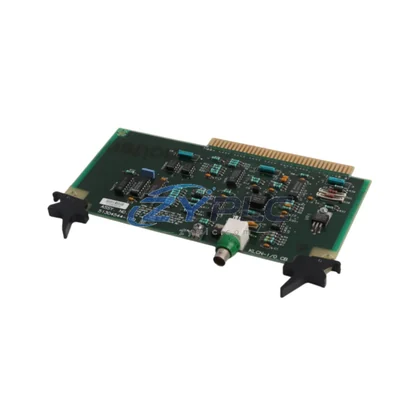
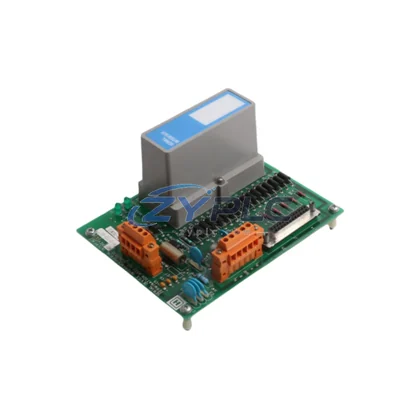
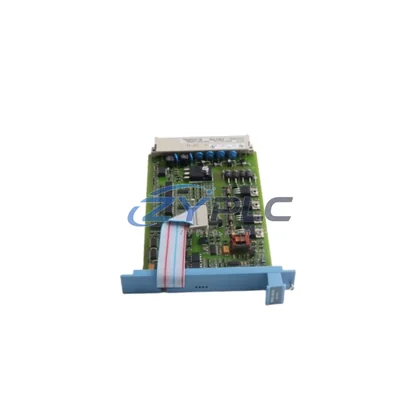
Honeywell DC-SDOR01 Digital Output Module for TDC3000 Automation
In modern industrial automation, every output signal carries an energy cost. The Honeywell DC-SDOR01 is a high-efficiency digital output relay module engineered for the TDC3000 Total Distributed Control platform — a system architecture that has defined process control reliability across petrochemical, power generation, refining, and continuous manufacturing industries for decades. Rather than treating output switching as a passive function, the DC-SDOR01 is designed to deliver precise, low-latency relay actuation that directly supports maintenance-focused automation strategies: reducing unnecessary actuator cycling, minimizing hold-current losses, and enabling tighter control loop execution that translates into measurable reductions in unplanned downtime at the field device level.
The DC-SDOR01 occupies a critical position in the TDC3000 I/O subsystem. It interfaces directly with the Honeywell TDC3000 Local Control Network (LCN) and communicates upstream to the Universal Control Network (UCN), ensuring that output commands from the Honeywell AM (Application Module) or HPM (High-Performance Process Manager) are executed with deterministic timing. This determinism is not merely a reliability feature — it is an energy efficiency feature. When output switching is predictable and synchronized with process demand, actuators, solenoids, and motor starters operate only when required, eliminating the parasitic energy draw associated with poorly timed or redundant switching events.
Within a fully integrated TDC3000 architecture, the DC-SDOR01 works in close coordination with analog and digital input modules such as the Honeywell DC-SDAI01 analog input module and DC-SDDI01 digital input module, which feed real-time process data back into the control loop. This closed-loop feedback structure allows the system to continuously evaluate whether output states are aligned with actual process conditions — a prerequisite for any meaningful maintenance planning strategy. When paired with the Honeywell PM I/O Link and the HPM Process Manager, the DC-SDOR01 becomes part of a coordinated control fabric that can implement demand-response logic, load-shedding sequences, and equipment duty-cycling routines without operator intervention.
From a drive and motor control perspective, the DC-SDOR01 relay outputs are commonly used to command variable frequency drive (VFD) enable signals, motor contactor coils, and pump start/stop sequences. In facilities where pump and fan systems account for 30–60% of total electrical consumption, the ability to issue precise, condition-based start/stop commands — rather than relying on manual or timer-based switching — can yield significant reductions in operating load. The module’s relay contact ratings support both AC and DC load switching, making it compatible with a wide range of field devices across different voltage classes.
The DC-SDOR01 also plays a role in predictive maintenance architectures. By logging output state transitions through the TDC3000 historian and Honeywell PHD (Process Historian Database), maintenance teams can track actuator cycle counts, identify abnormal switching patterns, and schedule preventive maintenance before equipment failure occurs. This approach reduces unplanned downtime — which is itself a major source of energy inefficiency, as emergency restarts and production recovery sequences consume disproportionate amounts of energy compared to steady-state operation.
For facilities operating Honeywell EPKS (Experion Process Knowledge System) alongside legacy TDC3000 infrastructure, the DC-SDOR01 remains fully compatible through the TDC3000-to-EPKS migration bridge, allowing plants to modernize their control strategy without replacing field-level I/O hardware. This compatibility extends the useful life of installed DC-SDOR01 modules and defers capital expenditure, contributing to the overall lifecycle cost efficiency of the automation investment.
Installation of the DC-SDOR01 follows standard TDC3000 I/O module procedures. The module slots into the Honeywell IOP (I/O Processor) card cage, with field wiring terminated at the associated FTA (Field Termination Assembly). No special tools or calibration equipment are required for module replacement, and the hot-swap capability of the TDC3000 I/O subsystem means that module replacement can be performed without process interruption — a critical advantage in continuous process industries where planned shutdowns are costly and infrequent.
Every DC-SDOR01 unit supplied by ZYPLC undergoes a comprehensive pre-shipment test protocol that verifies relay contact integrity, output channel isolation, communication handshake with the IOP, and thermal performance under load. Units are shipped with full documentation and are covered by a warranty terms confirmed during quotation, providing procurement teams and plant engineers with the confidence needed to specify refurbished TDC3000 I/O modules in both maintenance and capital project contexts.
Product Specification Table
| Parameter |
Specification |
| Module Type |
Digital Output Relay Module |
| Compatible Platform |
Honeywell TDC3000 / EPKS (via migration bridge) |
| Output Channels |
8 relay output channels (SPDT) |
| Relay Contact Rating |
2A @ 120VAC / 30VDC per channel |
| Communication Interface |
TDC3000 I/O Link (IOP-based) |
| Power Consumption |
Low-standby relay design; minimizes hold-current draw |
| Operating Temperature |
0°C to 60°C (32°F to 140°F) |
| Mounting |
TDC3000 IOP Card Cage (standard slot) |
| Field Termination |
Via Honeywell FTA (Field Termination Assembly) |
| Maintenance Value |
Demand-based switching; supports VFD enable, motor start/stop, load-shedding |
| Compatibility |
DC-SDAI01, DC-SDDI01, HPM, AM, PHD Historian |
| Warranty |
warranty terms confirmed during quotation (ZYPLC) |
System Compatibility and Application
The DC-SDOR01 does not operate in isolation — its maintenance planning value is realized through its integration within the broader TDC3000 control hierarchy. At the controller level, the Honeywell HPM (High-Performance Process Manager) executes the control algorithms that determine when and how the DC-SDOR01 relay outputs are energized. The HPM’s ability to process hundreds of control loops simultaneously means that output switching decisions are made in the context of full process state awareness, not in response to isolated sensor readings.
At the I/O layer, the DC-SDOR01 shares the IOP card cage with analog input modules such as the DC-SDAI01 and digital input modules such as the DC-SDDI01, creating a tightly coupled sensing and actuation environment. The Honeywell IOP (I/O Processor) manages communication between these modules and the UCN, ensuring that input data and output commands are synchronized within the same scan cycle. This synchronization is essential for energy-efficient control: when input data and output actuation are aligned in time, the system avoids the over-actuation and hunting behavior that wastes energy in poorly tuned control loops.
At the network layer, the Honeywell UCN (Universal Control Network) provides the high-speed backbone that connects the HPM to the LCN and ultimately to the Honeywell GUS (Global User Station) operator interface. Operators monitoring operating load trends can use the GUS to implement manual load-shedding commands that are executed through the DC-SDOR01 relay outputs, providing a direct human-in-the-loop maintenance planning capability. For automated maintenance planning, the Honeywell PHD Process Historian provides the long-term data storage needed to identify operating load patterns and optimize control setpoints over time.
At the power layer, the TDC3000 system relies on redundant Honeywell Power Supply Modules to maintain continuous operation of the IOP card cages. The DC-SDOR01’s low standby power consumption contributes to the overall power budget efficiency of the card cage, allowing more I/O modules to be installed per cage without exceeding power supply capacity limits.
Maintenance and Replacement Notes
In a continuous chemical processing plant, the DC-SDOR01 is typically used to control the enable signals for multiple variable frequency drives managing cooling water pumps, agitator motors, and compressed air compressors. By implementing demand-based enable logic in the HPM — where drives are enabled only when process conditions require flow — plants have reported reductions in auxiliary equipment runtime of 15–25%, with corresponding reductions in electrical operating load.
In power generation facilities, the DC-SDOR01 relay outputs are used to control auxiliary equipment such as lube oil pumps, seal gas compressors, and cooling fans. The ability to implement staged startup sequences — where equipment is brought online in a controlled order to minimize inrush current peaks — reduces both operating load and mechanical stress on equipment, extending service intervals and reducing maintenance costs.
In refinery and petrochemical applications, the DC-SDOR01 supports emergency shutdown (ESD) integration by providing the relay output signals that de-energize field devices during safety system activation. The reliability of the relay contacts under fault conditions is critical to ensuring that ESD sequences execute correctly, preventing the unplanned downtime and equipment damage associated with uncontrolled process upsets.
For packaging and discrete manufacturing lines operating on TDC3000 hybrid architectures, the DC-SDOR01 enables precise conveyor start/stop sequencing that eliminates the idle running of belt conveyors and accumulation systems. By running conveyors only when product is present — detected through digital inputs from the DC-SDDI01 — plants can reduce conveyor motor load by Actual operating results depend on the installed system, load profile, and commissioning parameters.
Product Sourcing FAQ
Q1: How does the DC-SDOR01 contribute to measurable operational stability in a TDC3000 system?
The DC-SDOR01 enables demand-based output switching, which means field devices such as motors, pumps, and drives are energized only when process conditions require it. When integrated with HPM control algorithms and PHD historian data, plants can implement and continuously refine operational-efficiency control strategies — such as equipment duty-cycling, load-shedding, and staged startup sequences — that directly reduce electrical operating load without compromising process performance.
Q2: Is the DC-SDOR01 compatible with both legacy TDC3000 and modern Experion PKS environments?
Yes. The DC-SDOR01 is natively compatible with TDC3000 IOP card cages and communicates via the standard TDC3000 I/O Link protocol. For plants that have migrated to or are integrating Honeywell Experion PKS, the module remains operational through the TDC3000-to-EPKS migration bridge, allowing existing I/O hardware to be retained while the control and supervisory layers are modernized. This compatibility protects capital investment and avoids the energy and resource cost of full I/O replacement.
Q3: What does the warranty terms confirmed during quotation cover, and what is the replacement process?
The warranty terms confirmed during quotation provided by ZYPLC covers manufacturing defects, relay contact failure, communication faults, and any performance issues identified during normal operation within the TDC3000 system. Each unit is pre-tested before shipment to verify relay contact integrity, channel isolation, and IOP communication. In the event of a warranty claim, ZYPLC provides a replacement unit with expedited shipping to minimize process downtime. Contact plc.sales@zyplc.com or +86 19859288691 to initiate a warranty claim.
Q4: Can the DC-SDOR01 be replaced without shutting down the TDC3000 system?
The TDC3000 IOP card cage supports hot-swap module replacement, meaning the DC-SDOR01 can be removed and replaced while the card cage remains powered and other modules continue to operate. However, the output channels on the module being replaced will be de-energized during the swap, so field devices connected to those channels will lose their output signals. Process engineers should implement appropriate hold logic or manual overrides for critical outputs before performing a hot-swap replacement to ensure process safety and continuity.