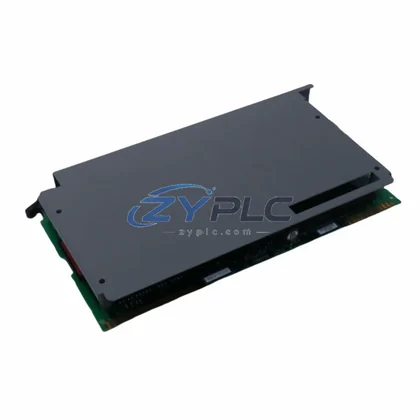
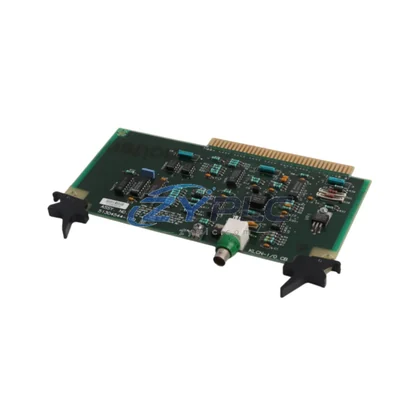
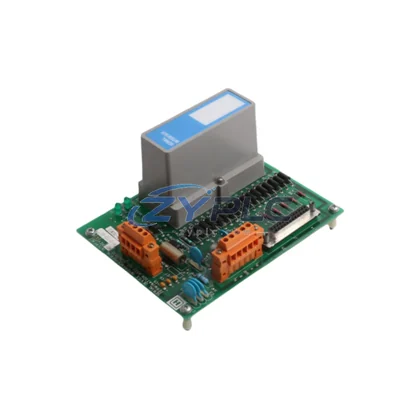
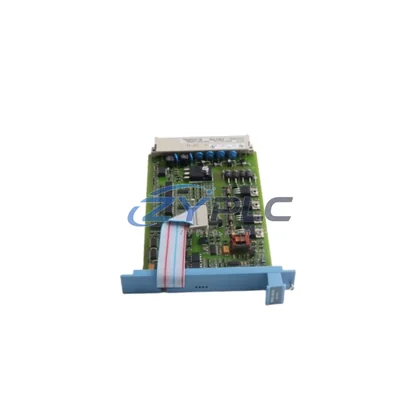
The Honeywell DC-TDIL51 is a Digital Input IOTA (Input/Output Termination Assembly) module engineered for seamless integration within the Honeywell TDC 3000 and Experion PKS distributed control system (DCS) architecture. In modern industrial automation, no module operates in isolation — every I/O termination assembly is a critical node in a layered control hierarchy that spans the field device layer, the I/O layer, the control processing layer, the network communication layer, and the human-machine interface layer. The DC-TDIL51 occupies a foundational position in this hierarchy, serving as the physical and electrical bridge between field-level digital signals and the DCS controller logic.
Within a fully integrated TDC 3000 system, the DC-TDIL51 works in close coordination with the High-Performance Process Manager (HPM) or the Application Module (AM) at the control layer. Digital input signals — such as valve position feedback, motor run status, interlock signals, and equipment fault indicators — are captured at the field terminal level through the DC-TDIL51 IOTA and transmitted upstream to the controller via the I/O Link. This signal flow is deterministic, low-latency, and designed to support the real-time demands of process industries including refining, petrochemicals, power generation, and water treatment.
System engineers deploying the DC-TDIL51 in a TDC 3000 cabinet will typically pair it with the corresponding FTA (Field Termination Assembly) card, such as the DC-TAIX51 analog input FTA or the DC-TDOD51 digital output IOTA, to build a balanced I/O subsystem. The modular architecture of the TDC 3000 I/O system allows the DC-TDIL51 to be installed in standard I/O carrier assemblies alongside other IOTA modules, enabling engineers to configure mixed I/O racks that address both digital and analog signal requirements within a single cabinet footprint. This modularity directly reduces panel space requirements and simplifies cable management in large-scale control room installations.
From a redundancy and system reliability perspective, the DC-TDIL51 supports the TDC 3000 platform’s inherent fault-tolerant design philosophy. When deployed alongside redundant HPM controllers and dual-redundant I/O Link networks, the digital input signals processed through the DC-TDIL51 remain continuously available to the control system even in the event of a single-point hardware failure. This architecture is particularly critical in safety-instrumented environments where loss of digital input visibility — such as emergency shutdown valve position feedback — could compromise process safety or regulatory compliance.
At the network and communication layer, the DC-TDIL51 interfaces with the Honeywell Local Control Network (LCN) and the Universal Control Network (UCN) through the HPM controller, ensuring that digital input data is available not only to the local control strategy but also to supervisory systems, historian servers, and operator workstations running Honeywell’s HMIWeb or Station displays. This system integration means that a single digital input point captured by the DC-TDIL51 can simultaneously feed a PID interlock, a sequence-of-events recorder, an alarm management system, and a plant-wide data historian — all without additional signal conditioning hardware.
For maintenance engineers, the DC-TDIL51’s IOTA design philosophy offers a significant operational advantage: the termination assembly can be replaced or serviced without disturbing field wiring. Field cables terminate directly on the IOTA’s screw terminals, while the electronic FTA card plugs into the IOTA from the rear. This separation of field wiring from active electronics dramatically reduces the risk of wiring errors during maintenance and allows hot-swap replacement of the electronic card in systems that support online maintenance procedures. Combined with the module’s warranty terms confirmed during quotation coverage, this design philosophy supports long-term asset management strategies in facilities where unplanned downtime carries significant financial and safety consequences.
Procurement and spare parts management teams will find the DC-TDIL51 to be a strategically important stocking item. As a core I/O module in the TDC 3000 platform — one of the most widely deployed DCS architectures in the global process industry — the DC-TDIL51 appears in the bill of materials for thousands of installed systems across refineries, chemical plants, power stations, and offshore platforms. Maintaining an adequate inventory of DC-TDIL51 modules as critical spares ensures that unplanned failures can be addressed within hours rather than weeks, protecting production continuity and avoiding costly emergency procurement at premium prices.
Product Specification Table
| Parameter |
Specification |
| Part Number |
DC-TDIL51 |
| Module Type |
Digital Input IOTA (Input/Output Termination Assembly) |
| Compatible Platform |
Honeywell TDC 3000 / Experion PKS DCS |
| System Role |
Field-level digital input signal termination and I/O Link interface |
| Signal Type |
Digital Input (DI) — discrete on/off field signals |
| Typical Input Sources |
Valve position switches, motor run/stop status, interlock relays, limit switches |
| Communication Interface |
I/O Link to HPM / Application Module via TDC 3000 backplane |
| Installation Environment |
Control room cabinet / DCS I/O enclosure; standard DIN rail or rack mount |
| Electrical Isolation |
Optically isolated digital inputs (field-side isolation from logic-side) |
| Operating Temperature |
0°C to 60°C (standard industrial control room environment) |
| Compatible FTA / IOTA Partners |
DC-TDOD51 (Digital Output IOTA), DC-TAIX51 (Analog Input FTA) |
| Wiring Termination |
Screw-terminal field wiring on IOTA; FTA card plugs into IOTA rear connector |
| Redundancy Support |
Compatible with redundant HPM and dual I/O Link network configurations |
| Warranty |
warranty terms confirmed during quotation — covers full functional testing and operational integrity |
| Condition |
Tested, inspected, and verified ready for system integration |
System Compatibility Notes
A complete TDC 3000 control system architecture built around the DC-TDIL51 typically incorporates a carefully selected set of coordinated modules and components. At the control processing layer, the Honeywell HPM (High-Performance Process Manager) serves as the primary controller, executing the control strategy that consumes digital input data from the DC-TDIL51. The HPM communicates with I/O modules via the I/O Link, a deterministic serial bus that ensures consistent scan rates across all connected IOTA and FTA modules.
On the output side, the DC-TDOD51 Digital Output IOTA mirrors the DC-TDIL51’s architecture, providing the digital output termination points for actuator commands — motor starters, solenoid valves, and relay coils — that respond to the control logic driven by the digital inputs. Together, the DC-TDIL51 and DC-TDOD51 form a complete digital I/O subsystem within a single I/O rack, minimizing the number of distinct module types that maintenance teams must stock and support.
For analog signal processing in the same cabinet, the DC-TAIX51 Analog Input FTA handles 4–20 mA process variable signals from transmitters, while analog output modules such as the DC-TAOX51 drive control valve positioners and variable speed drives. The coexistence of digital and analog IOTA/FTA modules in a shared rack assembly is a hallmark of the TDC 3000 I/O architecture, enabling engineers to design compact, mixed-signal I/O panels without sacrificing signal integrity or system performance.
At the power layer, dedicated TDC 3000 Power Supply modules provide regulated 24 VDC to the I/O carrier assemblies, with redundant power supply configurations available for critical applications. The power distribution architecture ensures that a single power supply failure does not interrupt I/O scanning or controller communication. At the human-machine interface layer, Honeywell Station operator workstations and HMIWeb Display Builder applications consume the digital input data processed through the DC-TDIL51, presenting valve status, equipment run indicators, and interlock states to operators in real time. For inter-system communication, Honeywell FIM (Fieldbus Interface Module) and HSI (Hiway Interface Module) components extend the TDC 3000 architecture to field device networks and legacy subsystems, ensuring that the DC-TDIL51’s digital input data can be contextualized within a plant-wide information architecture.
Industrial Application Notes
Refining and Petrochemical Plants: In crude distillation units, fluid catalytic cracking (FCC) units, and hydroprocessing reactors, the DC-TDIL51 captures digital status signals from emergency shutdown valves (ESDVs), high-level switches, and motor control centers. These inputs feed directly into the HPM’s safety interlock logic, ensuring that process upsets trigger the correct protective responses within the required response time. The module’s optical isolation protects the DCS electronics from the high-voltage transients common in heavy industrial environments.
Power Generation: In coal-fired, gas turbine, and combined-cycle power plants, the DC-TDIL51 monitors turbine trip signals, breaker status, and auxiliary equipment run/stop feedback. The deterministic I/O Link scan rate ensures that critical digital inputs are processed within the control system’s required cycle time, supporting both normal operations and fast-acting protective functions. Redundant HPM configurations paired with the DC-TDIL51 provide the fault tolerance required for continuous baseload generation.
Water and Wastewater Treatment: Municipal and industrial water treatment facilities use the DC-TDIL51 to monitor pump run status, valve position feedback, and level switch inputs across distributed pump stations and treatment basins. The module’s compatibility with the TDC 3000 platform’s remote I/O capabilities allows digital inputs from geographically dispersed field locations to be integrated into a centralized control architecture without requiring separate PLCs or RTUs at each site.
Mining and Metallurgy: In ore processing plants, smelters, and mineral separation facilities, the DC-TDIL51 handles digital inputs from conveyor belt run indicators, crusher status signals, and flotation cell level switches. The module’s robust design and warranty terms confirmed during quotation support the demanding operating schedules of continuous-process mining operations, where unplanned downtime directly impacts production tonnage and revenue.
Product Compatibility FAQ
Q1: Is the DC-TDIL51 compatible with both TDC 3000 and Experion PKS systems, and can it be used in a mixed-generation DCS architecture?
A: Yes. The DC-TDIL51 IOTA is designed for the Honeywell TDC 3000 I/O platform, which is also supported within Experion PKS environments through the HPM controller. In mixed-generation installations where TDC 3000 I/O hardware is retained alongside newer Experion PKS controllers and servers, the DC-TDIL51 continues to function as a valid I/O termination point, provided the HPM firmware and I/O Link configuration are maintained at compatible revision levels. This backward compatibility is a key advantage of the TDC 3000 architecture and allows facilities to modernize their control systems incrementally without replacing all field I/O hardware simultaneously.
Q2: What is the recommended installation and commissioning procedure for the DC-TDIL51 in an existing TDC 3000 cabinet?
A: Installation of the DC-TDIL51 follows the standard TDC 3000 I/O replacement procedure. The IOTA is mounted in the I/O carrier assembly and field wiring is connected to the screw terminals according to the existing termination drawings. The FTA card is then inserted into the IOTA’s rear connector. Prior to energizing, engineers should verify that the I/O Link address configuration matches the system database definition and that the HPM’s I/O configuration has been updated to reflect the module’s channel assignments. After energization, point-by-point functional testing should be performed to verify that each digital input channel correctly reflects the field device state in the operator display. The module’s warranty terms confirmed during quotation covers any functional defects identified during this commissioning process.
Q3: How does the warranty terms confirmed during quotation apply to the DC-TDIL51, and what does it cover for long-term maintenance planning?
A: The warranty terms confirmed during quotation on the DC-TDIL51 covers the module against functional failures attributable to manufacturing defects or component degradation under normal operating conditions. For maintenance planners, this warranty provides a defined baseline for spare parts lifecycle management: modules installed as critical spares or deployed as replacements are covered for a full year from the date of purchase, allowing facilities to rotate spare inventory with confidence. The warranty also supports the business case for proactive spare parts procurement — rather than waiting for an in-service failure and facing emergency sourcing lead times, facilities can maintain a warranted spare on the shelf and replace aging modules during planned maintenance windows, minimizing unplanned downtime risk.