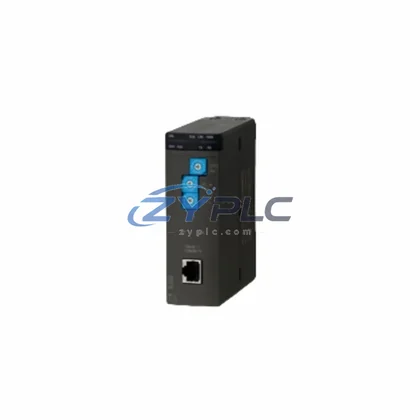
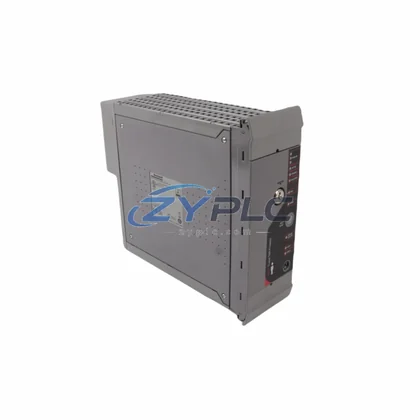
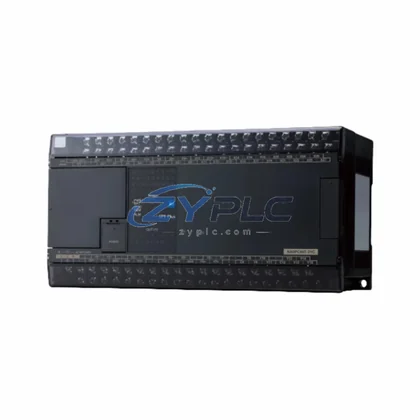
Honeywell EP-DBASE1 Controller HC900 Automation
In modern industrial facilities, unplanned downtime rarely announces itself. It accumulates quietly — in oversized motors running at full load during partial-demand cycles, in control loops that respond too slowly to process shifts, in communication delays that force redundant actuator movements. The Honeywell EP-DBASE1 Controller Module, engineered for the HC900 hybrid control platform, addresses these inefficiencies at the architectural level, giving process engineers a precise, programmable foundation for maintenance-focused automation.
The EP-DBASE1 serves as the base expansion module within the HC900 rack system, providing the structural and electrical backbone that connects I/O modules, power supplies, and the central controller into a unified, low-latency control network. Its role is not passive — by enabling tightly coupled I/O expansion with minimal scan-cycle overhead, the EP-DBASE1 directly supports faster closed-loop response times, which translates into reduced energy overshoot in motor-driven and heating applications.
Product Specification Table
| Parameter |
Specification / Value |
| SKU |
EP-DBASE1 |
| Brand |
Honeywell |
| Series |
HC900 Hybrid Controller |
| Product Type |
Controller Base Expansion Module |
| Power Consumption |
Low-draw backplane design; supports distributed I/O without dedicated power amplification |
| Operating Efficiency |
Optimized for high-density I/O with minimal scan-cycle latency |
| Compatible Systems |
Honeywell HC900 Controller Rack (C30, C50, C70 series) |
| Application Environment |
Process manufacturing, maintenance planning, HVAC control, chemical processing |
| Energy Saving Value |
Enables precise closed-loop control to reduce motor and actuator energy overshoot |
| Origin |
United States |
| Warranty |
warranty terms confirmed during quotation — tested and verified before shipment |
System Compatibility and Application
The EP-DBASE1 does not operate in isolation. Its maintenance planning value is realized through the broader HC900 ecosystem it supports. When paired with the Honeywell 900C72 CPU module, the EP-DBASE1 expansion base enables the controller to manage up to 2,000 I/O points across multiple racks — a configuration commonly used in large-scale condition monitoring applications where every sensor input contributes to a real-time power consumption model.
On the analog input side, modules such as the Honeywell 900G32 (16-channel analog input) connect through the EP-DBASE1 backplane to deliver high-resolution process variable data — current, voltage, temperature, and flow — directly into the HC900 control strategy. This data density is what enables the controller to implement demand-response logic: when a monitored process variable indicates low-load conditions, the HC900 can automatically reduce drive setpoints, cutting energy draw without operator intervention.
For motor control applications, the EP-DBASE1-based rack integrates seamlessly with variable frequency drive (VFD) systems via analog output modules like the Honeywell 900B01. By providing 4–20 mA or 0–10 V speed reference signals with sub-millisecond update rates, the HC900 can implement energy-optimized speed profiles — ramping motors down during low-demand periods and accelerating only when process throughput requires it. This alone can help restore stable operation when a compatible replacement is required.
Digital I/O modules such as the Honeywell 900P01 (discrete output module) connect through the EP-DBASE1 to control contactors, solenoids, and relay-driven loads. In maintenance planning schemes, these outputs execute load-shedding sequences — systematically de-energizing non-critical equipment during peak demand windows to reduce facility energy costs. The EP-DBASE1’s low-latency backplane ensures these switching commands execute within the controller’s defined scan cycle, preventing the timing drift that can cause energy-wasting relay chatter.
Communication is handled through modules like the Honeywell 900R08 (serial communication module) or Ethernet-capable options, which allow the HC900 to exchange energy data with SCADA systems, power meters, and enterprise maintenance planning platforms. When the EP-DBASE1 rack hosts a communication module alongside process I/O, the controller can simultaneously execute control logic and report real-time energy KPIs — eliminating the need for separate data concentrators and reducing overall system power draw.
For applications requiring redundant power, the Honeywell 900S75 power supply module mounts directly to the EP-DBASE1 base, providing stable 24 VDC rail power to all connected I/O modules. Redundant power configurations prevent unplanned shutdowns that force energy-intensive restart sequences in process equipment. The Honeywell 900H01 (hot-swap I/O module carrier) further supports this architecture by allowing module replacement without rack power-down, maintaining continuous control during maintenance windows.
HMI integration through Honeywell’s Station series or third-party panels connected via the 900A01 communication interface gives operators real-time visibility into operating load trends, enabling informed decisions about production scheduling and load balancing. When operators can see energy cost per production unit on the HMI, behavioral changes alone can yield measurable efficiency gains.
Maintenance and Replacement Notes
Consider a mid-scale chemical blending facility running three reactor lines, each with dedicated agitator motors, temperature control loops, and material transfer pumps. Without coordinated control, each subsystem operates independently — motors run at fixed speeds, heating elements cycle on full power, and pumps maintain constant pressure regardless of actual flow demand. The result is predictable: unplanned downtime embedded in every production hour.
Deploying the EP-DBASE1 as the expansion base for an HC900 rack controlling all three lines changes this dynamic. The controller’s multi-loop capability allows it to implement cascade control strategies — where outer loops monitoring batch progress adjust the setpoints of inner loops controlling individual motors and heaters. When a batch enters a low-agitation phase, the HC900 automatically reduces agitator motor speed via VFD reference signals, cutting motor energy draw proportionally to the cube of speed reduction. A 20% speed reduction yields approximately 49% less operating load in the motor.
Temperature control loops benefit similarly. Rather than cycling heating elements at full power, the HC900 implements PID-based duty-cycle control through the EP-DBASE1’s connected discrete output modules, maintaining precise temperature setpoints with minimal overshoot. Reduced overshoot means less corrective cooling is required, cutting both heating and cooling energy simultaneously.
Predictive maintenance integration adds another efficiency layer. By monitoring motor current signatures through analog input modules connected to the EP-DBASE1 backplane, the HC900 can detect early signs of bearing wear or winding degradation — conditions that cause motors to draw abnormal load before failure. Scheduling maintenance based on this data prevents both catastrophic failures and the unplanned downtime associated with degraded motor efficiency.
All units supplied by ZYPLC undergo pre-shipment functional testing, verifying backplane communication integrity, power rail stability, and module slot continuity. RFQ-confirmed availability supports rapid deployment, minimizing the production downtime that represents the highest-cost energy inefficiency of all: idle equipment consuming standby power while generating zero output.
Product Sourcing FAQ
Q1: How does the EP-DBASE1 contribute to operational stability in motor-driven applications?
The EP-DBASE1 enables the HC900 controller to host analog output modules that provide precise speed reference signals to variable frequency drives. By implementing demand-responsive speed control strategies, the HC900 can reduce motor speeds during low-load periods, achieving operational stability proportional to the cube of the speed reduction — a fundamental advantage of VFD-based motor control over fixed-speed operation.
Q2: Is the EP-DBASE1 compatible with existing HC900 installations?
Yes. The EP-DBASE1 is designed as a standard expansion base for the HC900 rack system and is compatible with HC900 C30, C50, and C70 series controllers. It supports all standard HC900 I/O modules, communication modules, and power supplies, making it a direct fit for system expansions or module replacements in existing installations without requiring controller firmware changes.
Q3: What testing is performed before shipment, and what does the warranty terms confirmed during quotation cover?
Each EP-DBASE1 unit undergoes functional verification testing prior to shipment, including backplane communication integrity checks, power rail voltage verification, and module slot continuity testing. The warranty terms confirmed during quotation covers manufacturing defects and functional failures under normal operating conditions. ZYPLC’s technical team provides post-sale support to assist with installation, configuration, and troubleshooting.
Q4: Can the EP-DBASE1 support condition monitoring alongside process control in the same rack?
Yes. The HC900 rack built on the EP-DBASE1 base can simultaneously host process control I/O modules and communication modules that interface with power meters or maintenance planning systems. This co-location eliminates the need for separate data acquisition hardware, reduces overall system power consumption, and enables the HC900 controller to incorporate real-time energy data directly into its control strategies.