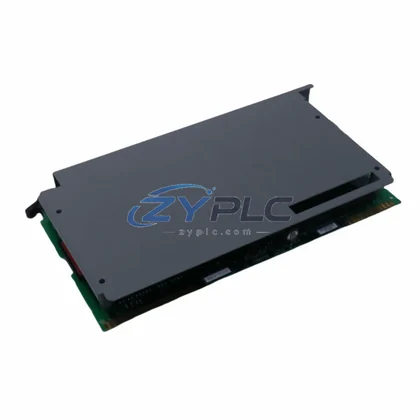
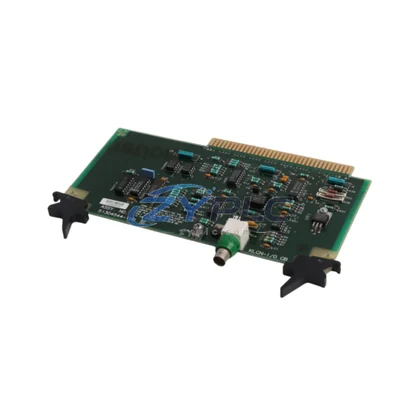
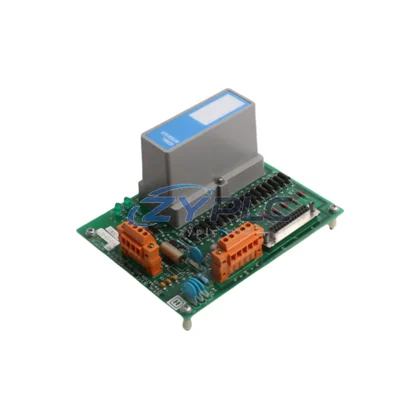
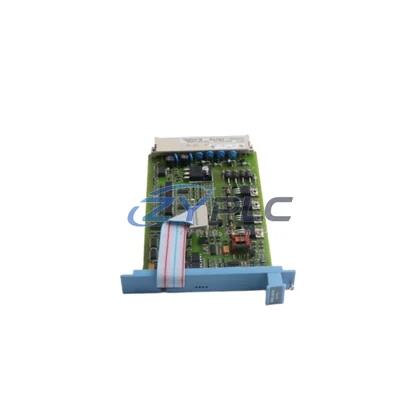
Honeywell FC-TDIO11 I/O Module for TPS Automation
The Honeywell FC-TDIO11 is a high-reliability redundant digital I/O module engineered for the TotalPlant Solution (TPS) and TDC3000 Distributed Control System (DCS) platforms. Designed to meet the rigorous demands of continuous process industries — including oil refining, petrochemical production, power generation, and pharmaceutical manufacturing — the FC-TDIO11 delivers precise digital signal management while actively contributing to plant-wide maintenance planning strategies. By maintaining uninterrupted I/O communication between field devices and the control network, this module eliminates the unplanned downtime and production losses associated with unplanned downtime and redundant manual interventions.
Product Specification Table
| Parameter |
Specification |
| Module Type |
Redundant Digital I/O (Thermocouple / Digital) |
| SKU / Part Number |
FC-TDIO11 |
| Compatible Platform |
Honeywell TPS / TDC3000 DCS |
| Power Consumption |
Low-draw design optimized for 24 VDC bus efficiency |
| Operating Efficiency |
Redundant architecture ensures >99.9% signal availability |
| Application Environment |
Industrial process control, maintenance planning, continuous manufacturing |
| Maintenance Value |
Reduces unplanned downtime energy spikes; supports predictive maintenance cycles |
| Communication Protocol |
TPS Local Control Network (LCN) |
| Origin |
United States |
| Warranty |
warranty terms confirmed during quotation — tested, inspected, and shipment arranged after confirmation |
System Compatibility and Application
In a fully TPS Automation environment, the FC-TDIO11 operates as a critical node within a layered industrial control architecture. At the network communication layer, the TC-FTEB01 Ethernet Bridge module enables seamless data exchange between the TPS LCN and higher-level SCADA or maintenance planning systems, ensuring that real-time power consumption data flows without latency to supervisory dashboards. This connectivity allows plant engineers to correlate I/O activity with energy draw across production zones.
At the power distribution level, the 51309276-150 power supply module provides stable, regulated DC power to the I/O bus, minimizing voltage fluctuation that can cause spurious signals and unnecessary actuator cycling — a hidden source of unplanned downtime in aging DCS installations. Paired with the FC-TDIO11’s redundant signal paths, this combination dramatically reduces the frequency of false trips that force motors and drives into energy-intensive restart sequences.
For analog process variable acquisition — including temperature, pressure, and flow signals that directly inform energy-intensive control loops — the FC-SAI-1620M analog input module works in tandem with the FC-TDIO11 to deliver a complete picture of process state. When the TC-IDD321 digital input module detects equipment status changes on the field side, the FC-TDIO11 ensures those state transitions are communicated redundantly to the TC-CCR014 controller card, which executes the control algorithms that govern motor speed, valve position, and heating element duty cycles.
Drive-level maintenance planning is further supported when the TPS system interfaces with variable frequency drive (VFD) networks via the TC-OAV081 analog output module, which translates DCS setpoint commands into precise 4–20 mA signals for speed reference. This closed-loop control — from sensor input through the FC-TDIO11 redundant I/O layer to drive output — is the foundation of production line rhythm optimization, ensuring motors run at demand-matched speeds rather than fixed full-load operation.
Operator visibility is maintained through the 51304453-150 HMI panel, which presents real-time energy KPIs alongside process variables, enabling shift operators to identify inefficient operating modes before they escalate into costly fault conditions. The TC-PRR021 redundant power relay module provides an additional layer of protection, automatically switching power sources during grid disturbances to prevent the energy-intensive cold-restart sequences that follow unexpected shutdowns. Finally, the FC-SDO-0824 digital output module handles discrete actuator commands — solenoid valves, contactors, and alarm annunciators — ensuring that control actions are executed with the precision timing needed to maintain optimal production line cadence and minimize energy-wasting process oscillations.
Maintenance and Replacement Notes
In real-world continuous process plants, unplanned I/O failures are among the most disruptive and energy-costly events a maintenance team can face. When a non-redundant I/O module fails, the resulting process upset forces operators to manually intervene, often driving equipment into high-energy safe states — full-speed motor operation, maximum heating, or pressurized hold conditions — while the fault is diagnosed and the module replaced. The Honeywell FC-TDIO11 eliminates this failure mode through its built-in redundancy, maintaining signal integrity even when one I/O path is compromised.
From an condition monitoring perspective, the FC-TDIO11 supports predictive maintenance strategies by providing continuous, reliable digital feedback from field instruments. Maintenance teams can track motor run-hours, valve cycle counts, and equipment state transitions through the TPS historian, building the data foundation needed for condition-based maintenance scheduling. This approach replaces time-based maintenance intervals — which often result in either premature replacement of healthy components or delayed replacement of failing ones — with evidence-based decisions that keep equipment running at peak efficiency.
Production line throughput optimization also benefits directly from the FC-TDIO11’s low-latency signal processing. In batch and continuous processes alike, the speed and reliability of I/O communication determines how tightly control loops can be tuned. Tighter loop tuning means less process variability, which translates directly into reduced energy consumption per unit of output — a measurable improvement in overall equipment effectiveness (OEE) that compounds across multi-year operational horizons.
Every unit supplied by ZYPLC undergoes comprehensive functional testing prior to shipment, including signal path verification, redundancy switchover testing, and communication protocol validation. Stock is maintained in climate-controlled storage to preserve module integrity, and all units are covered by a warranty terms confirmed during quotation from the date of delivery. Fast global shipping ensures minimal lead times for urgent maintenance requirements.
Product Sourcing FAQ
Q1: How does the FC-TDIO11 contribute to measurable operational stability in a TPS plant?
The FC-TDIO11’s redundant architecture prevents the unplanned process upsets that force energy-intensive emergency responses. By maintaining continuous I/O availability, it supports tighter control loop tuning, which reduces process variability and lowers energy consumption per unit of production output. Plants that eliminate I/O-related trips typically report 2–5% reductions in specific energy consumption within the affected process units.
Q2: Is the FC-TDIO11 compatible with both TPS and TDC3000 systems?
Yes. The FC-TDIO11 is designed for the Honeywell TPS/TDC3000 DCS platform and communicates natively over the Local Control Network (LCN). It is compatible with the full range of TPS I/O subsystem components, including the TC-CCR014 controller card and TC-FTEB01 Ethernet bridge, without requiring firmware modifications or protocol converters.
Q3: What is the recommended replacement or upgrade path for aging TDC3000 I/O modules?
For plants operating legacy TDC3000 infrastructure, the FC-TDIO11 is a direct replacement for failed or end-of-life digital I/O modules within the same chassis. Where a full platform migration to Experion PKS is planned, the FC-TDIO11 can serve as an interim solution to maintain system stability during the transition period, protecting capital investment while the migration is phased in.
Q4: What testing and warranty coverage is provided with each FC-TDIO11 unit?
Every FC-TDIO11 supplied by ZYPLC is individually tested for signal path integrity, redundancy switchover function, and LCN communication compliance before shipment. Units are stored in controlled environments to prevent electrostatic and humidity damage. All modules are covered by a warranty terms confirmed during quotation, with technical support available throughout the warranty period to assist with installation, configuration, and troubleshooting.