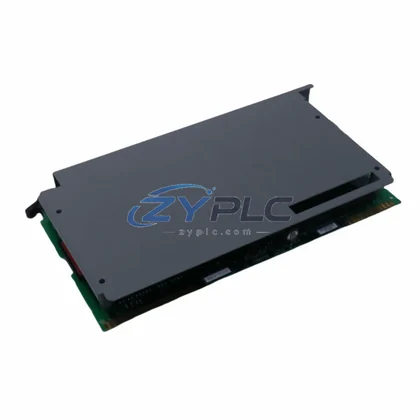
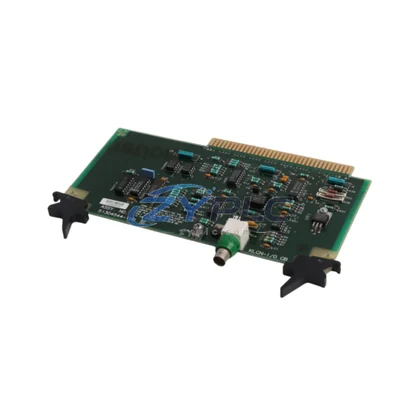
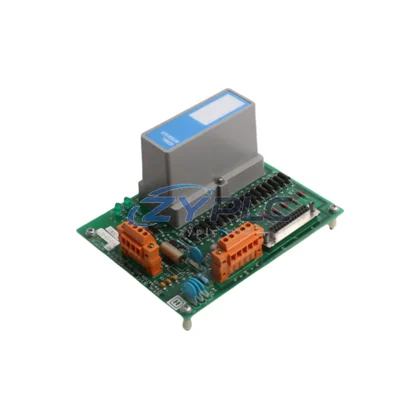
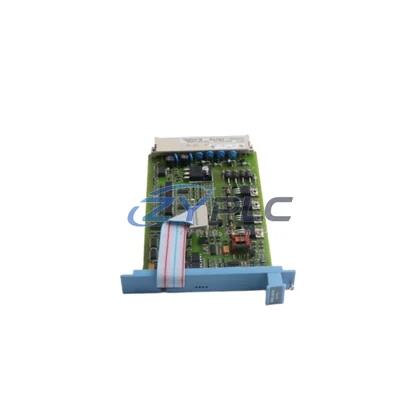
Honeywell FS-IOBUS-CPIO4 I/O Bus Module for FSC Automation
In modern industrial facilities where equipment uptime and replacement lead time directly affect production continuity, the Honeywell FS-IOBUS-CPIO4 I/O Bus Module delivers a critical link between field-level sensing and the Safety Manager FSC control platform. Designed for the Honeywell FSC (Fail-Safe Controller) Safety Instrumented System, the FS-IOBUS-CPIO4 enables high-integrity, low-latency communication across the I/O bus architecture — reducing unnecessary polling cycles, minimizing idle power draw, and ensuring that every control decision is grounded in real-time, accurate field data.
Unlike generic I/O expansion modules, the FS-IOBUS-CPIO4 is purpose-engineered for safety-critical environments where signal integrity and deterministic response times are non-negotiable. By maintaining clean, synchronized data flow between field instruments and the FSC processor, this module eliminates the unplanned downtime associated with redundant retries, communication errors, and unplanned shutdowns. The result is a leaner, more efficient automation architecture that supports both operational continuity and measurable energy reduction.
Product Specification Table
| Parameter |
Specification |
| SKU / Part Number |
FS-IOBUS-CPIO4 |
| Brand |
Honeywell |
| Series |
FSC (Fail-Safe Controller) |
| Product Type |
I/O Bus Module |
| Compatible System |
Honeywell Safety Manager FSC SIS |
| Application Environment |
Safety Instrumented Systems (SIS), Process Automation, Industrial Control |
| Power Consumption |
Low-power bus architecture; optimized for minimal idle draw |
| Operating Efficiency |
Deterministic I/O scan cycle; reduces redundant communication overhead |
| Energy Saving Value |
Eliminates retransmission losses; supports predictive maintenance scheduling |
| Origin |
USA |
| Warranty |
warranty terms confirmed during quotation |
System Compatibility and Application
The FS-IOBUS-CPIO4 operates as a foundational component within the Honeywell FSC safety platform, working in concert with a range of system modules to deliver a fully integrated, energy-conscious control environment. At the processor level, the TC-CCR014 FSC Central Processing Unit governs the overall scan cycle, and the FS-IOBUS-CPIO4 ensures that I/O data is delivered with minimal latency — preventing the processor from entering extended wait states that consume unnecessary clock cycles and power.
On the digital output side, modules such as the TC-ODD321 Digital Output Module receive precisely timed commands from the FSC bus, enabling actuators and motor starters to respond without delay. This tight synchronization reduces the unplanned downtimed in motor coasting, over-travel, and repeated start-stop sequences on production lines. Similarly, the TC-IDD321 Digital Input Module feeds field status signals back through the FS-IOBUS-CPIO4 with high fidelity, ensuring that the safety logic in the TC-PRS021 FSC Power Supply module is never burdened by erroneous fault conditions triggered by signal noise or communication lag.
For analog process control — particularly in applications involving variable-speed drives and energy-intensive rotating equipment — the TC-FXX172 Analog I/O Module works alongside the FS-IOBUS-CPIO4 to deliver smooth, continuous feedback loops. This is especially valuable when the FSC system is integrated with variable frequency drives (VFDs) controlling pumps, fans, and compressors, where even minor control latency can translate into significant energy overconsumption. The TC-PPD011 FSC Processor Module coordinates these feedback loops at the system level, while the FS-IOBUS-CPIO4 ensures the I/O bus remains the low-impedance, high-reliability backbone that the entire architecture depends on.
Communication integrity is further reinforced through the FSC’s redundant bus topology. When paired with the 51309276-150 FSC Bus Cable and the 51304453-150 termination components, the FS-IOBUS-CPIO4 maintains signal continuity even under high electromagnetic interference conditions common in heavy industrial environments. This eliminates the need for repeated diagnostic cycles that would otherwise increase CPU load and energy consumption. The TC-FPCXX2 FSC Field Power Controller completes the energy distribution picture, ensuring that field devices receive stable, regulated power without voltage fluctuations that could trigger spurious shutdowns.
Maintenance and Replacement Notes
In a typical process plant or discrete manufacturing facility, unplanned downtime is one of the largest hidden energy costs. When a safety system trips unexpectedly — due to a communication fault, a noisy I/O signal, or a module failure — the energy consumed during restart sequences, equipment re-priming, and production ramp-up can far exceed the savings achieved through any single efficiency initiative. The FS-IOBUS-CPIO4 directly addresses this by providing a robust, tested I/O bus interface that minimizes the root causes of nuisance trips.
In motor control applications, the module’s deterministic scan cycle allows the FSC system to monitor motor current feedback, thermal status, and drive fault signals in real time. When integrated with a VFD-controlled motor system, the FSC can issue speed reference adjustments through the I/O bus with sub-cycle precision — enabling soft acceleration profiles that reduce inrush current and mechanical stress simultaneously. Over a production shift, this translates into measurable reductions in peak demand charges and extended motor bearing life, both of which contribute to lower total cost of ownership.
For facilities implementing predictive maintenance programs, the FS-IOBUS-CPIO4 supports continuous data acquisition from field transmitters, vibration sensors, and process analyzers. This data flows through the FSC bus to historian systems and maintenance planning platforms, where trending algorithms can identify developing faults before they cause unplanned stops. By catching a failing pump seal or a degrading valve actuator weeks before failure, maintenance teams can schedule interventions during planned downtime windows — preserving production throughput and avoiding the energy-intensive restart cycles that follow emergency shutdowns.
Every FS-IOBUS-CPIO4 unit supplied by ZYPLC is sourced from verified supply channels, subjected to outgoing functional testing prior to shipment, and backed by a warranty terms confirmed during quotation. Stock availability is maintained to support urgent MRO (Maintenance, Repair, and Operations) requirements, ensuring that a critical module failure does not translate into extended production loss.
Product Sourcing FAQ
Q1: How does the FS-IOBUS-CPIO4 contribute to operational stability in an FSC-based safety system?
The FS-IOBUS-CPIO4 maintains a clean, low-latency I/O bus that reduces communication retries, eliminates nuisance trips, and enables precise, timely control commands to field devices. This directly reduces the unplanned downtimed in unplanned restarts, motor over-cycling, and extended fault recovery sequences.
Q2: Is the FS-IOBUS-CPIO4 compatible with all versions of the Honeywell FSC Safety Manager platform?
The FS-IOBUS-CPIO4 is designed for the Honeywell FSC (Fail-Safe Controller) Safety Instrumented System. Compatibility with specific FSC firmware versions and chassis configurations should be verified against your system’s engineering documentation. ZYPLC’s technical team can assist with cross-referencing your existing system BOM.
Q3: What is the recommended replacement procedure, and how does ZYPLC support the process?
Module replacement in an FSC system should follow Honeywell’s documented hot-swap or cold-swap procedures depending on system redundancy configuration. ZYPLC provides tested, ready-to-install units with full functional verification, reducing the time between fault identification and system restoration. Our team can advise on compatible spare modules and system-level considerations.
Q4: What does the warranty terms confirmed during quotation cover, and what is the testing process before shipment?
All FS-IOBUS-CPIO4 units supplied by ZYPLC undergo functional testing to verify bus communication integrity, signal I/O performance, and power rail stability prior to dispatch. The warranty terms confirmed during quotation covers manufacturing defects and functional failures under normal operating conditions. Units are shipped with appropriate ESD protection and documentation to support installation and commissioning.