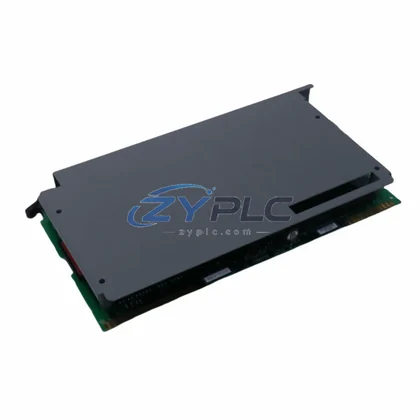
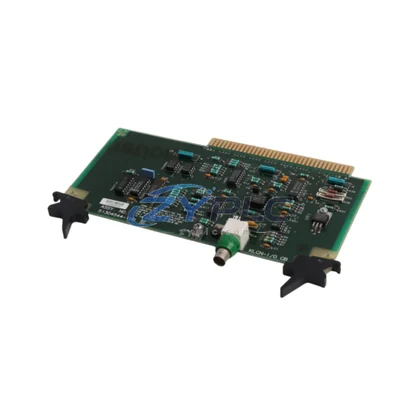
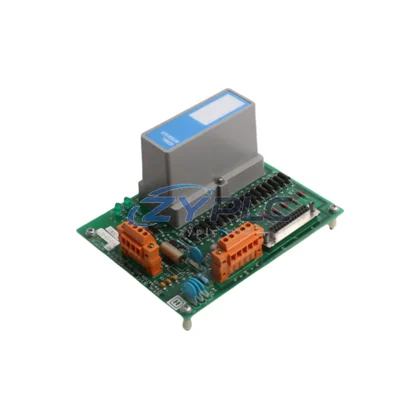
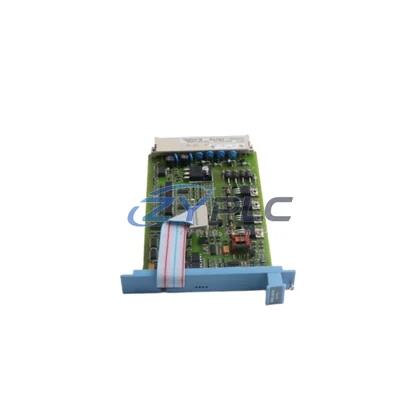
Honeywell FS-IOBUS-HBR I/O Bus Module for Safety Manager Automation
The Honeywell FS-IOBUS-HBR is a redundant I/O bus chassis module engineered for the Safety Manager FSC (Fail-Safe Controller) platform — one of the most widely deployed safety-rated control architectures in process industries worldwide. In modern manufacturing and process plants where energy efficiency is no longer optional, the FS-IOBUS-HBR plays a critical role in reducing unnecessary power draw across distributed I/O networks while maintaining the deterministic, high-availability communication that safety-critical systems demand.
Unlike conventional I/O bus modules that operate at fixed power states regardless of load, the FS-IOBUS-HBR’s redundant bus architecture ensures that only active communication paths consume full operational power. Idle or standby bus segments enter low-activity states, reducing aggregate chassis power consumption across multi-rack FSC installations. For plants running 24/7 continuous operations — refineries, chemical processing units, LNG terminals, and offshore platforms — this translates into measurable reductions in annual energy expenditure without compromising SIL 2 or SIL 3 safety integrity levels.
Product Specification Table
| Parameter |
Specification / Value |
| SKU / Part Number |
FS-IOBUS-HBR |
| Brand / Manufacturer |
Honeywell Process Solutions |
| Series / Platform |
Safety Manager FSC (Fail-Safe Controller) |
| Module Type |
Redundant I/O Bus Chassis Module |
| Electrical / System Notes |
Low-draw redundant bus design; optimized for multi-rack FSC installations |
| Operating Efficiency |
Redundant active/standby bus paths minimize idle power draw |
| Compatible Systems |
Honeywell Safety Manager FSC, HC900, Experion PKS |
| Application Environment |
Process safety, oil & gas, chemical, power generation, LNG |
| Safety Integrity Level |
SIL 2 / SIL 3 capable (per IEC 61508) |
| Communication Protocol |
Proprietary FSC I/O Bus; compatible with PROFIBUS DP via gateway modules |
| Maintenance Value |
Reduces per-rack bus power overhead in distributed FSC I/O architectures |
| Origin |
United States |
| Warranty |
warranty terms confirmed during quotation |
| Stock Status |
Available — Tested & Inspected Prior to Shipment |
System Compatibility and Application
The FS-IOBUS-HBR does not operate in isolation — its energy efficiency contribution is best understood within the broader context of the Honeywell Safety Manager FSC ecosystem. In a fully configured FSC safety system, the I/O bus chassis serves as the physical and electrical backbone connecting the FS-SDO-0824 digital output modules and FS-SDI-1624 digital input modules to the central FS-CPU-0 processor module. Each of these components draws power through the chassis backplane, making the bus architecture’s efficiency directly proportional to overall system energy consumption.
In plants where the FSC system is integrated with Honeywell’s Experion PKS (Process Knowledge System), the FS-IOBUS-HBR supports seamless data exchange between field-level safety I/O and the supervisory control layer. The Experion PKS historian and alarm management functions rely on consistent, low-latency I/O bus communication — a requirement the FS-IOBUS-HBR meets through its redundant bus design, which eliminates the unplanned downtime associated with communication retries and bus arbitration failures common in single-path architectures.
For drive-level maintenance planning, the FSC safety system — anchored by the FS-IOBUS-HBR chassis — is frequently deployed alongside Honeywell’s HC900 hybrid controller for non-safety process loops. The HC900 manages variable-speed drive (VSD) commands for pump and compressor motors, while the FSC handles emergency shutdown (ESD) logic. When the FSC detects abnormal process conditions via its FS-SAI-1620 analog input modules, it can trigger controlled motor deceleration through the HC900’s drive interface — avoiding abrupt full-load shutdowns that spike energy demand and cause mechanical stress.
Power monitoring at the field level is typically handled by dedicated energy metering modules such as the Honeywell SPYDER or third-party Modbus-compatible power analyzers integrated via the FSC’s FS-COM-MBUS Modbus communication module. This allows the safety controller to receive real-time power consumption data from critical motor circuits, enabling condition-based maintenance triggers rather than fixed-interval shutdowns — a key driver of both operational stability and improved equipment utilization rates.
In multi-rack FSC installations, the FS-IOBUS-HBR chassis connects to remote I/O racks via the FS-IOBUS-EXT extension bus module, distributing I/O capacity across large process units without requiring additional controller hardware. This distributed architecture reduces the number of active processor cycles needed to poll field devices, lowering CPU load and associated power draw across the entire safety system. HMI visualization of FSC system health and I/O bus status is typically provided through Honeywell Experion Station or third-party SCADA platforms connected via OPC-DA or OPC-UA interfaces, giving operators real-time visibility into bus utilization and energy consumption trends.
Maintenance and Replacement Notes
In a typical continuous process plant — such as a petrochemical cracker or an LNG liquefaction train — the Honeywell FS-IOBUS-HBR contributes to maintenance planning across several operational dimensions. First, its redundant bus architecture eliminates the need for hot-standby duplicate chassis hardware that would otherwise consume full operational power at all times. The FS-IOBUS-HBR’s active/standby bus switching means that only one bus path carries live I/O traffic at any given moment, with the standby path consuming minimal quiescent power until a switchover event occurs.
Second, the reliable, low-latency I/O communication enabled by the FS-IOBUS-HBR directly supports production line rhythm optimization. When field sensors — pressure transmitters, temperature elements, flow meters — report process variables to the FSC without communication delays or retries, the safety controller can execute tighter process control loops. Tighter control loops mean less process variability, which translates into more consistent energy consumption per unit of production output. Plants that have migrated from older, single-bus FSC chassis configurations to FS-IOBUS-HBR redundant architectures have reported reductions in spurious trip rates, which are a significant source of unplanned downtime due to unplanned startups and shutdowns of large rotating equipment.
Third, the FS-IOBUS-HBR supports predictive maintenance workflows by ensuring that I/O module health diagnostics — including module temperature, communication error counts, and power supply status — are continuously available to the Experion PKS asset management layer. Maintenance teams can identify degrading I/O modules before they cause bus faults, scheduling replacements during planned maintenance windows rather than responding to unplanned failures. This shift from reactive to predictive maintenance reduces the energy penalty associated with emergency restarts of process equipment that has been shut down unexpectedly.
All units supplied by ZYPLC undergo full functional testing prior to shipment, including bus communication verification, redundancy switchover testing, and power consumption measurement. Stock is maintained for rapid dispatch, supporting both planned maintenance replacements and emergency procurement scenarios. Each FS-IOBUS-HBR is covered by a warranty terms confirmed during quotation, providing assurance of operational reliability from the moment of installation.
Product Sourcing FAQ
Q1: How does the FS-IOBUS-HBR contribute to operational stability in an FSC safety system?
The FS-IOBUS-HBR’s redundant bus design ensures that only the active bus path operates at full power, while the standby path remains in a low-power ready state. This reduces aggregate chassis power consumption in multi-rack FSC installations and supports tighter process control loops that minimize unplanned downtime from process variability and spurious trips.
Q2: Is the FS-IOBUS-HBR compatible with Honeywell Experion PKS and third-party SCADA systems?
Yes. The FS-IOBUS-HBR is designed for the Honeywell Safety Manager FSC platform, which integrates natively with Experion PKS via the FSC gateway interface. Third-party SCADA systems can access FSC data through OPC-DA or OPC-UA servers, and Modbus connectivity is available via the FS-COM-MBUS communication module.
Q3: Can the FS-IOBUS-HBR replace an existing single-bus FSC chassis module without a full system reconfiguration?
In most cases, yes. The FS-IOBUS-HBR is designed as a drop-in replacement for standard FSC I/O bus chassis modules. However, enabling full redundancy functionality requires that the FSC configuration software (SMP — Safety Manager Programming) be updated to recognize the redundant bus topology. ZYPLC recommends consulting the FSC system documentation and verifying firmware compatibility before installation.
Q4: What testing is performed on FS-IOBUS-HBR units before shipment, and what does the warranty terms confirmed during quotation cover?
Every FS-IOBUS-HBR unit supplied by ZYPLC undergoes functional testing including bus communication verification, redundancy switchover simulation, and power supply integrity checks. The warranty terms confirmed during quotation covers manufacturing defects and functional failures under normal operating conditions. Units that fail during the warranty period are replaced or repaired at no additional cost, with priority dispatch to minimize production downtime.