Honeywell FS-SCSBL212 Industrial Network Interface: Bridging Fire Alarm Data Links in Smart Facilities
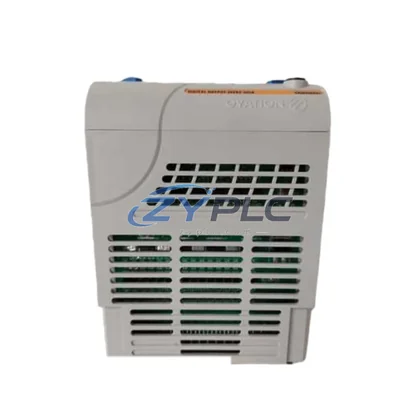
The Honeywell FS-SCSBL212 System Communication Module is a purpose-built industrial network interface designed to integrate fire alarm control panels, field devices, and supervisory systems into a unified, real-time data architecture. In modern smart facilities and industrial sites, fire safety infrastructure must operate not as an isolated island but as a fully connected node within the broader automation and building management ecosystem. The FS-SCSBL212 fulfills this role by enabling seamless protocol translation, structured data transmission, and continuous supervisory communication across multi-vendor environments.
From the moment a field sensor detects an anomaly — whether a smoke detector, heat detector, or manual call point — the FS-SCSBL212 ensures that signal data is captured, encoded, and transmitted across the network with minimal latency. This module acts as the communication backbone between the Honeywell fire alarm control panel and upstream SCADA platforms, BMS (Building Management Systems), and HMI workstations, enabling operators to monitor system status, acknowledge alarms, and initiate remote diagnostics from a centralized interface.
Compatibility & Integration Notes
| Parameter |
Specification |
| SKU |
FS-SCSBL212 |
| Brand |
Honeywell |
| Series |
Fire Alarm Series |
| Product Type |
System Communication Module |
| Communication Protocol |
BACnet MS/TP, Modbus RTU, Proprietary Honeywell Protocol |
| Interface Type |
RS-485, Serial Communication Bus |
| Network Compatibility |
Fire Alarm Control Panel Networks, BMS, SCADA, HMI |
| Transmission Capability |
Real-time alarm data, status reporting, diagnostic feedback |
| System Application |
Fire Alarm Integration, Building Automation, Industrial Safety Networks |
| Origin |
United States |
| Warranty |
warranty terms confirmed during quotation |
Connected Automation Data Flow
In a typical smart facility deployment, the FS-SCSBL212 sits at the intersection of field-level detection and supervisory control. Field devices such as Honeywell System Sensor smoke detectors and addressable heat detectors feed real-time status data into the Honeywell fire alarm control panel — for example, the Honeywell FS-250 or Honeywell FS-4000 series panels — where the FS-SCSBL212 module aggregates and formats this data for upstream transmission.
The module communicates over an RS-485 serial bus using BACnet MS/TP or Modbus RTU, making it directly compatible with industrial SCADA gateways such as the Honeywell XLS80 network controller and third-party edge gateways running IEC 61131-3 logic. This allows plant engineers to pull live alarm states, zone status, and fault diagnostics into their SCADA dashboards without manual polling or proprietary software bridges.
For facilities running Siemens or Schneider Electric PLCs alongside Honeywell fire systems, the FS-SCSBL212 serves as the protocol gateway that normalizes data into a format readable by the PLC’s communication module — such as a Schneider Electric BMXNOE0100 Ethernet module or a Siemens CP 343-1 communications processor — enabling cross-platform alarm management and interlock logic.
At the HMI layer, operators using Weintek cMT Series or Siemens SIMATIC HMI TP700 panels can visualize fire zone maps, acknowledge alarms, and review event logs in real time. The FS-SCSBL212 ensures that alarm events are timestamped and transmitted with sufficient fidelity for audit trail compliance and regulatory reporting.
For remote I/O expansion, the module integrates with Honeywell FS-ANNCIATOR annunciator panels and remote display units, extending alarm visibility to secondary control rooms and guard stations. In larger campus deployments, the FS-SCSBL212 feeds data into a centralized Honeywell WIN-PAK or third-party SCADA platform, where alarm events are correlated with access control, CCTV, and HVAC data for unified incident response.
Variable frequency drives (VFDs) and fan control systems — such as those used in smoke extraction and pressurization — can also receive interlock signals derived from FS-SCSBL212 alarm outputs, enabling automated emergency ventilation sequences without manual operator intervention. This level of integration is essential for compliance with NFPA 72, EN 54, and GB 50116 fire alarm standards in industrial and commercial facilities.
Solving Data Isolation in Industrial Sites
One of the most persistent challenges in industrial fire safety is the fragmentation of communication protocols. Legacy fire alarm panels often use proprietary serial protocols that cannot natively communicate with modern IP-based SCADA or BMS platforms. The result is data isolation — alarm events that exist only within the fire panel’s local memory, invisible to the plant’s central monitoring infrastructure until a technician physically inspects the panel.
The Honeywell FS-SCSBL212 directly addresses this problem by acting as a protocol bridge. Its support for BACnet MS/TP and Modbus RTU means that existing SCADA and BMS systems can query the fire alarm network using standard industrial protocols, eliminating the need for custom middleware or proprietary integration software. This dramatically reduces integration costs and accelerates commissioning timelines for new facility automation projects.
Remote monitoring is another critical capability enabled by the FS-SCSBL212. In multi-site industrial operations — manufacturing plants, logistics hubs, data centers — maintaining on-site fire safety personnel at every location is neither practical nor cost-effective. By connecting the fire alarm network to a centralized SCADA platform via the FS-SCSBL212, facility managers can monitor alarm status, system health, and fault conditions across all sites from a single control room or even a mobile device.
Production line transparency is also enhanced. When fire alarm data is integrated into the plant’s broader automation network, production supervisors gain visibility into safety-related shutdowns and can correlate fire events with process data — identifying root causes, reducing false alarm rates, and minimizing unplanned downtime. The FS-SCSBL212 supports this transparency by providing structured, timestamped data that can be logged, trended, and analyzed within standard industrial historian platforms.
System scalability is built into the FS-SCSBL212’s architecture. As facilities expand — adding new production zones, warehouses, or building wings — additional fire alarm loops and devices can be integrated into the existing network without replacing the communication infrastructure. The module’s RS-485 bus supports multi-drop topologies, allowing multiple panels and annunciators to share a single communication segment while maintaining data integrity and response time.
Industrial Connectivity FAQ
Q1: What communication protocols does the Honeywell FS-SCSBL212 support, and is it compatible with third-party SCADA systems?
The FS-SCSBL212 supports BACnet MS/TP and Modbus RTU over RS-485, making it compatible with a wide range of third-party SCADA, BMS, and HMI platforms. Most industrial SCADA systems — including Wonderware, Ignition, and Siemens WinCC — support these protocols natively, enabling straightforward integration without custom drivers.
Q2: What is the typical communication latency for alarm transmission through the FS-SCSBL212?
Under normal network conditions, the FS-SCSBL212 transmits alarm status updates with latency in the range of 100–500 milliseconds over RS-485 at standard baud rates. For time-critical applications, baud rate and polling interval can be optimized during commissioning to meet specific response time requirements.
Q3: Can the FS-SCSBL212 be used in multi-panel fire alarm networks, and how does it handle network expansion?
Yes. The FS-SCSBL212 supports multi-drop RS-485 topologies, allowing it to communicate with multiple fire alarm panels and annunciator units on a single bus segment. Network expansion is achieved by adding panels or remote I/O nodes to the existing bus, with address configuration managed through the module’s onboard settings. No replacement of the core communication infrastructure is required.
Q4: What does the warranty terms confirmed during quotation cover, and how is pre-shipment testing conducted?
Every Honeywell FS-SCSBL212 unit supplied by ZYPLC undergoes pre-shipment functional testing to verify communication integrity, protocol handshaking, and hardware condition. The warranty terms confirmed during quotation covers manufacturing defects and functional failures under normal operating conditions. Units are shipped via DHL or FedEx with full tracking, and our technical team provides post-sale support for integration and commissioning queries.