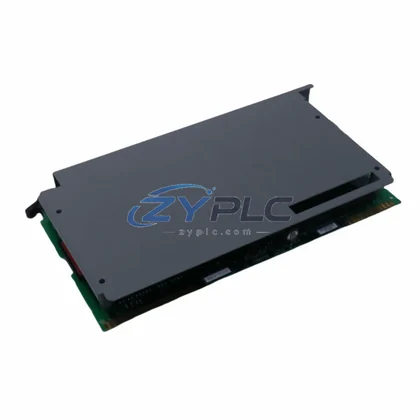
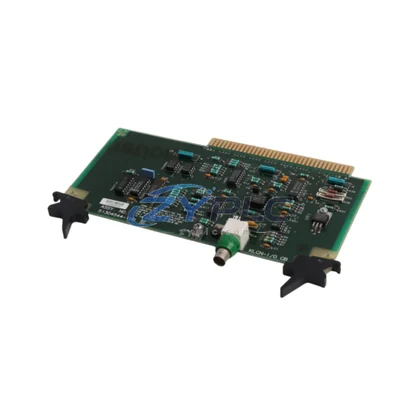
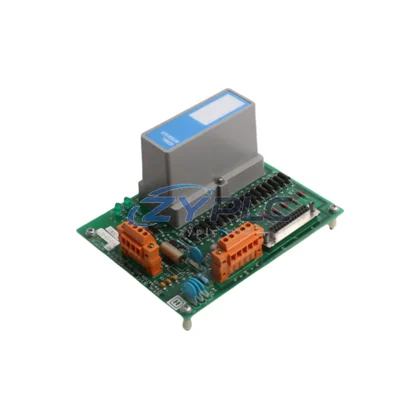
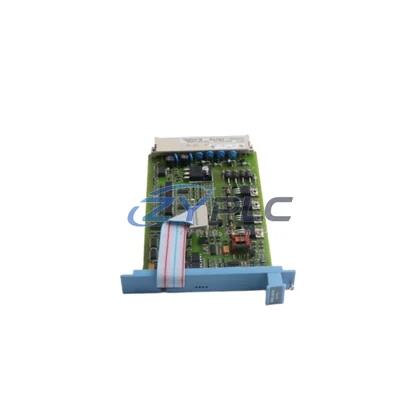
The Honeywell FS-SDI-1648 is a SIL3-rated safe analog input module engineered for seamless integration within the Honeywell Safety Manager FS (Fail-Safe) control system architecture. Rather than functioning as a standalone component, the FS-SDI-1648 occupies a critical position in the I/O layer of a layered safety instrumented system (SIS), working in concert with the control layer, network layer, power layer, human-machine interface layer, and field execution layer to deliver a coherent, high-integrity safety solution. Understanding its role within the full system hierarchy is essential for engineers designing, commissioning, or maintaining safety-critical automation environments across industries such as oil and gas, petrochemical processing, power generation, water treatment, mining, metallurgy, and advanced manufacturing.
Within the Honeywell Safety Manager FS platform, the FS-SDI-1648 connects directly to the FS-CPU-0 or FS-CPU-1 safety controller via the system backplane, enabling deterministic, high-speed signal acquisition from field-level transmitters and sensors. The module supports up to 16 single-ended or 8 differential analog input channels, accepting standard 4–20 mA HART signals that are prevalent across process industries. Its hardware-enforced SIL3 diagnostics—including open-circuit detection, short-circuit detection, and out-of-range monitoring—ensure that signal integrity is continuously validated without relying solely on software routines, a fundamental requirement for IEC 61508 and IEC 61511 compliance.
The FS-SDI-1648 is supplied with a warranty terms confirmed during quotation and full system integration support, ensuring that every module delivered is verified for compatibility within your existing Safety Manager FS architecture before deployment.
Product Specification Table
| Parameter |
Specification |
| System Role |
SIL3 Safe Analog Input Module — I/O Layer |
| Compatible Platform |
Honeywell Safety Manager FS (Fail-Safe) System |
| Input Channels |
16 single-ended / 8 differential analog inputs |
| Signal Type |
4–20 mA HART (Highway Addressable Remote Transducer) |
| Safety Integrity Level |
SIL3 (IEC 61508 / IEC 61511 compliant) |
| Diagnostic Coverage |
Open-circuit, short-circuit, out-of-range, internal self-test |
| Communication Interface |
Backplane bus to FS-CPU safety controller |
| Power Supply |
Supplied via FS system backplane (redundant power supported) |
| Operating Temperature |
0°C to +60°C (32°F to 140°F) |
| Mounting |
FS-series rack / backplane slot mounting |
| Certifications |
TÜV, IEC 61508 SIL3, FM, ATEX (application-dependent) |
| Warranty |
warranty terms confirmed during quotation — all units tested and verified |
| system integration |
Full system integration support for FS architecture deployment |
System Compatibility Notes
The FS-SDI-1648 achieves its full value only when considered as part of a coordinated Safety Manager FS system architecture. At the control layer, the FS-CPU-0 or FS-CPU-1 safety controller executes the safety application logic, polling the FS-SDI-1648 at deterministic scan intervals to process analog field signals and trigger appropriate safety actions. The CPU communicates with the I/O modules via the FS-RMU (Remote Marshalling Unit) backplane, which provides the physical and electrical interface between the processor and the I/O layer.
For system redundancy—a standard requirement in SIL3 applications—the FS-SDI-1648 is typically deployed alongside a redundant counterpart module in a 1oo2 (one-out-of-two) or 2oo3 (two-out-of-three) voting architecture. The FS-SDO-0824 safe digital output module and FS-SDI-0816 safe digital input module complement the FS-SDI-1648 in mixed I/O configurations, covering both discrete and analog signal domains within the same rack. The FS-PSU-0100 redundant power supply unit ensures that the entire I/O rack maintains continuous operation even during a single power supply failure, a critical design consideration for process safety systems that must remain energized during emergency shutdown sequences.
At the network layer, the Safety Manager FS system communicates with the distributed control system (DCS) or supervisory layer via Modbus TCP, PROFIBUS DP, or OPC DA/UA gateways, depending on the plant communication standard. The FS-NCM (Network Communication Module) handles this inter-system data exchange, ensuring that analog process values acquired by the FS-SDI-1648 are available to the DCS historian, alarm management system, and operator workstation without compromising the safety network’s integrity. At the human-machine interface layer, Honeywell’s Safety Builder engineering workstation software provides full configuration, diagnostics, and online monitoring of the FS-SDI-1648’s channel status, calibration data, and diagnostic counters, enabling engineers to verify system health without interrupting the safety function.
Field-level instruments—including pressure transmitters, temperature transmitters, flow meters, and level sensors—connect directly to the FS-SDI-1648’s input terminals via FS-series terminal modules or marshalling cabinets. HART pass-through capability allows secondary device management tools to communicate with smart field instruments through the FS-SDI-1648 without requiring additional wiring infrastructure, significantly reducing commissioning time and long-term maintenance overhead.
Industrial Application Notes
In oil and gas processing and petrochemical plants, the FS-SDI-1648 is deployed in emergency shutdown (ESD) and fire and gas (F&G) systems where SIL3 analog input integrity is mandatory. Pressure and temperature signals from wellhead equipment, separator vessels, and heat exchangers are routed through the FS-SDI-1648 to the Safety Manager FS controller, which executes the safety instrumented function (SIF) logic and initiates shutdown sequences when process variables exceed safe operating limits.
In power generation facilities—including thermal, nuclear, and combined-cycle plants—the FS-SDI-1648 monitors turbine inlet temperatures, generator winding temperatures, and cooling system pressures. Its SIL3 diagnostic architecture ensures that spurious trips caused by signal faults are minimized while genuine process deviations are detected and acted upon within the required safety response time.
In water and wastewater treatment infrastructure, the FS-SDI-1648 integrates with chemical dosing control systems, monitoring flow rates and chemical concentration levels to prevent over-dosing events that could compromise public health. Its wide operating temperature range and robust EMC performance make it suitable for both indoor control room installations and outdoor marshalling cabinet deployments.
In mining and metallurgical operations, the FS-SDI-1648 supports conveyor belt tension monitoring, crusher load sensing, and furnace temperature control within safety-rated control architectures. Its ability to handle multiple analog channels within a single module slot reduces rack space requirements and simplifies cable management in dense control panel environments.
In packaging and discrete manufacturing lines where process safety standards are increasingly applied, the FS-SDI-1648 provides the analog input infrastructure for machine guarding systems, press force monitoring, and robotic cell safety interlocks, enabling manufacturers to achieve SIL2 or SIL3 ratings without deploying separate safety relay architectures.
Product Compatibility FAQ
Q1: Is the FS-SDI-1648 compatible with both the original Safety Manager and the Safety Manager FS platform?
The FS-SDI-1648 is specifically designed for the Honeywell Safety Manager FS (Fail-Safe) platform and its associated FS-series backplane and CPU architecture. While Honeywell’s Safety Manager product family shares a common engineering philosophy, the FS-series modules use a dedicated backplane connector and communication protocol that is not backward-compatible with the original Safety Manager SM series racks. Engineers migrating from SM to FS architecture should verify rack and backplane compatibility before deploying FS-SDI-1648 modules. Our team provides full system integration support to assist with architecture validation prior to procurement.
Q2: Can the FS-SDI-1648 be hot-swapped during live system operation, and what are the maintenance implications?
The Safety Manager FS platform supports online module replacement under specific conditions defined by Honeywell’s system documentation and the plant’s safety management of change (MOC) procedure. Hot-swap capability depends on the redundancy configuration in use: in a fully redundant 1oo2D architecture, the redundant channel can maintain the safety function while the faulted module is replaced. In simplex configurations, a bypass or inhibit procedure must be followed in accordance with IEC 61511 requirements. All FS-SDI-1648 units supplied under our warranty terms confirmed during quotation are pre-tested and serialized, enabling direct drop-in replacement with full traceability documentation.
Q3: What long-term supply and obsolescence support is available for the FS-SDI-1648?
We maintain dedicated inventory of the FS-SDI-1648 to support long-term plant maintenance cycles, recognizing that safety instrumented systems typically operate for 20–30 years between major overhauls. Each unit is supplied with a warranty terms confirmed during quotation covering manufacturing defects and functional performance. For plants requiring multi-year supply agreements or last-time-buy inventory strategies, our team can provide volume pricing and staggered delivery schedules. system integration support is included with every order, ensuring that replacement modules are validated against your specific system configuration before shipment.