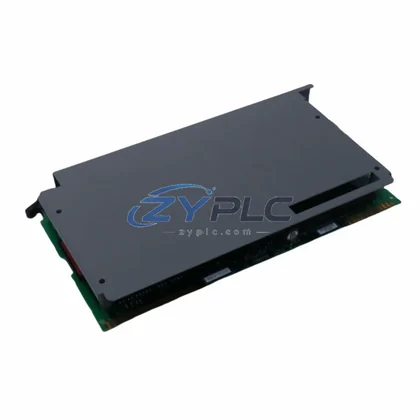
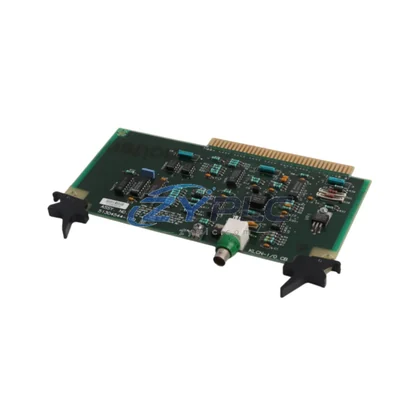
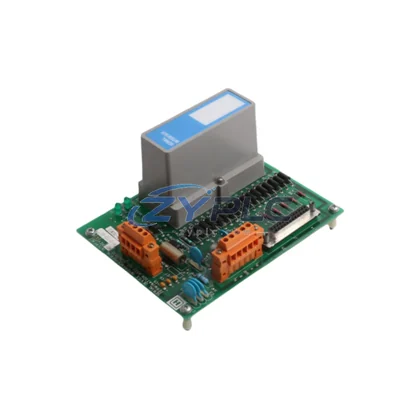
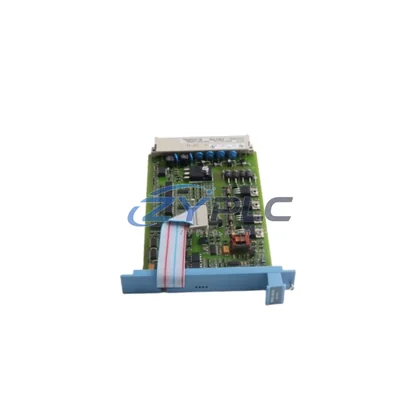
The Honeywell MC-TAIH04 (Part No. 51305900-175) is a high-level analog input module engineered for seamless integration within the TotalPlant Solution (TPS) and TDC 3000 Distributed Control System (DCS) architecture. Rather than functioning as a standalone component, the MC-TAIH04 occupies a critical position in the I/O layer of a multi-tier automation hierarchy — receiving, conditioning, and transmitting field-level analog signals upward to the control and supervisory layers with precision and reliability. Its design philosophy is rooted in system coherence: every electrical parameter, communication protocol, and mechanical form factor is aligned with the broader Honeywell MC Series ecosystem, ensuring that engineers can deploy, expand, and maintain the control architecture without introducing compatibility risk.
In a fully realized TPS control environment, the MC-TAIH04 works in concert with the MC-PAIH03 high-level analog input processor, the MC-TAIX04 analog input termination assembly, and the MC-PDIY22 digital I/O module to form a complete signal acquisition and distribution layer. The module interfaces directly with the MC-PAIH03 processor card via the I/O Link bus, enabling deterministic data transfer at scan rates appropriate for continuous process control. Field wiring is terminated at the MC-TAIX04 termination assembly, which provides the physical connection point for 4–20 mA transmitters, RTDs, and thermocouple inputs commonly found in refinery, petrochemical, and power generation applications. This structured wiring approach reduces installation errors, simplifies loop testing, and accelerates commissioning timelines on large-scale projects.
At the control layer, the MC-TAIH04 feeds conditioned analog data to the Honeywell HPM (High-Performance Process Manager) or PM (Process Manager) controller modules, which execute regulatory control strategies including PID loops, cascade control, and feedforward compensation. The HPM’s ability to handle thousands of I/O points across multiple MC Series racks makes the MC-TAIH04 a scalable building block for both greenfield installations and brownfield expansions. Engineers integrating the MC-TAIH04 into an existing TPS architecture benefit from the module’s backward compatibility with legacy TDC 3000 hardware, allowing mixed-generation deployments without requiring a full system migration.
Network and communication stability are foundational to the MC-TAIH04’s role in the system. The TPS architecture employs the Honeywell Local Control Network (LCN) and the Universal Control Network (UCN) as its primary communication backbones. The MC-TAIH04 participates in this network hierarchy by providing real-time process variable data to the LCN-connected Application Modules (AM) and History Modules (HM), which aggregate, trend, and archive process data for operator display and long-term analysis. The Honeywell GUS (Global User Station) and US (Universal Station) HMI platforms consume this data stream, presenting operators with live process graphics, alarm summaries, and trend displays that reflect the current state of the analog input signals acquired by the MC-TAIH04.
Power integrity is maintained through the TPS power system architecture, which typically employs redundant MC-PSEM01 or equivalent power supply modules housed within the MC Series card file. The card file backplane distributes regulated DC power to all installed modules, including the MC-TAIH04, ensuring that analog signal conditioning circuits receive stable, noise-free power — a prerequisite for achieving the module’s specified accuracy and resolution. In safety-critical applications, redundant power feeds from independent UPS sources are routed to the card file to eliminate single points of failure at the power layer.
For applications requiring high availability, the MC-TAIH04 supports deployment in redundant I/O configurations where a secondary module mirrors the primary’s signal acquisition function. Should the primary module fail, the redundant unit assumes control without interrupting the process data stream to the HPM controller. This redundancy architecture is particularly valued in continuous process industries — oil and gas, chemical manufacturing, pulp and paper, and power generation — where unplanned shutdowns carry significant financial and safety consequences. The MC-TAIH04’s hot-swap capability, supported by the TPS card file design, allows field technicians to replace a faulty module during live operation, further reducing mean time to repair (MTTR) and supporting the plant’s overall equipment effectiveness (OEE) targets.
From a maintenance and lifecycle perspective, the MC-TAIH04 benefits from Honeywell’s extensive installed base and long-term parts availability commitment. Spare module inventory planning is simplified by the module’s standardized form factor and consistent part numbering across TPS generations. Maintenance engineers can perform loop calibration checks, diagnostic reads, and firmware status queries directly from the GUS or US operator station without requiring physical access to the card file — a significant advantage in hazardous area installations where entry procedures are time-consuming and costly. All MC-TAIH04 units supplied by ZYPLC are covered by a warranty terms confirmed during quotation, providing procurement teams with the assurance needed to justify spare parts investment and support long-term maintenance contracts.
The module’s system integration capability ensures that it can be configured, tagged, and commissioned within the TPS database environment using standard Honeywell engineering tools, including the Control Builder and the TPS Configuration Studio. Point parameters — including engineering units, range limits, alarm setpoints, and filter time constants — are defined at the database level and downloaded to the module via the LCN, eliminating the need for manual hardware configuration and reducing the risk of transcription errors during commissioning. This database-driven approach also facilitates rapid system restoration following a hardware replacement, as the replacement module automatically inherits the configuration of its predecessor upon connection to the network.
Product Specification Table
| Parameter |
Specification |
| Part Number |
MC-TAIH04 / 51305900-175 |
| Manufacturer |
Honeywell |
| Series |
TPS / TDC 3000 MC Series |
| Module Type |
High-Level Analog Input Module |
| System Role |
I/O Layer – Analog Signal Acquisition |
| Input Channels |
4 Channels (High-Level Analog) |
| Input Signal Range |
4–20 mA / 1–5 VDC (configurable) |
| Resolution |
12-bit A/D Conversion |
| Accuracy |
±0.1% of Full Scale (typical) |
| Communication Interface |
I/O Link Bus (MC Series Backplane) |
| Compatible Controller |
HPM, PM (TPS/TDC 3000) |
| Network Compatibility |
LCN / UCN (Honeywell TPS Architecture) |
| Power Supply |
Supplied via MC Series Card File Backplane |
| Operating Temperature |
0°C to 60°C |
| Relative Humidity |
5% to 95% Non-Condensing |
| Installation |
MC Series Card File (Rack-Mounted) |
| Redundancy Support |
Yes – Redundant I/O Configuration |
| Hot-Swap Capable |
Yes |
| system integration |
Yes – TPS Configuration Studio / Control Builder |
| Warranty |
warranty terms confirmed during quotation (ZYPLC) |
System Compatibility Notes
The MC-TAIH04 achieves its full potential when deployed as part of a coordinated Honeywell TPS control system. In a typical process plant architecture, the module is installed in an MC Series card file alongside the MC-PAIH03 analog input processor, which handles signal multiplexing and A/D conversion management for the four input channels. The card file itself is powered by a redundant pair of MC-PSEM01 power supply modules, ensuring that the analog input circuitry maintains stable operation even during a single power supply failure.
At the controller level, the Honeywell HPM (High-Performance Process Manager) receives the digitized process variable data from the MC-TAIH04 via the I/O Link bus and executes the configured control strategies. For digital I/O requirements within the same control loop — such as pump start/stop commands or valve position feedback — the MC-PDIY22 digital I/O module is typically co-located in the same card file, sharing the backplane communication infrastructure and simplifying cabinet wiring. Analog output signals generated by the HPM’s control algorithms are routed through the MC-TAOH04 analog output module, completing the closed-loop control path from field sensor to final control element.
Communication between the card file and the plant-wide control network is managed by the Honeywell NIM (Network Interface Module), which bridges the I/O Link bus to the UCN. The UCN carries process data to the Application Module (AM) for advanced control and optimization functions, and to the History Module (HM) for long-term data archiving. Operators interact with the system through the Honeywell GUS (Global User Station) or Universal Station (US), which display real-time process graphics and alarm states derived from the analog input data acquired by the MC-TAIH04. For field-level diagnostics and loop calibration, the MC-TAIX04 termination assembly provides accessible test points without requiring disconnection of field wiring, supporting efficient maintenance workflows in live plant environments.
Industrial Application Notes
The MC-TAIH04 is deployed across a broad spectrum of process industries where the Honeywell TPS and TDC 3000 DCS platforms have established a long operational history. In petroleum refining, the module acquires analog signals from pressure transmitters, flow meters, and temperature sensors distributed across distillation columns, heat exchangers, and reactor vessels, providing the HPM controller with the real-time process data required for tight product quality control and maintenance planning. In petrochemical and chemical manufacturing plants, the MC-TAIH04 supports continuous monitoring of reaction parameters — temperature, pressure, and flow — in environments where process upsets can have significant safety and environmental consequences, making the module’s accuracy and redundancy capabilities particularly valuable.
In the power generation sector, the MC-TAIH04 is used in boiler control systems, turbine monitoring applications, and balance-of-plant automation, where the TPS architecture’s proven reliability and long service life align with the extended operational cycles of power plant equipment. Pulp and paper manufacturers rely on the module for process variable acquisition in digester control, bleaching systems, and paper machine automation, where consistent analog signal quality directly impacts product uniformity and yield. In water and wastewater treatment facilities, the MC-TAIH04 monitors flow rates, chemical dosing levels, and tank levels across geographically distributed pump stations and treatment processes, supporting both local control and SCADA integration via the TPS network infrastructure.
For mining and metallurgical applications, the module’s robust operating temperature range and rack-mounted form factor make it suitable for installation in control rooms serving smelting, flotation, and materials handling processes. In pharmaceutical and food processing environments, the MC-TAIH04 supports validated control systems where audit trail requirements and configuration management are critical — capabilities that are natively supported by the TPS database-driven engineering environment. Across all these industries, the module’s system integration capability and warranty terms confirmed during quotation provide procurement and maintenance teams with the confidence to specify the MC-TAIH04 as a long-term component of their control system infrastructure.
Product Compatibility FAQ
Q1: Is the MC-TAIH04 (51305900-175) compatible with both TPS and TDC 3000 DCS architectures, and can it be mixed with legacy modules in the same card file?
Yes. The MC-TAIH04 is designed for cross-generation compatibility within the Honeywell MC Series ecosystem. It can be installed in the same MC Series card file alongside legacy TDC 3000 I/O modules, provided the card file backplane and power supply specifications are met. The module communicates via the standard I/O Link bus protocol, which is consistent across TPS and TDC 3000 HPM and PM controller generations. Engineers undertaking brownfield expansions or partial system upgrades can integrate the MC-TAIH04 without requiring a full platform migration, preserving existing infrastructure investment while gaining access to the module’s improved signal conditioning and diagnostic capabilities.
Q2: What configuration and commissioning tools are required to deploy the MC-TAIH04 in a TPS architecture, and how does system integration simplify the process?
The MC-TAIH04 is configured using Honeywell’s TPS engineering environment, which includes the Control Builder application and the TPS Configuration Studio. All point parameters — including channel assignments, engineering unit ranges, alarm limits, and filter constants — are defined in the TPS database and downloaded to the module via the LCN/UCN network. system integration means that the module’s configuration is fully database-resident: when a replacement module is installed, it automatically receives its configuration from the database upon network connection, eliminating manual re-entry and reducing commissioning time. This approach also supports systematic configuration backup and version control, which is essential for maintaining audit trails in regulated industries.
Q3: What does the warranty terms confirmed during quotation cover for the MC-TAIH04, and how does ZYPLC support long-term spare parts availability for TPS systems?
All MC-TAIH04 modules supplied by ZYPLC are covered by a warranty terms confirmed during quotation against manufacturing defects and functional failures under normal operating conditions. The warranty period begins from the date of shipment and covers repair or replacement of the module at ZYPLC’s discretion. ZYPLC maintains dedicated inventory of Honeywell TPS and TDC 3000 spare parts to support customers with long-term maintenance contracts and emergency replacement requirements. Our technical team can assist with module cross-referencing, compatibility verification, and logistics coordination to minimize downtime in the event of an unplanned failure. For ongoing spare parts planning, ZYPLC recommends maintaining a minimum of one spare MC-TAIH04 per eight installed units, aligned with industry best practices for DCS I/O module inventory management.