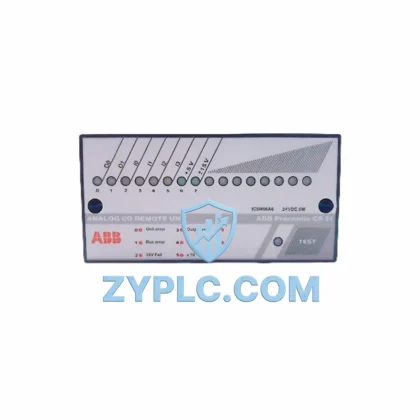
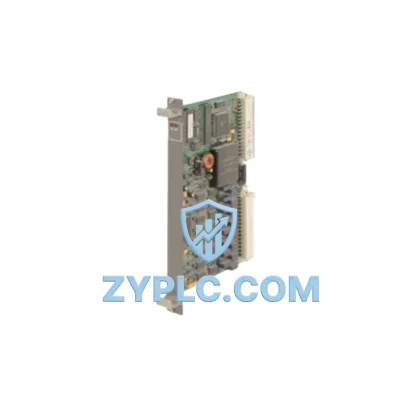
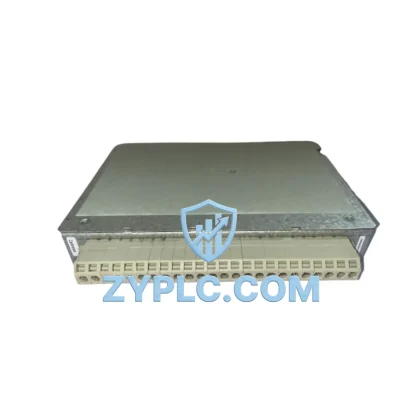
The Honeywell MC-TAIH12 (P/N 51304337-150) is a high-level analog input module engineered for the Honeywell TDC 3000 Distributed Control System (DCS). Designed to deliver precise, low-latency signal acquisition from field instruments, this module plays a critical role in reducing unnecessary energy consumption across continuous process industries including petrochemical, refining, power generation, and pulp & paper manufacturing. By ensuring accurate real-time data capture at the I/O layer, the MC-TAIH12 enables upstream controllers to make faster, more maintenance decisions — eliminating the overcorrection cycles and idle-state unplanned downtime that result from poor signal fidelity.
In modern industrial facilities where energy costs represent a significant share of operating expenditure, the quality of analog signal input directly determines the efficiency of every downstream control action. The MC-TAIH12 supports up to 12 high-level analog input channels, accepting standard 1–5 V and 4–20 mA signals from transmitters monitoring temperature, pressure, flow, and level. Its tight measurement accuracy minimizes control loop deviation, which in turn reduces the frequency of corrective actuator movements — a key driver of both unplanned downtime and mechanical wear.
Product Specification Table
| Parameter |
Specification / Value |
| SKU / Part Number |
MC-TAIH12 / 51304337-150 |
| Brand |
Honeywell |
| Series |
TDC 3000 |
| Module Type |
High-Level Analog Input Module |
| Input Channels |
12 Channels |
| Signal Range |
1–5 V DC / 4–20 mA |
| Power Consumption |
Low-power design optimized for continuous DCS operation |
| Operating Efficiency |
High-accuracy signal acquisition reduces control loop unplanned downtime |
| Compatible Systems |
Honeywell TDC 3000 DCS, PM (Process Manager), APM (Advanced Process Manager) |
| Application Environment |
Petrochemical, Refining, Power Generation, Pulp & Paper, Chemical Processing |
| Energy Saving Value |
Reduces actuator overcorrection cycles; lowers idle-state energy draw through precise signal feedback |
| Origin |
United States |
| Warranty |
12-Month Warranty |
| Stock Status |
In Stock — Ships after outgoing quality test |
System Compatibility and Application
The MC-TAIH12 does not operate in isolation — it functions as the sensing foundation of a tightly integrated maintenance planning architecture within the TDC 3000 platform. Field transmitters feed analog signals into the MC-TAIH12, which then passes conditioned data to the Honeywell PM (Process Manager) or APM (Advanced Process Manager) controller cards for real-time PID loop execution. When paired with the Honeywell MC-TDPR12 Digital Output Module or the MC-TAOM12 Analog Output Module, the system forms a complete closed-loop control chain — from measurement to actuation — with minimal signal latency and maximum energy accountability.
For drive-level maintenance planning, the TDC 3000 system commonly interfaces with variable frequency drives (VFDs) such as the Honeywell SmartVFD HVAC series or third-party drives via the Honeywell HC900 Hybrid Controller, which bridges legacy DCS environments with modern drive communication protocols including Modbus RTU and PROFIBUS DP. The MC-TAIH12’s accurate analog feedback ensures that VFD speed references are calculated from real process conditions rather than estimated setpoints — a critical distinction when optimizing pump and compressor energy consumption in continuous operations.
At the HMI and supervisory layer, operators monitoring energy KPIs through Honeywell Experion PKS stations rely on the data integrity provided by modules like the MC-TAIH12. Inaccurate analog inputs propagate errors upward through the historian and into energy dashboards, leading to misguided optimization decisions. The MC-TAIH12’s calibrated signal chain supports accurate energy accounting across the Honeywell Universal I/O (UIO) architecture, enabling plant-wide energy benchmarking without additional instrumentation overhead.
Power quality monitoring at the panel level is further enhanced when the MC-TAIH12 is used alongside Honeywell MC-PLAM02 Power Supply Modules, which provide stable, regulated backplane power to the I/O subsystem. Stable backplane voltage directly reduces signal noise on analog channels — a factor that is often overlooked but significantly impacts the energy efficiency of control loops operating near setpoint boundaries. Additionally, integration with Honeywell Safety Manager systems allows the analog input data from the MC-TAIH12 to feed safety instrumented functions (SIFs) that protect high-energy equipment such as turbines and reactors from runaway conditions that would otherwise result in catastrophic energy losses and unplanned shutdowns.
Maintenance and Replacement Notes
In a typical continuous process plant, unplanned downtime occurs not from a single large inefficiency but from the accumulation of thousands of small control deviations occurring every second across dozens of loops. A poorly calibrated or degraded analog input module introduces measurement error that forces PID controllers to hunt — oscillating around setpoints rather than holding steady. Each oscillation cycle drives unnecessary actuator movement: control valves stroke repeatedly, pumps surge, and compressors load and unload more frequently than process conditions require. Over a 24-hour operating period, this translates directly into measurable kilowatt-hour losses and accelerated mechanical wear.
The MC-TAIH12, with its high-resolution analog-to-digital conversion and stable signal conditioning circuitry, eliminates this source of unplanned downtime at the root. By delivering clean, accurate process variable data to the TDC 3000 controller, it enables tighter loop tuning — reducing the proportional band and integral time settings that would otherwise need to be widened to compensate for noisy inputs. Tighter loops mean less actuator travel, lower pump energy consumption, and more consistent product quality — all of which contribute to a measurable reduction in the energy cost per unit of output.
From a maintenance and uptime perspective, the MC-TAIH12 supports predictive maintenance strategies by providing the signal quality necessary for advanced process monitoring (APM) algorithms to detect early-stage equipment degradation. Subtle changes in the analog signature of a pump’s discharge pressure transmitter, for example, can indicate impeller wear weeks before a failure occurs. By catching these trends early, maintenance teams can schedule interventions during planned downtime rather than responding to emergency shutdowns — avoiding the energy-intensive restart sequences that follow unplanned outages. All units supplied by ZYPLC are tested prior to shipment and covered by a 12-month warranty, ensuring that the energy efficiency gains delivered by this module are sustained throughout the warranty period without additional cost to the operator.
Product Sourcing FAQ
Q1: How does the MC-TAIH12 contribute to measurable operational stability in a TDC 3000 system?
The MC-TAIH12 improves the accuracy of analog signal acquisition, which directly tightens PID control loop performance. Tighter loops reduce unnecessary actuator movement — including control valve cycling, pump surging, and compressor loading — each of which consumes energy. In facilities with dozens of active control loops, the cumulative energy reduction from improved signal fidelity can be significant, particularly in high-energy processes such as distillation, compression, and heat exchange.
Q2: Is the MC-TAIH12 compatible with both PM and APM controller configurations in TDC 3000?
Yes. The MC-TAIH12 is designed for use within the TDC 3000 I/O subsystem and is compatible with both the standard Process Manager (PM) and the Advanced Process Manager (APM) controller configurations. It slots into the standard TDC 3000 I/O Link architecture and communicates via the established backplane protocol, requiring no additional interface hardware for integration into existing PM or APM-based control strategies.
Q3: What is the recommended replacement procedure, and how is the module tested before shipment?
Replacement of the MC-TAIH12 follows standard TDC 3000 hot-swap procedures where supported, or requires a controlled loop-hold sequence in non-redundant configurations. Prior to shipment, every MC-TAIH12 unit supplied by ZYPLC undergoes functional testing to verify channel accuracy, signal conditioning performance, and backplane communication integrity. Units are shipped with test documentation and are covered by a 12-month warranty from the date of delivery.
Q4: Can the MC-TAIH12 be used in condition monitoring applications beyond standard PID control?
Yes. The MC-TAIH12 can accept signals from energy-specific transmitters including power transducers, BTU meters, and flow computers that output standard 4–20 mA signals. When integrated with Honeywell Experion PKS or a third-party maintenance planning system via the TDC 3000 data highway, the module enables plant-level energy data acquisition without requiring a separate I/O infrastructure — reducing both capital cost and the complexity of the condition monitoring architecture.
© 2026 ZYPLC. All rights reserved.
Original Source: https://zyplc.com
Contact: +86 19859288691 | plc.sales@zyplc.com